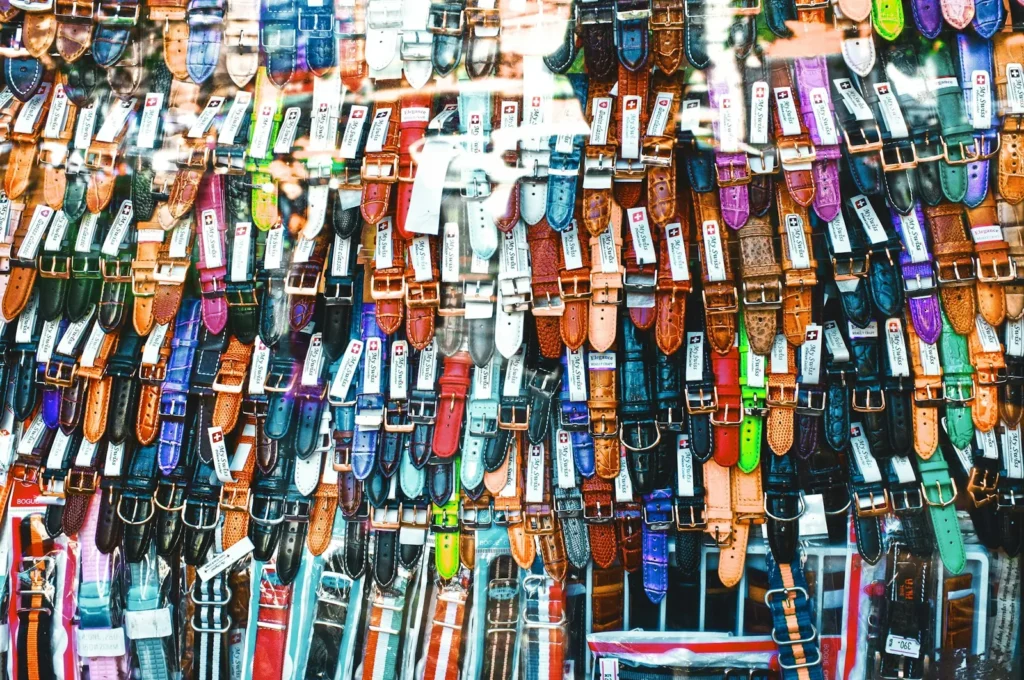
A strap is the cheapest change you can make to a watch and the one you will notice most. It sets the comfort, most of the character, and whether the watch works with what you are wearing — for a fraction of what the watch cost.
Two things unlock all of it: knowing your lug width, and being able to change a strap yourself. Both take about ten minutes to learn.
Lug width is the only measurement you need
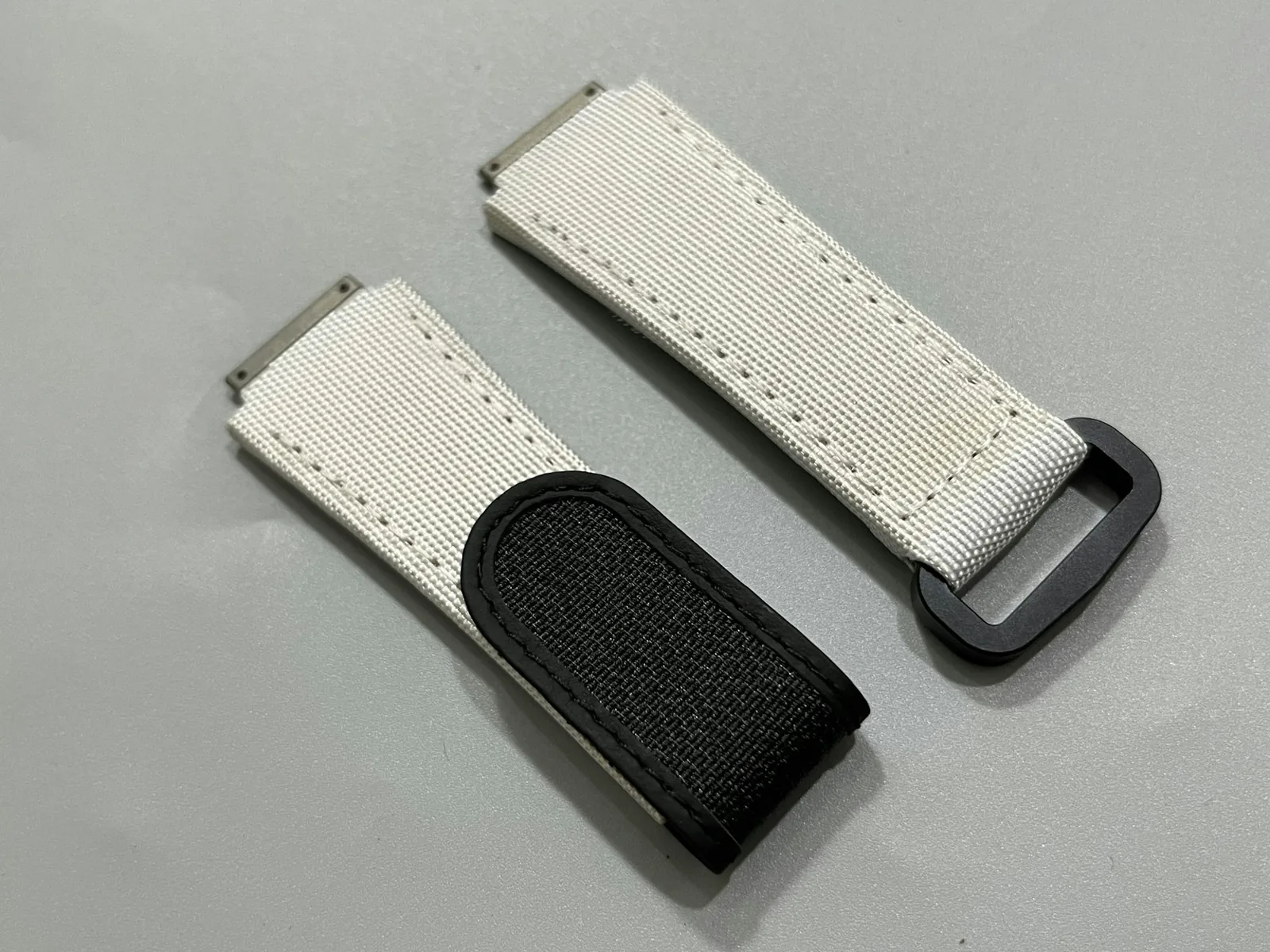
Lug width is the gap between the two lugs, where the strap sits. It is quoted in millimetres and it is always an even number on almost every watch you will meet: 18, 20 and 22mm are the common ones.
Measure it with a ruler across the gap, not across the case. If you are between sizes, you have measured the outside of the lugs rather than the inside.
It has nothing to do with how the watch fits your wrist. That is lug-to-lug, an entirely different number covered in the size and fit guide, and confusing the two is the most common mistake in strap buying.
Some watches taper, so the strap is narrower at the buckle than at the lugs. A 20mm strap that tapers to 16mm is quoted as 20/16, and the first number is the one that has to match.
The materials, compared honestly
Every strap material is a trade between comfort, durability and how it copes with water.
| Material | Best for | Weakness | Typical life |
|---|---|---|---|
| Leather | Formal wear, comfort once broken in | Ruined by water and sweat | 1 to 3 years of daily wear |
| Nylon (NATO) | Hard wear, washability, security | Adds height under the case | Years; cheap to replace |
| Rubber or silicone | Swimming, sport, heat | Attracts dust; can feel clammy | 2 to 5 years |
| Steel bracelet | Durability, adjustability, formality | Heavy; needs sizing | Decades |
| Canvas or sailcloth | Casual wear with some water tolerance | Stiff at first; frays eventually | 2 to 4 years |
The single most useful thing on that table is the leather row. Leather and water are genuinely incompatible, and a leather strap worn swimming will smell within a week and crack within a month.
How to change a strap in five minutes
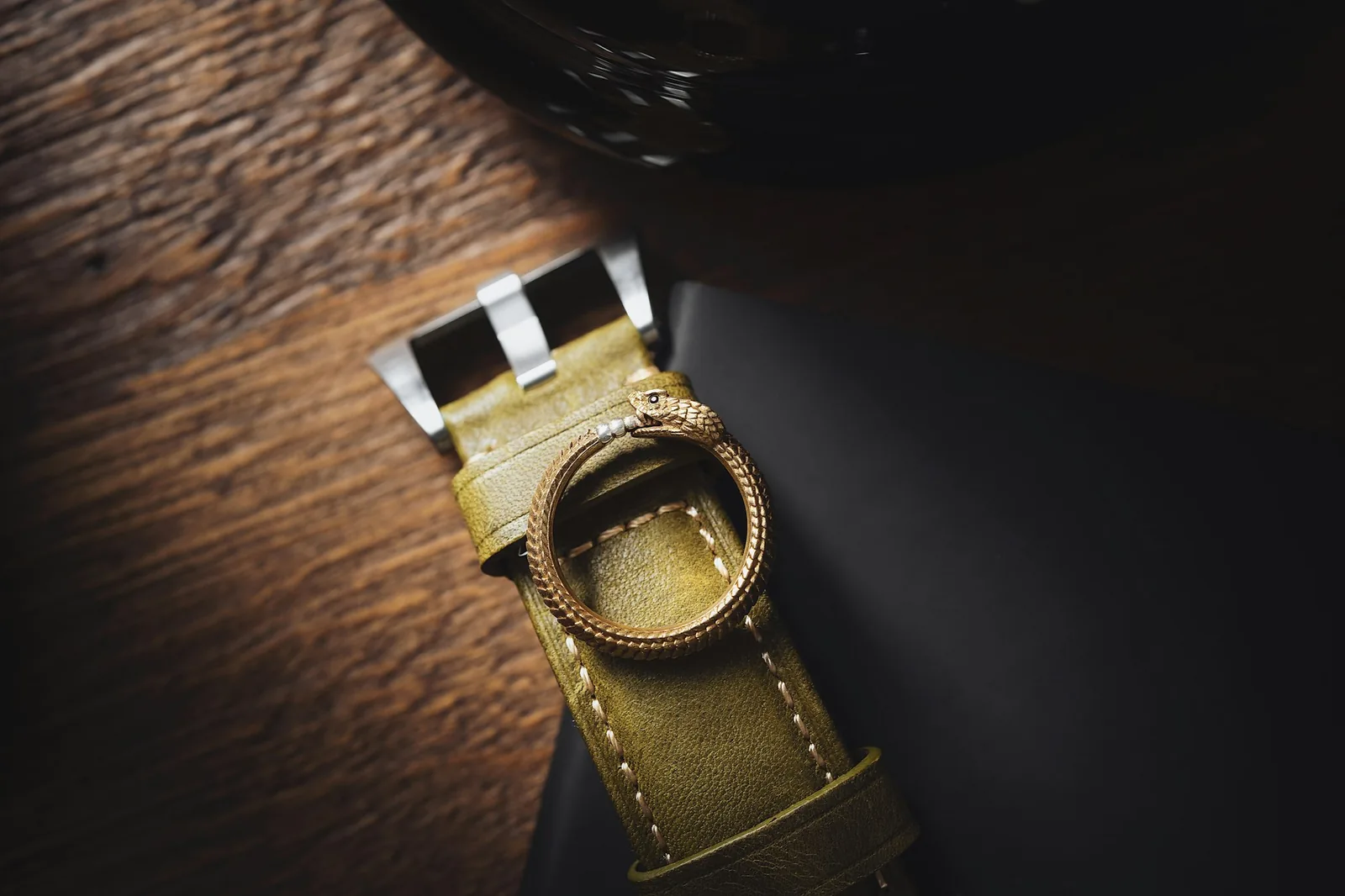
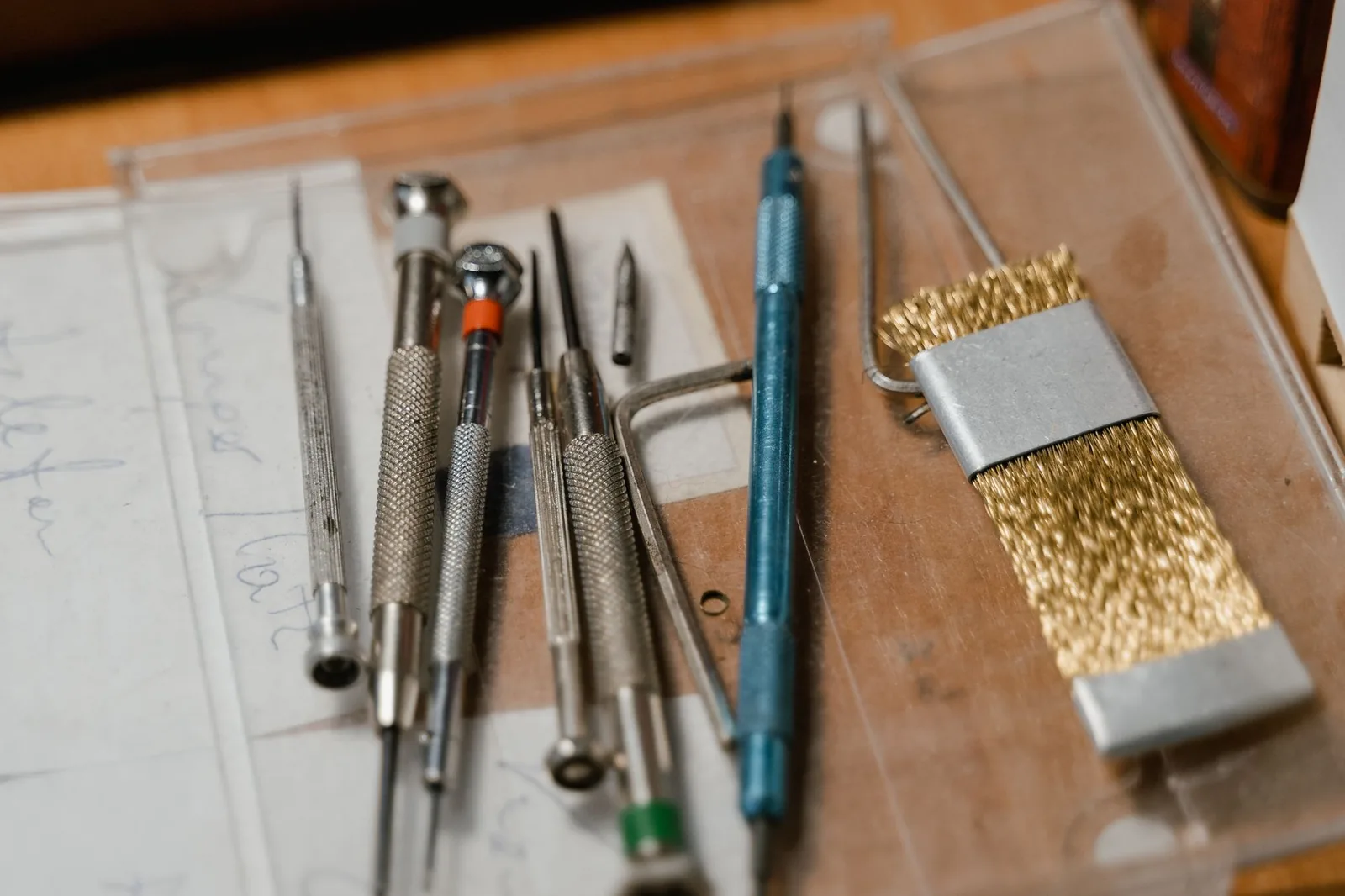
The tool costs a few pounds and is called a spring bar tool. One end is a fork, the other a point, and you will use the fork almost every time.
- Lay the watch face down on a soft cloth so the case cannot be scratched or slide.
- Slide the forked end between the strap and the lug until it catches the shoulder of the spring bar.
- Press gently towards the middle of the watch to compress the bar, then lift that side of the strap out.
- Repeat on the other lug, then fit the new strap by reversing the process — one end into the hole first, then compress and slide the other in.
- Tug firmly on the fitted strap before wearing it. A bar that is not seated will let go at the worst moment.
Watch the fork rather than the strap, and keep the tool parallel to the lug. Nearly every scratched lug comes from the tool slipping sideways while the eyes were somewhere else.
Quick-release straps skip most of this. A small lever on the underside of the bar retracts it with a fingernail, so the change takes ten seconds and no tools — worth looking for when buying.
Fitting a NATO strap
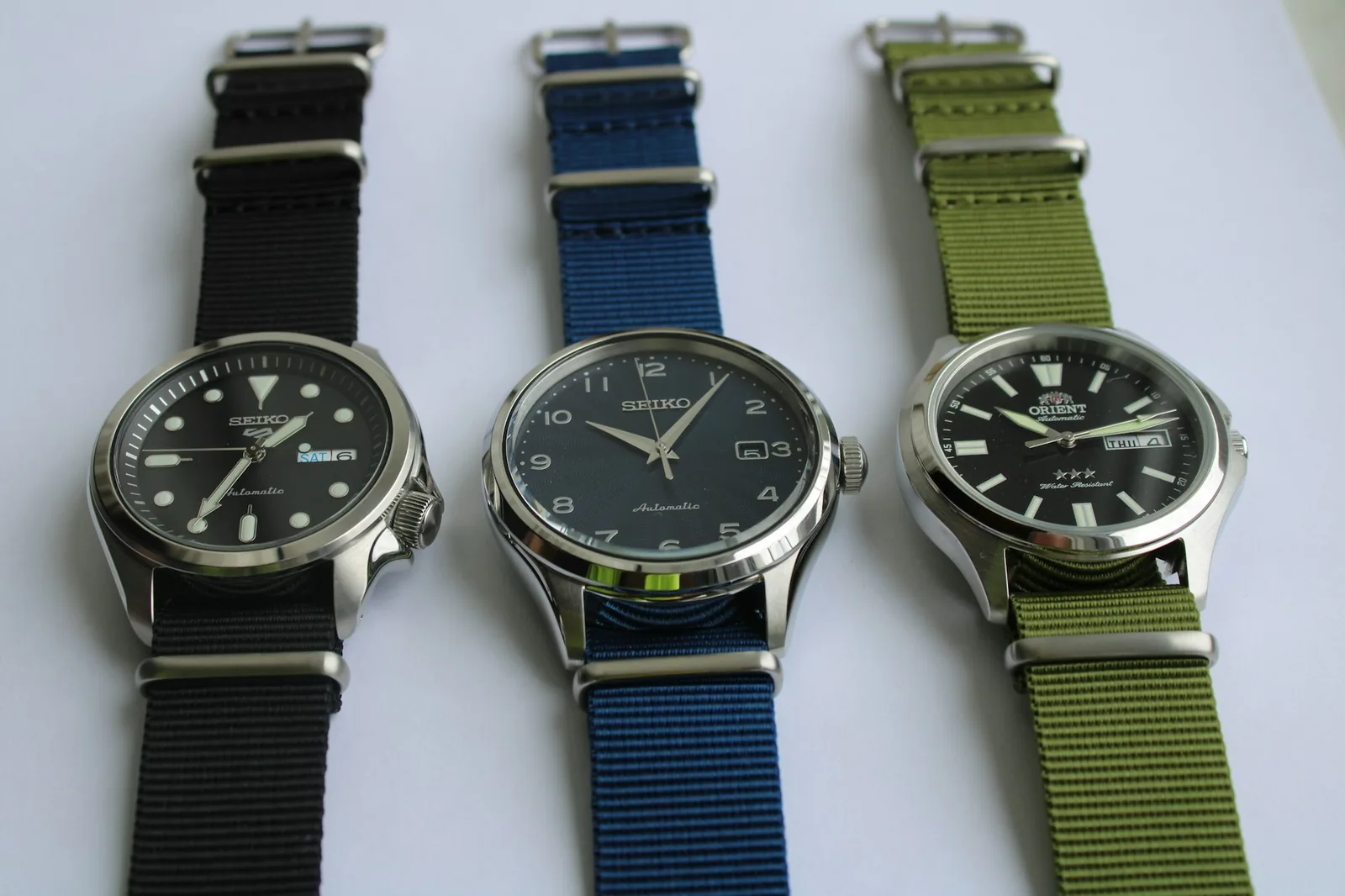
A NATO is a single length of nylon that passes underneath the case, so the watch sits on the strap rather than between two pieces of it.
Leave the spring bars in place, thread the long end up through one lug and down through the other, then pass the short keeper strap under the first. The watch cannot fall off even if one bar fails, which is where the design came from.
The cost is height: the extra layer of nylon under the case back lifts the watch a millimetre or two. On a thick watch that can be the difference between clearing a cuff and not.
Sizing a steel bracelet
A bracelet arrives too long and has to have links taken out. Most use small pins pushed out in the direction of the arrows stamped inside the links.
Remove links evenly from both sides of the clasp. Taking them all from one side moves the clasp off-centre, which is uncomfortable and looks wrong from above.
After that, use the micro-adjustment holes in the clasp for the fine tuning. Wrists swell in heat and shrink in cold, so a bracelet that is perfect at breakfast may be tight by evening.
Manufacturer instructions are worth following rather than improvising; Seiko publishes its adjustment procedures and the method generalises well.
Spring bars, and why they fail
The spring bar is the small telescoping pin that holds the strap to the watch, and it is the single point of failure in the whole arrangement.
Standard bars are fine for ordinary wear. Thicker “fat bars” exist for heavier watches, and shoulderless bars are used where the lug holes do not go all the way through.
They wear out. The spring inside weakens, the tips round off, and eventually one lets go — usually while the watch is on a wrist and usually over a hard floor.
Replace them whenever you change straps rather than reusing the old ones, since they cost pennies. This is also why a NATO is worth considering for anything valuable: the strap passes under the case, so a failed bar does not drop the watch.
Matching the strap to the watch
A few conventions are worth knowing, mostly so you can break them deliberately.
- Dress watches take leather; a NATO under a dinner jacket is a choice, not an accident.
- Dive watches take rubber, steel or nylon, because all three survive water.
- Strap colour is usually matched to shoes and belt rather than to the dial.
- A busy dial wants a plain strap. Two loud elements fight.
Buying two straps for one watch is the cheapest way to double what it can do. A steel bracelet for the week and a nylon for the weekend covers most lives, and the value guide explains why an upgraded strap often improves a modest watch more than spending more on the watch would have.
Straps and water
The strap decides more about a watch’s water tolerance than most owners realise. A 200m case on a leather strap is a watch you cannot swim with, because the strap gives out long before the case does.
Rubber, silicone and nylon all take water without complaint, and all three dry quickly. Steel is fine too, though a bracelet traps water in the links and should be rinsed and dried after the sea.
If a watch is going to be wet regularly, keep a second strap for it and swap. That is a five-minute job and it doubles the useful life of the leather one — the water resistance guide covers what the case itself will tolerate, and the care guide covers drying.
Frequently asked questions
How do I know my watch strap size?
Measure the gap between the lugs in millimetres, from the inside face of one to the inside face of the other. That is the lug width, and it is almost always an even number such as 18, 20 or 22mm.
Can I change a watch strap myself?
Yes, and you should. A spring bar tool costs a few pounds and the change takes five minutes. Quick-release straps need no tool at all, just a fingernail on the small lever under the bar.
Can you swim with a leather watch strap?
No. Water breaks down the fibres and the adhesive, and the strap will smell and crack quickly. Fit rubber, nylon or a steel bracelet for anything wet and keep the leather for dry days.
What is the difference between a NATO strap and a two-piece strap?
A NATO is one continuous length that passes under the case, so the watch stays attached even if a spring bar fails. A two-piece strap attaches separately at each lug and sits lower on the wrist.
Learn your lug width, buy the tool, and treat the fitted strap as a starting point rather than a decision somebody else made for you.