
Diameter is the number everyone quotes and the one that misleads most. Whether a watch fits is decided mainly by lug-to-lug — the distance from the tip of the top lugs to the tip of the bottom ones — because that is the watch’s real footprint on your wrist.
A 40mm watch with long straight lugs can overhang a wrist that a 42mm watch with short curved ones sits on comfortably. Once you know that, most sizing advice stops being confusing.
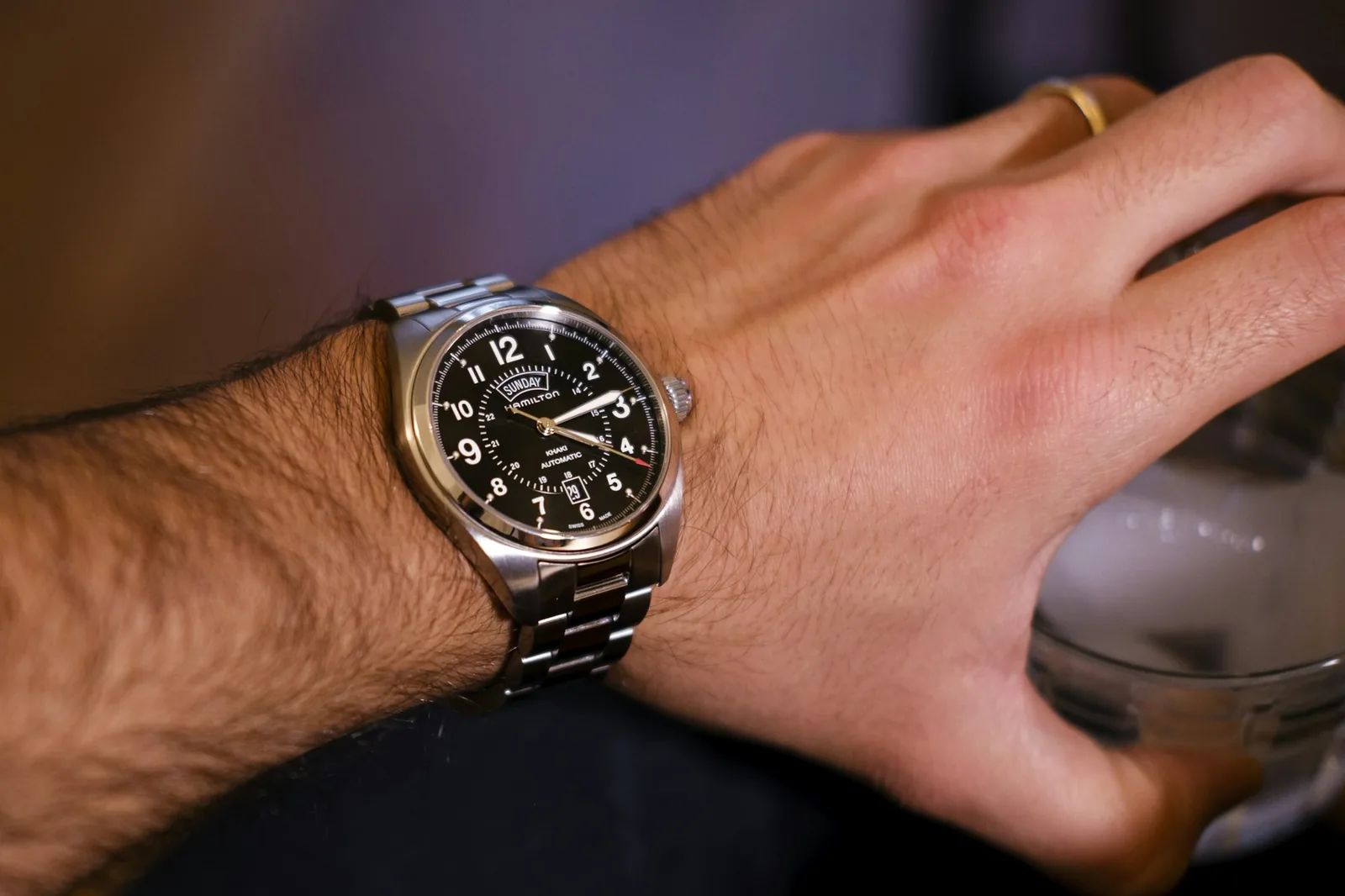
Measure your wrist before you measure any watch
Take a soft tape measure, or a strip of paper and a ruler, and wrap it just above the wrist bone where a watch actually sits. Note the circumference in millimetres rather than inches, because every watch specification is metric.
Then do the part most guides skip. Look at your wrist from directly above and note how wide the flat top of it is, from the point where it starts to curve on one side to the same point on the other.
That flat width is the number that matters. It is the shelf the watch has to sit on, and it is usually a good deal narrower than the circumference suggests.
Write both numbers down. Everything below refers back to them.
The four numbers that decide fit
A specification sheet gives you these, or should. If a listing quotes only diameter, that is itself a signal about how carefully the rest was written.
| Measurement | What it is | What it governs |
|---|---|---|
| Diameter | Width across the case, usually excluding the crown | How large the dial reads at a glance |
| Lug-to-lug | Tip of the top lugs to tip of the bottom lugs | Whether the watch overhangs your wrist |
| Thickness | Case back to the top of the crystal | Whether it clears a shirt cuff |
| Lug width | Gap between the lugs where the strap sits | Which straps will fit, nothing else |
Lug width is worth separating out because it has no bearing on fit at all. It is a strap-buying number, covered in the guide to watch straps, and people routinely confuse it with the others.
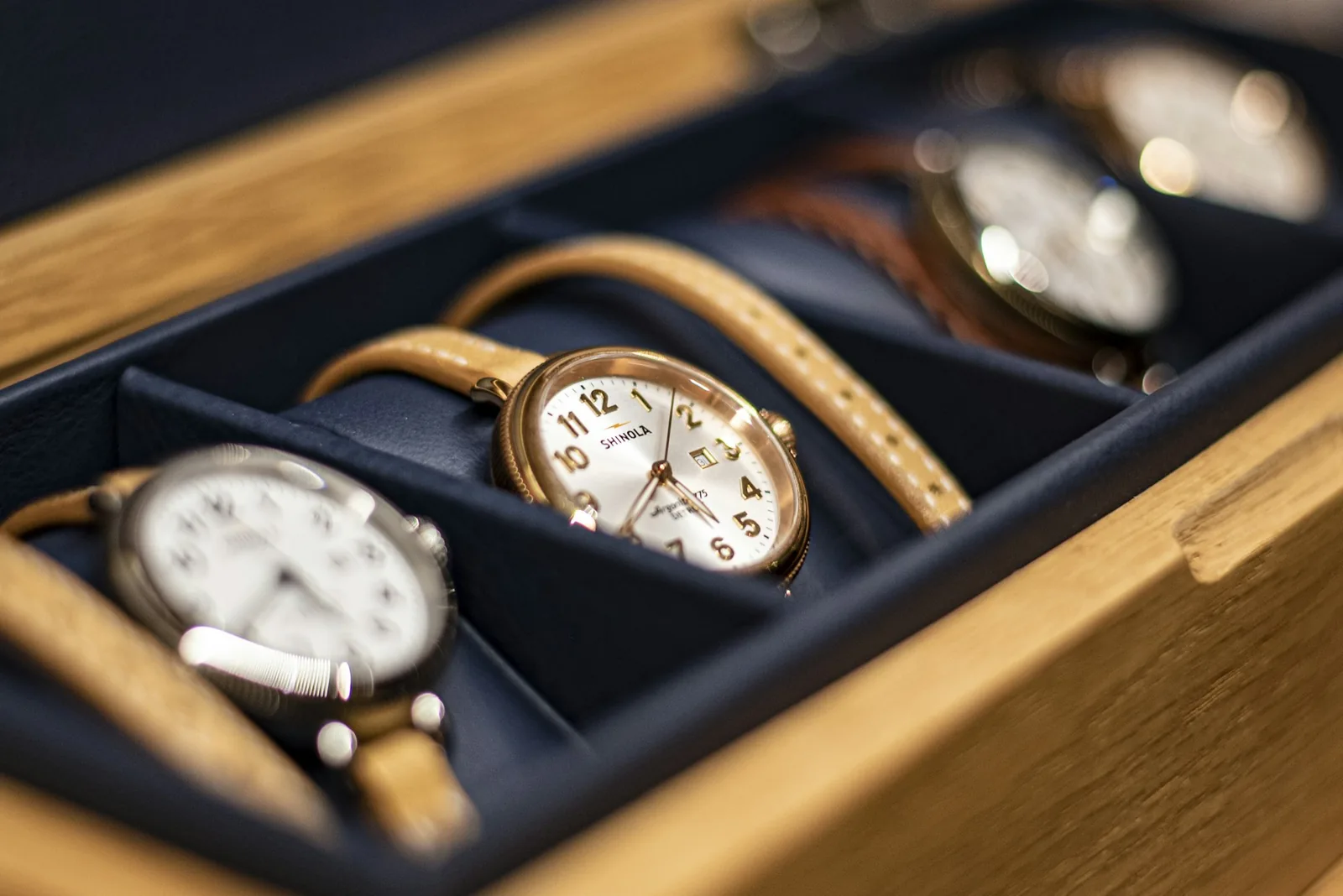
What lug-to-lug should be for your wrist
The working rule is that lug-to-lug should not exceed the flat width of your wrist. If it does, the lug tips lift off the skin and the watch rocks.
As a rough guide, a 6.5-inch wrist tends to top out around 47mm lug-to-lug, and a 7-inch wrist around 49 to 50mm. Those are ceilings rather than targets, and your own flat-width measurement beats both.
Curved lugs buy you a few millimetres, because they bend down to meet the wrist rather than pointing straight out. Two watches with identical lug-to-lug can therefore wear quite differently.
Thickness is the other quiet constraint. Under about 12mm slides under most cuffs; past 14mm you will notice it every time you reach across a desk.
Why watches got bigger, and why that is reversing
Wristwatches began small. Early twentieth-century pieces in museum collections are routinely 30 to 34mm, because they were adapted pocket watches and because nobody had yet decided a watch should announce itself.
Cases grew through the 1990s and 2000s until 44mm was unremarkable. The catalogue preserved on this site dates from the top of that curve, and it shows: plenty of entries from 2006 and 2007 are sized in a way that reads as large today.
The trend has since gone the other way. If you want to see how differently the same styles were proportioned two decades ago, the brand index is the fastest way in.
The Science Museum Group collection is a good place to see how small early wristwatches actually were.
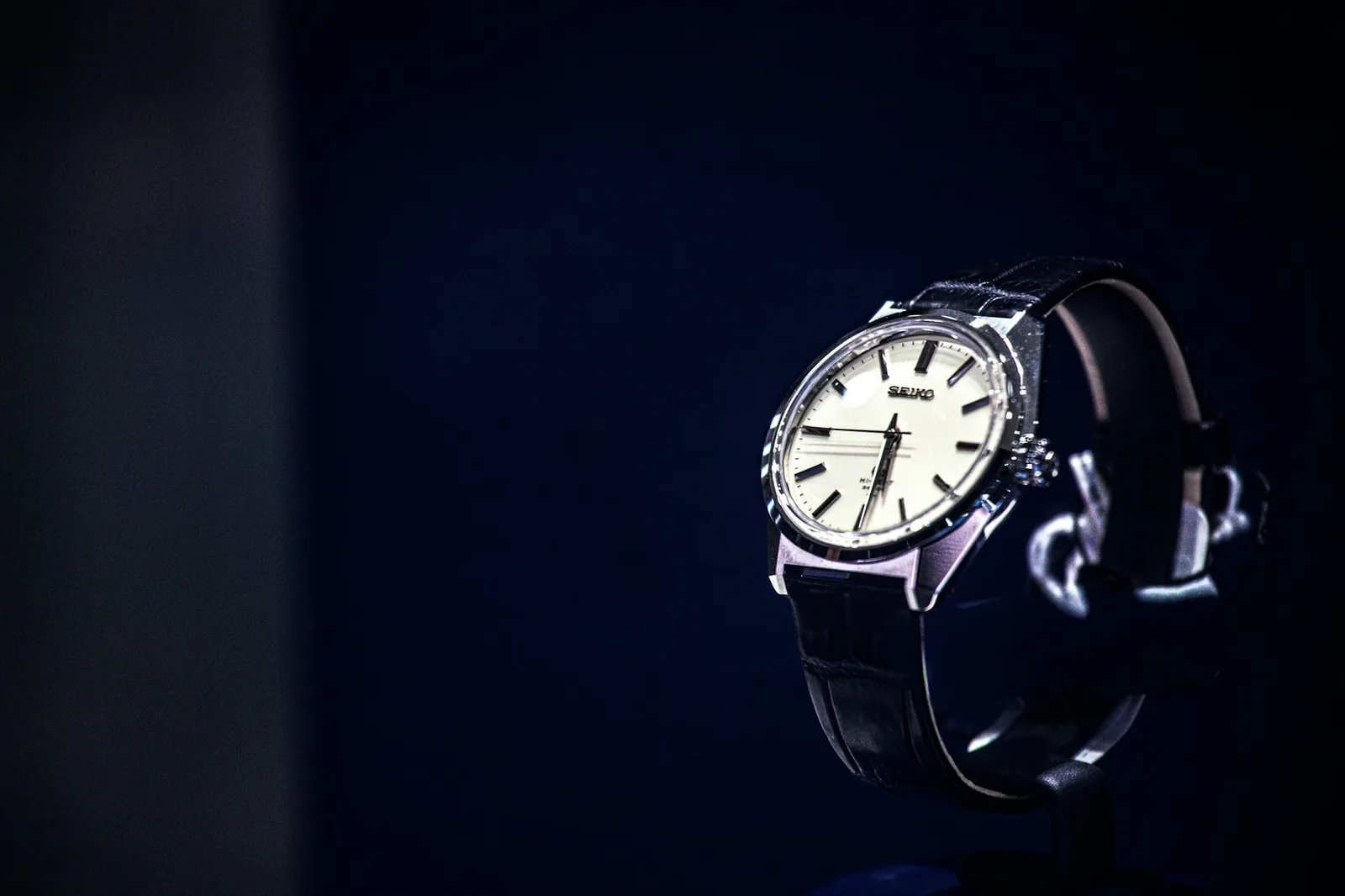
Where the number on the box comes from
Case diameter is not measured the same way by everyone, which is why two watches quoted at 40mm can differ by a millimetre in the hand.
Most makers quote the case excluding the crown, but not all do, and a few quote across the bezel at its widest point. A listing that says “40mm including crown” is telling you something different from one that just says 40mm.
Bezel width changes the reading again. A wide bezel on a 42mm case can leave a dial opening smaller than a 38mm watch with a thin one, and the dial opening is what your eye actually judges.
This is why trying a watch on beats any specification sheet, and why photographs on somebody else’s wrist are more useful than a table of numbers. Wrist shots with the wrist size stated are the closest thing to a standard the internet has.
Fit is not only proportion
A watch that fits visually can still be uncomfortable. Two things cause most of it, and both are fixable.
The first is a bracelet sized between holes, leaving the watch either slightly loose or slightly tight. Half-links and micro-adjustment in the clasp exist precisely for this, and it is worth asking for them.
The second is trapped moisture. A strap worn tight against skin all day holds sweat, and friction plus damp plus metal is a common cause of irritation — the guide to watch care and cleaning covers what to do about it.
Wear the watch loose enough to move a centimetre along the wrist, and take it off to dry after exercise. That solves most skin complaints without changing the watch.
How the watch type changes what fits
The same wrist takes different sizes depending on what the watch is for, because the type dictates the case architecture.
A dress watch is thin, flat-backed and short-lugged, so it can be relatively wide and still sit well. A dive watch carries a rotating bezel, a thick crystal and a domed case back, all of which push it away from the wrist and add apparent size.
A chronograph adds pushers that extend the case sideways and, more importantly, adds subdials that make the dial busy. Busy dials read larger than plain ones at the same diameter.
So a 40mm figure means three different things across those three watches. The guide to watch types covers what each style is built to do, and the archive’s chronograph listings show how varied the proportions were even within one category.
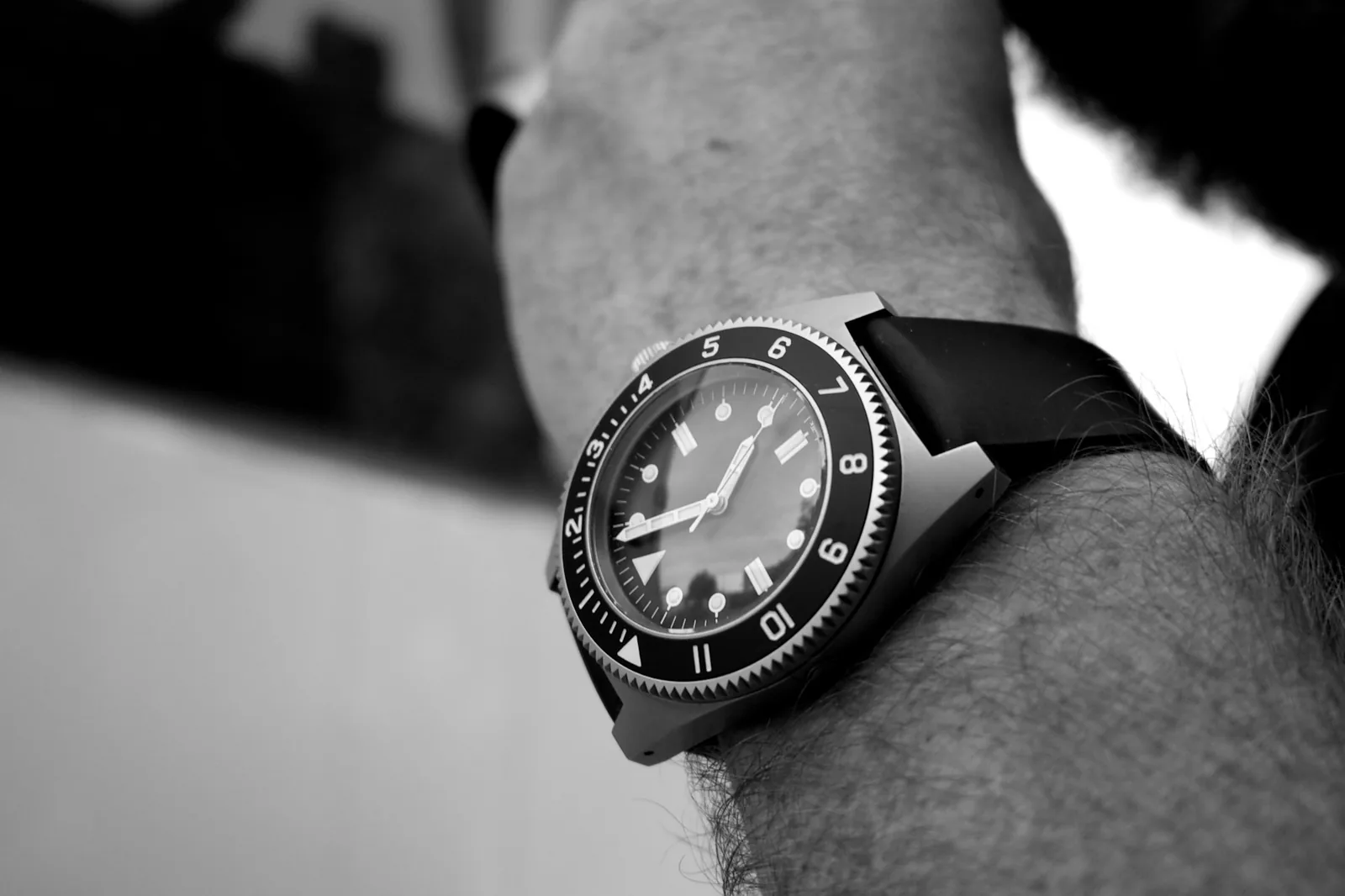
A quick way to sanity-check a listing
Before buying anything unseen, run these four checks against the numbers you wrote down.
- Is lug-to-lug less than the flat width of your wrist?
- Is thickness under 12mm, if you wear cuffs?
- Are the lugs curved or straight, judging from a side-on photograph?
- Is the diameter quoted with or without the crown?
If a listing will not tell you the lug-to-lug, print the case at actual size on paper and cut it out. It looks ridiculous and it works.
Frequently asked questions
How do I measure my wrist for a watch?
Wrap a soft tape just above the wrist bone and read the circumference in millimetres. Then look down at your wrist and measure the flat width across the top, which is the shelf the case actually has to sit on.
What size watch suits a small wrist?
Look for lug-to-lug under about 46mm and thickness under 12mm, and prefer curved lugs. Diameter matters less than either, which is why a well-proportioned 40mm watch can suit a wrist that a badly proportioned 38mm one does not.
What is lug-to-lug and why does it matter?
It is the distance from the tip of the upper lugs to the tip of the lower ones. It matters because it is the watch’s real footprint: exceed the flat of your wrist and the case rocks and overhangs, whatever the diameter says.
Should a watch be tight or loose?
Loose enough to slide a centimetre along your wrist, tight enough that it does not spin around. Too tight traps sweat against the skin; too loose lets the case slide over the wrist bone and knock.
Measure once, write the two numbers down, and carry them. Almost every sizing argument disappears the moment you compare lug-to-lug against the flat of your own wrist.