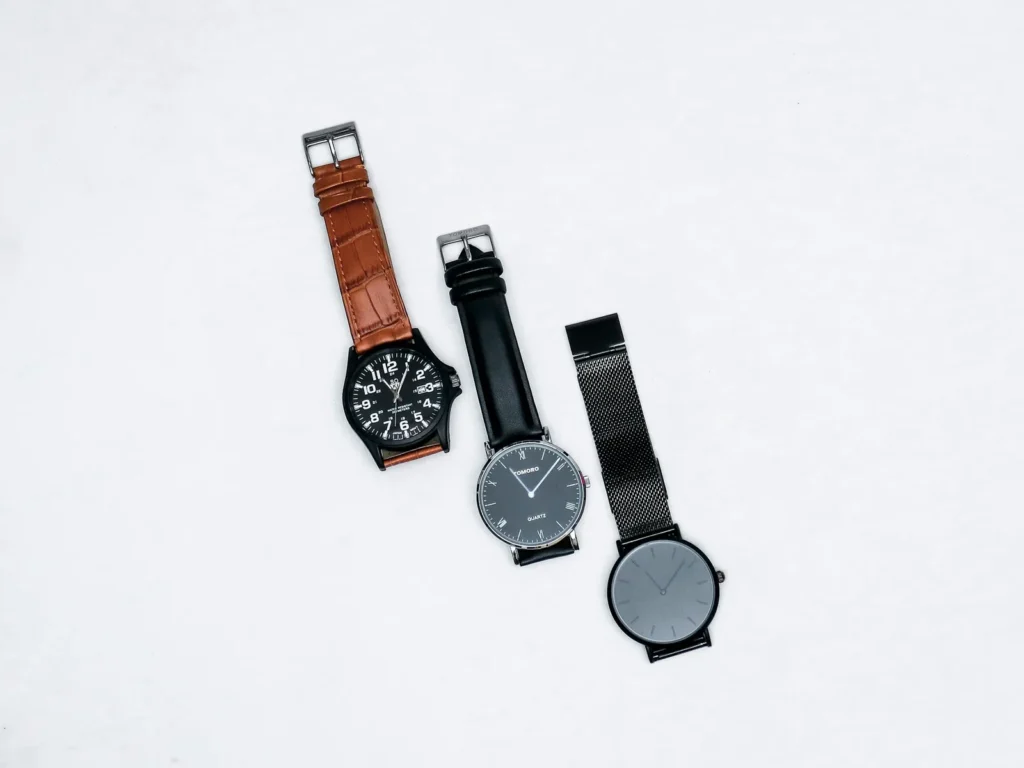
Every watch type is a solved problem wearing a name. A dive watch exists because a diver needed to time a decompression stop; a field watch because a soldier needed to read the time in bad light; a dress watch because a dinner jacket has a narrow cuff.
Once you know the problem each type solved, choosing between them stops being a matter of taste and becomes a matter of fit. Some of those problems are still yours. Most of them are not, which is fine — but it is worth knowing which is which.
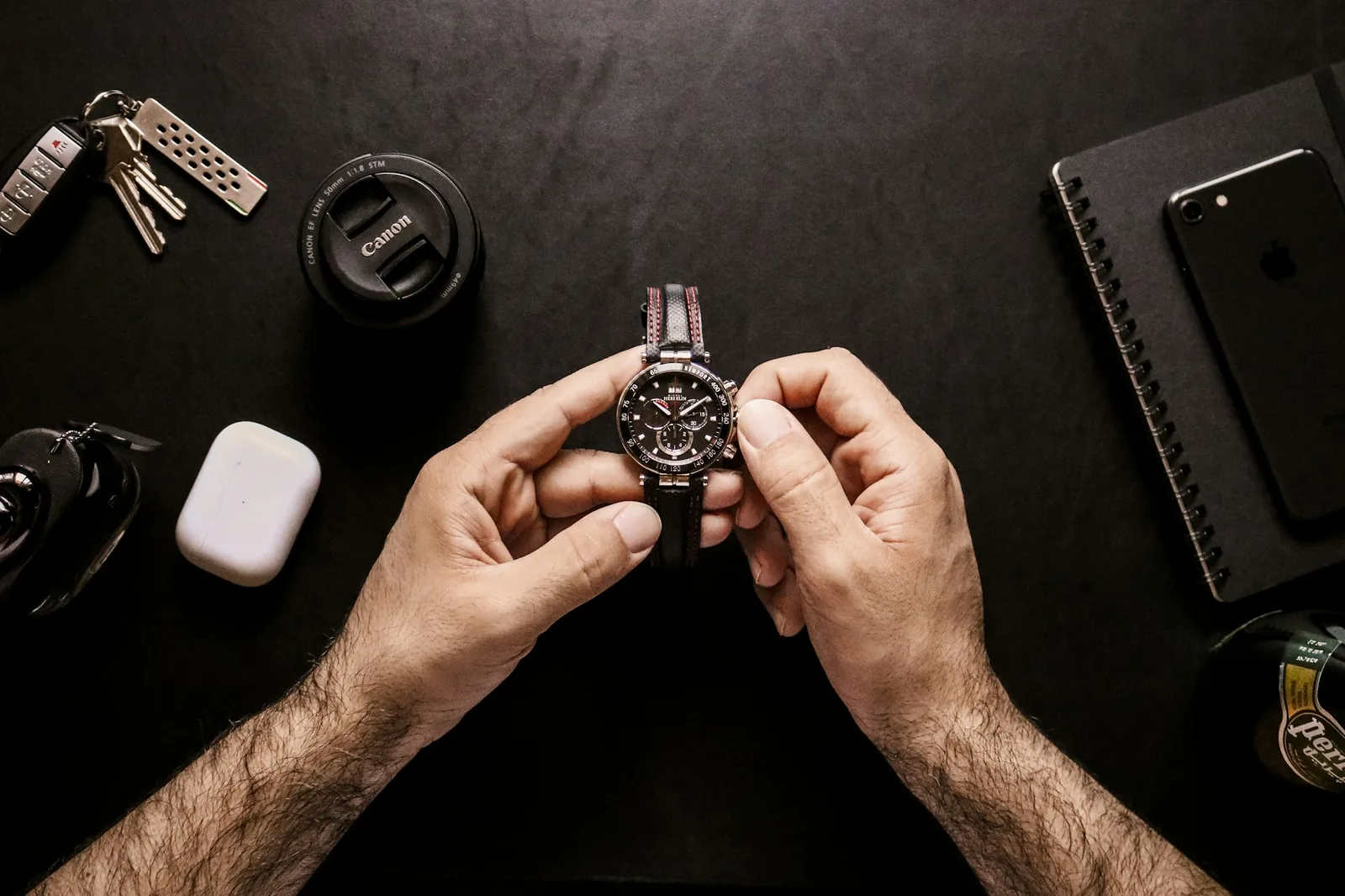
The types, and the problems they solved
Six categories cover most of what is sold, and the boundaries are softer than the marketing suggests.
| Type | Designed for | Recognise it by | Still useful for |
|---|---|---|---|
| Dive | Timing a dive underwater | Rotating bezel, heavy lume, thick case | Swimming, anything wet, hard wear |
| Field | Legibility in the dark and the mud | Plain dial, high contrast, modest size | Daily wear, small wrists |
| Dress | Sliding under a formal cuff | Thin case, small dial, leather strap | Formal wear, desk work |
| Pilot | Reading at a glance in a cockpit | Large dial, oversized numerals, long strap | Legibility, larger wrists |
| Chronograph | Timing an interval | Pushers, subdials, tachymeter scale | Anyone who actually times things |
| Digital | Alarms, timers and exact readings | LCD display, buttons instead of a crown | Sport, travel, absolute accuracy |
Dive watches
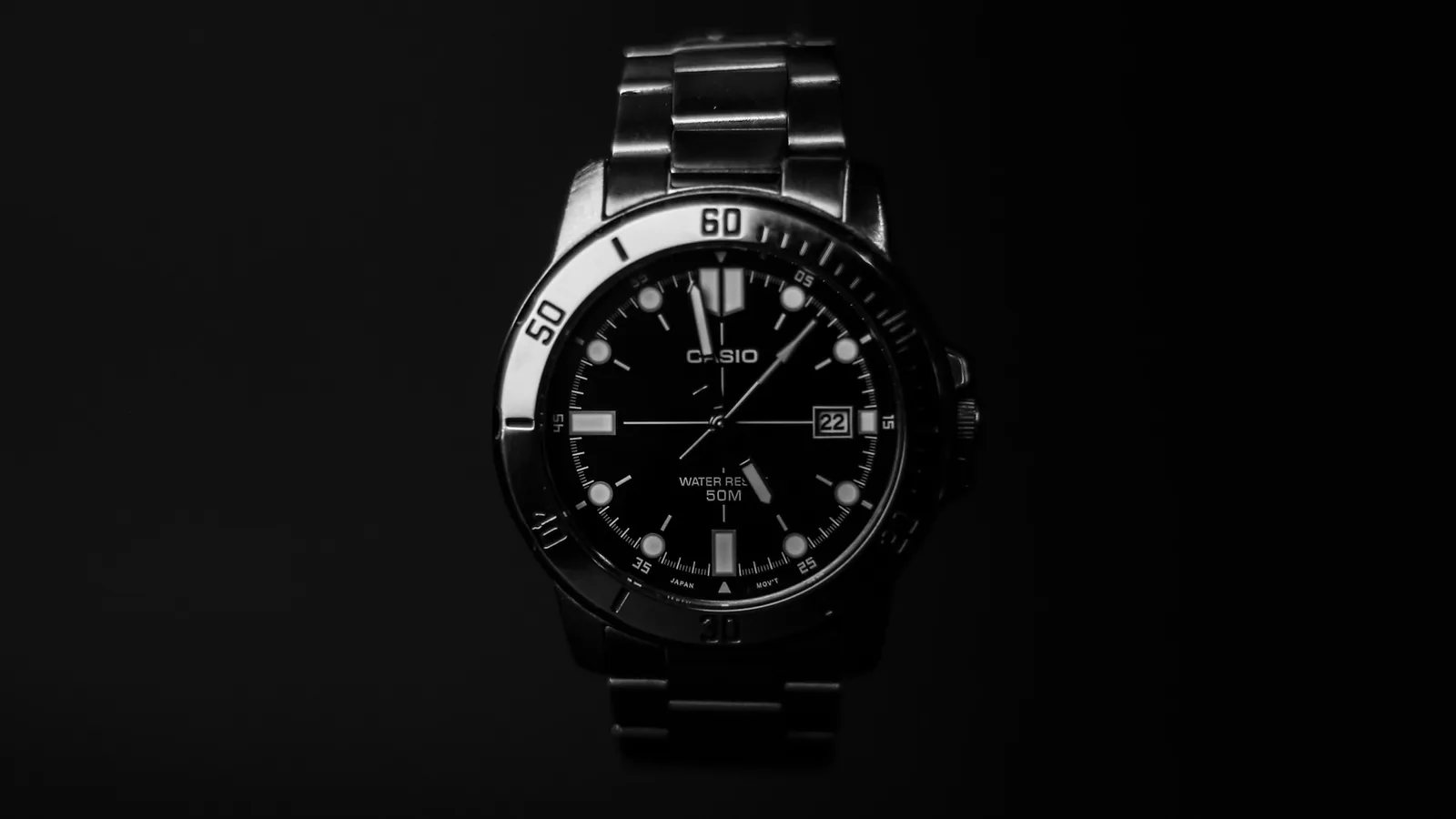
The rotating bezel is the whole point. You set the marker to the minute hand when you go in, and the elapsed time is then readable at a glance without arithmetic.
It only turns one way, and that is a safety feature rather than a manufacturing shortcut. A knock that turns the bezel can only make the elapsed time look longer, never shorter.
Everything else follows: thick crystal, screw-down crown, strong luminous material, and a case built to take pressure. That also makes it the most robust everyday watch most people can buy.
The trade is bulk. A dive watch is thick because it has to be, which is why the fit guide treats it as a special case. The archive’s dive watch listings show how the category was specified in the mid-2000s.
Field and pilot watches
Both are legibility-first designs, arrived at from opposite directions. The field watch solves for reading the time in poor light with tired eyes; the pilot watch solves for reading it in a fraction of a second while doing something else.
Field watches are consequently small, plain and high-contrast. That combination has aged extremely well, and it is why a 36mm field watch looks current in a way that most 2000s designs do not.
Pilot watches went the other way: big dials, oversized numerals, and long straps designed to go over a flight jacket. The size that made sense over a sleeve is a lot on a bare wrist.
If you want one watch for everything and have a smaller wrist, a field watch is the most reliable answer in this whole list.
Dress watches
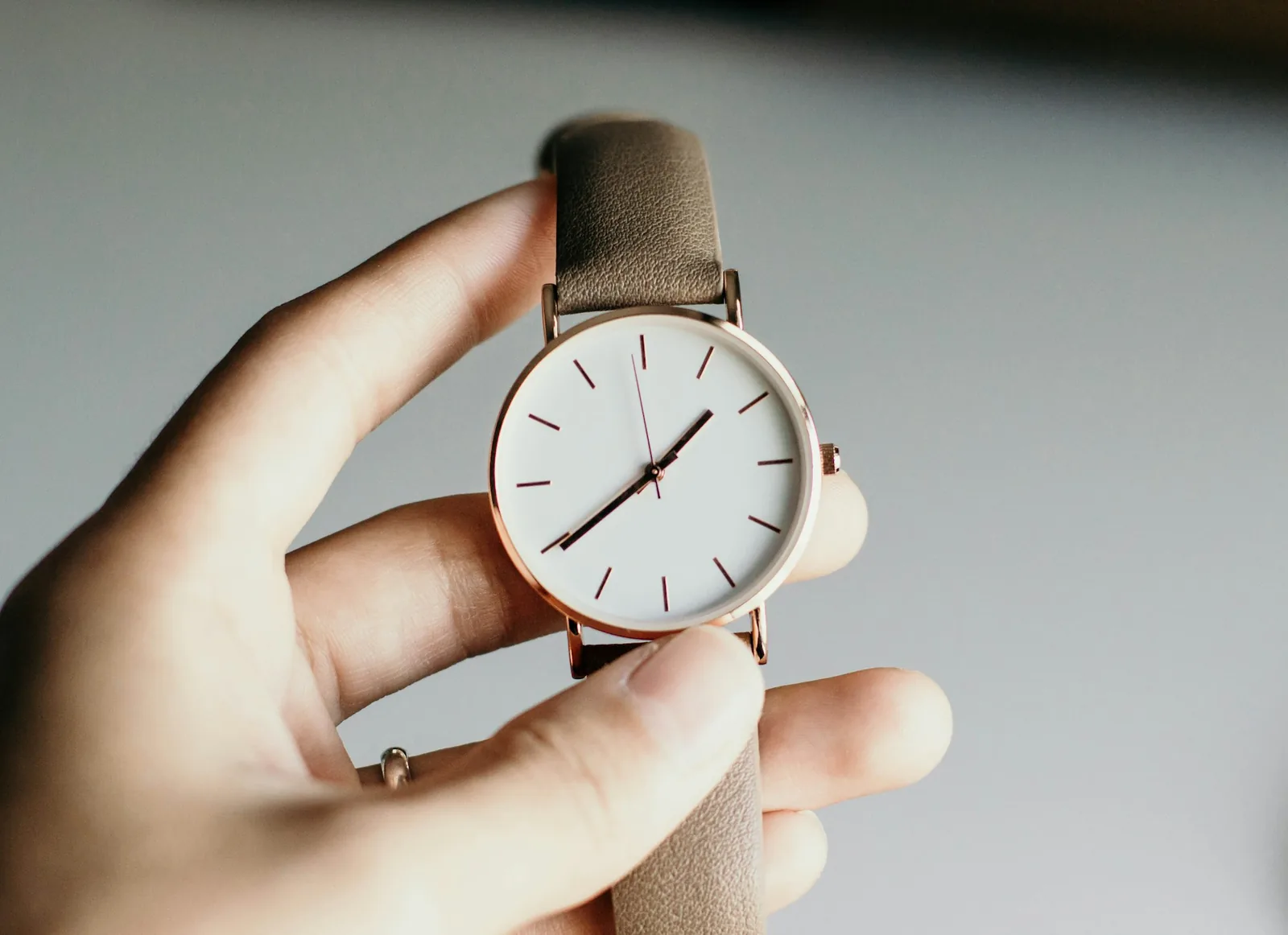
A dress watch is defined by what it leaves out. No bezel, no subdials, no lume, minimal text — because the cuff of a formal shirt is narrow and anything thick will not pass under it.
Thinness is the real specification. Under 8mm is a genuine dress watch; anything over 11mm is a smart watch pretending, and it will catch on your cuff all evening.
The corollary is fragility. Thin cases mean small gaskets and often no screw-down crown, so a dress watch usually carries a low water-resistance rating and should be treated accordingly.
Chronographs
A chronograph is a stopwatch built into a watch, and the only type on this list that adds a genuine function to the dial rather than a design language.
The subdials count elapsed minutes and hours; the central sweep hand counts seconds. A tachymeter scale on the bezel converts elapsed seconds into a rate, which is useful roughly once a decade.
They are the most-bought complication and the least-used one. Before buying, be honest about whether you have ever timed anything with a watch rather than a phone.
If the answer is yes, they are excellent. The chronograph entries in the archive run to well over a hundred models, which says something about how popular the type was.
Digital, and why it never went away
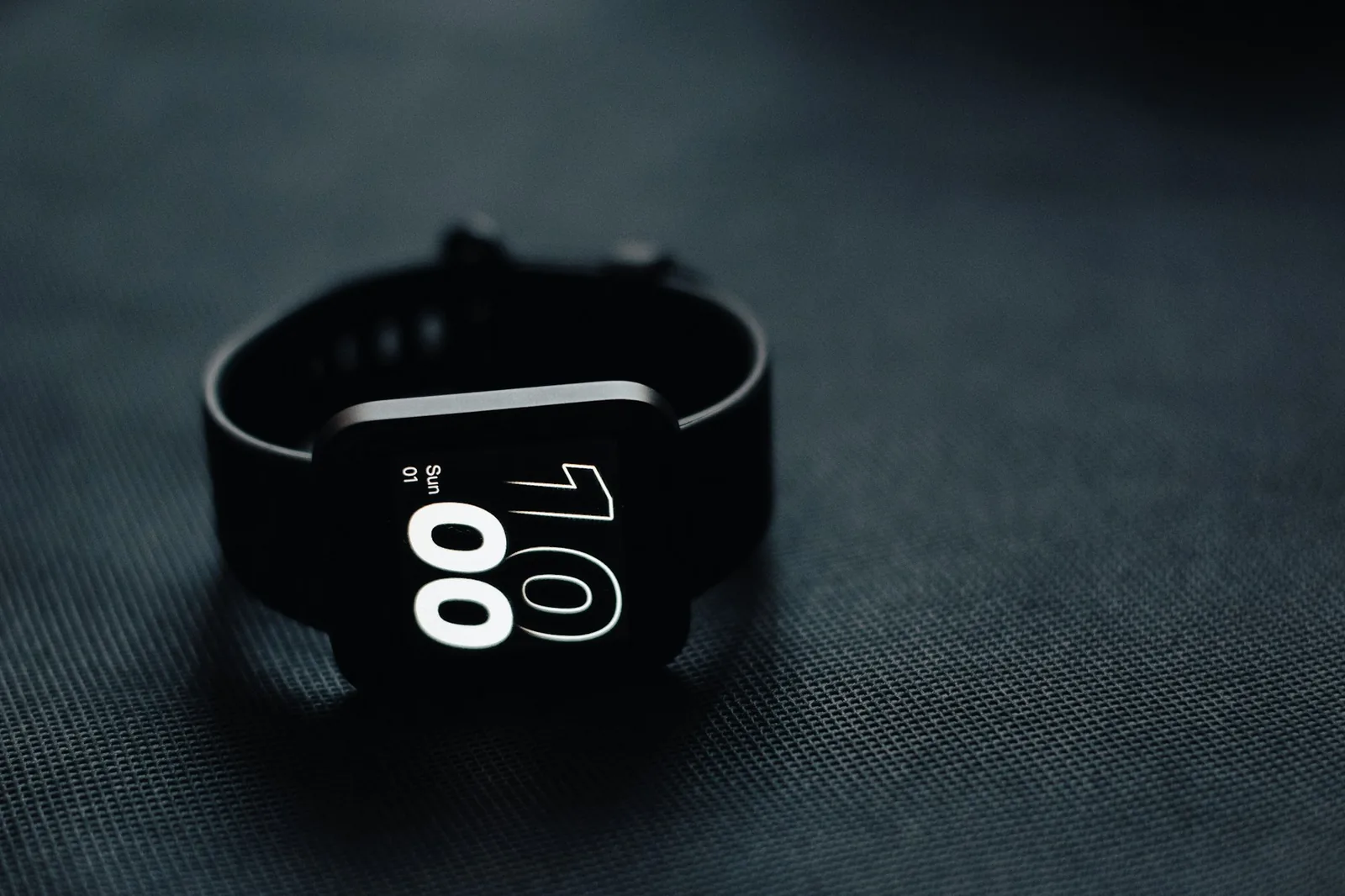
Digital watches are treated as a joke or a nostalgia purchase, and both readings miss what they are for. A digital display can show an alarm, a timer, a second time zone and a date at once without a single subdial.
They are also the most accurate watches most people will own, and the most durable. A resin-cased digital watch survives impacts that would stop a mechanical movement outright.
The trade is that they look like what they are. A digital watch does not pretend to be jewellery, which is either the point or the problem depending on the wearer.
The archive records a substantial number of digital models, along with the databank and calculator variants that were their high-water mark. They are listed alongside everything else in the brand index.
Where the types came from
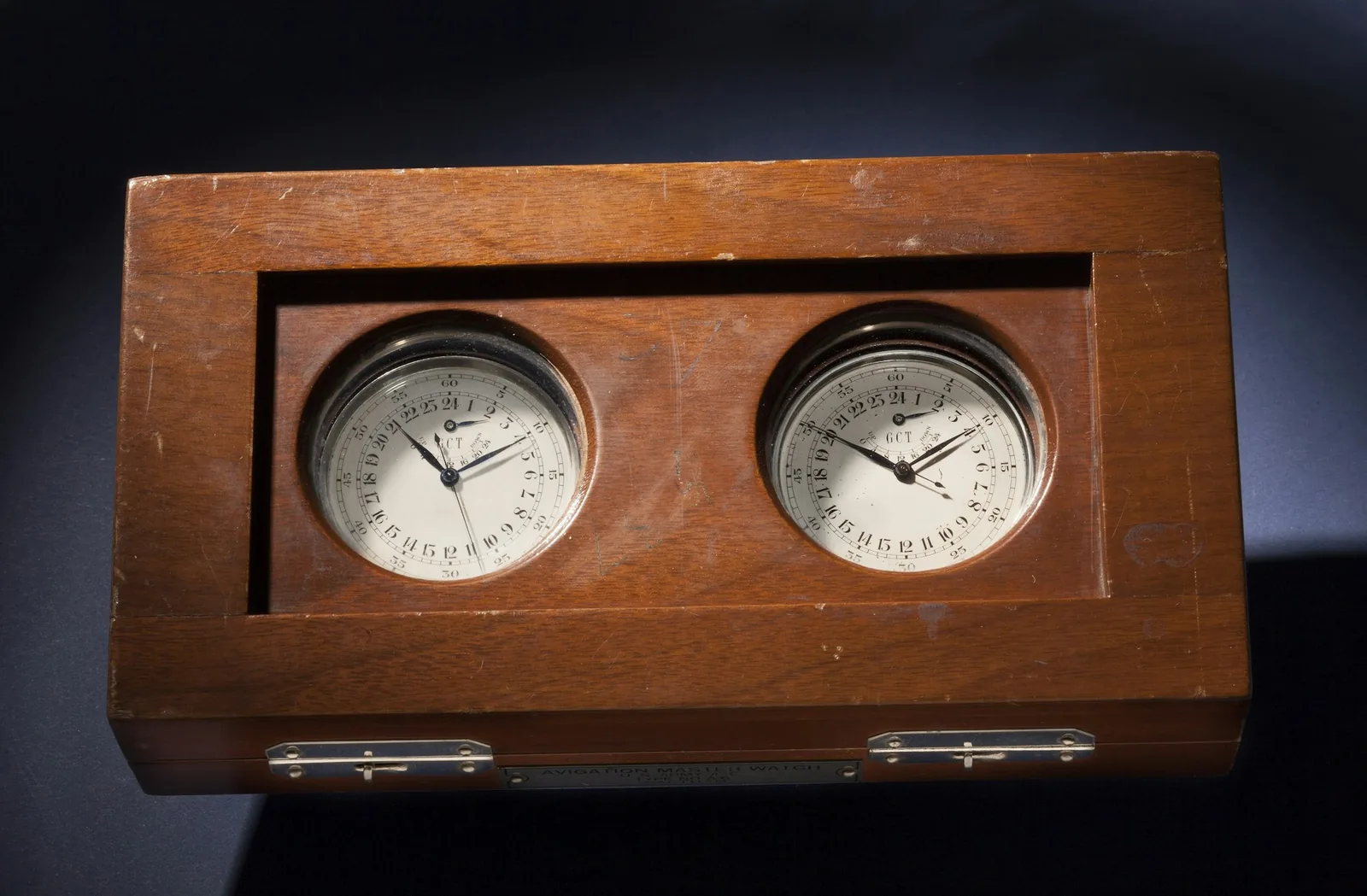
Almost every category on this list descends from an instrument rather than a fashion. The marine chronometer — the sea clock developed to solve the problem of finding longitude — is the ancestor of the whole idea that a portable timepiece could be trusted.
The Royal Museums Greenwich account of Harrison’s clocks is the clearest telling of that story. It is worth reading because it explains why accuracy, robustness and legibility became the three axes watches are still judged on.
The types then split as the jobs split. Timing a dive, reading a heading, checking a lap: each produced its own dial, and those dials outlived the jobs.
You can see the whole taxonomy as this archive recorded it in the index of every specification, which lists twenty-seven attributes across the catalogue.
The boundaries blur in practice, and that is not a failure of the taxonomy. A field watch with 200m of water resistance is a perfectly sensible object, and so is a chronograph on a dive case.
What matters is which constraint the designer treated as binding. A watch that is thin, legible, waterproof and cheap does not exist, because those four pull in different directions.
Choosing between them
Work backwards from your week rather than forwards from the styles.
- If it will get wet regularly, start with dive and stop worrying about the rest.
- If you wear formal clothes often, thinness beats every other consideration.
- If legibility matters and your wrist is small, look at field watches first.
- If you genuinely time things, a chronograph earns its bulk. If not, it is decoration.
Most people end up with a field or dive watch as the daily piece, because those two solve for durability and legibility, which is what daily wear actually demands. The buying guide covers the decision order once the type is settled.
Frequently asked questions
What is a field watch?
A plain, legible, modestly sized watch descended from military designs. High contrast dial, clear numerals, usually 34 to 38mm, and no bezel. It is the most versatile type for daily wear and the kindest to a smaller wrist.
What is the difference between a dive watch and a sports watch?
A dive watch has a specific set of features: a unidirectional rotating bezel, substantial water resistance, a screw-down crown and strong luminous markers. “Sports watch” is a looser description that may include none of those.
Can a dress watch be worn every day?
It can, but it will not enjoy it. Low water resistance, a soft crystal and a leather strap all suit occasional wear better than daily knocks, rain and sweat.
Which watch type is best for a first watch?
A field watch or a modest dive watch. Both are robust, both are legible, both look right with almost anything, and neither depends on a complication you may never use.
Pick the type by the problem you actually have, then let size, movement and strap follow from it. That order produces a watch that gets worn rather than admired.