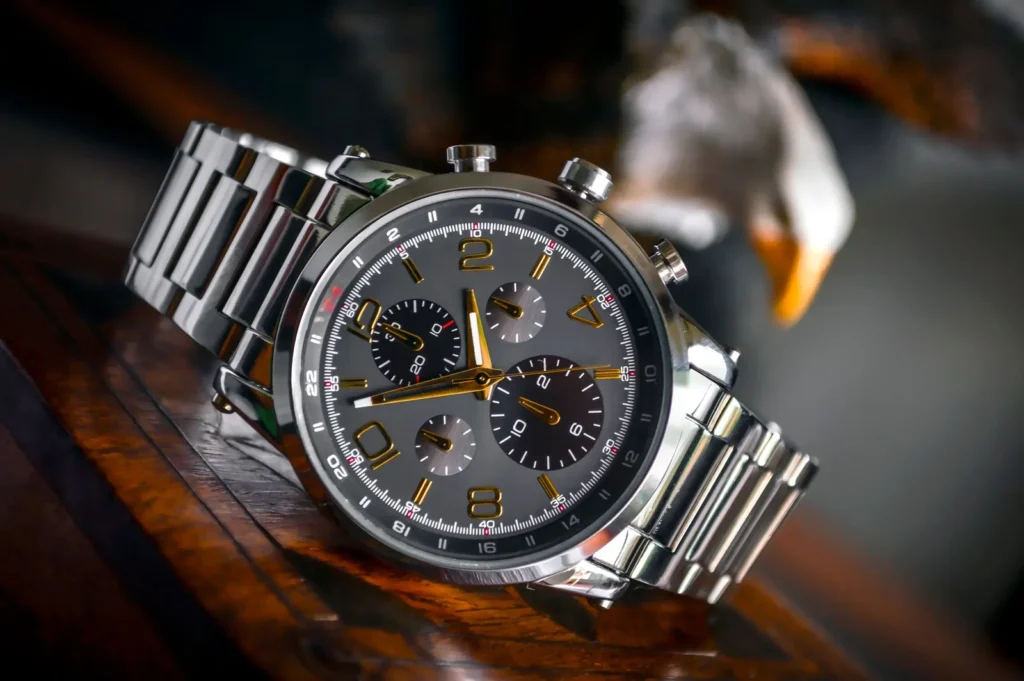
In an affordable watch, most of the price is in four parts: the movement, the crystal, the case finishing and the bracelet. Everything else is either free to do well or so cheap that nobody saves money by doing it badly.
Knowing which four means you can look at two watches at the same price and tell which one spent its budget sensibly. That is a more useful skill than any list of recommendations, because lists go out of date and this does not.
The movement is the biggest single line
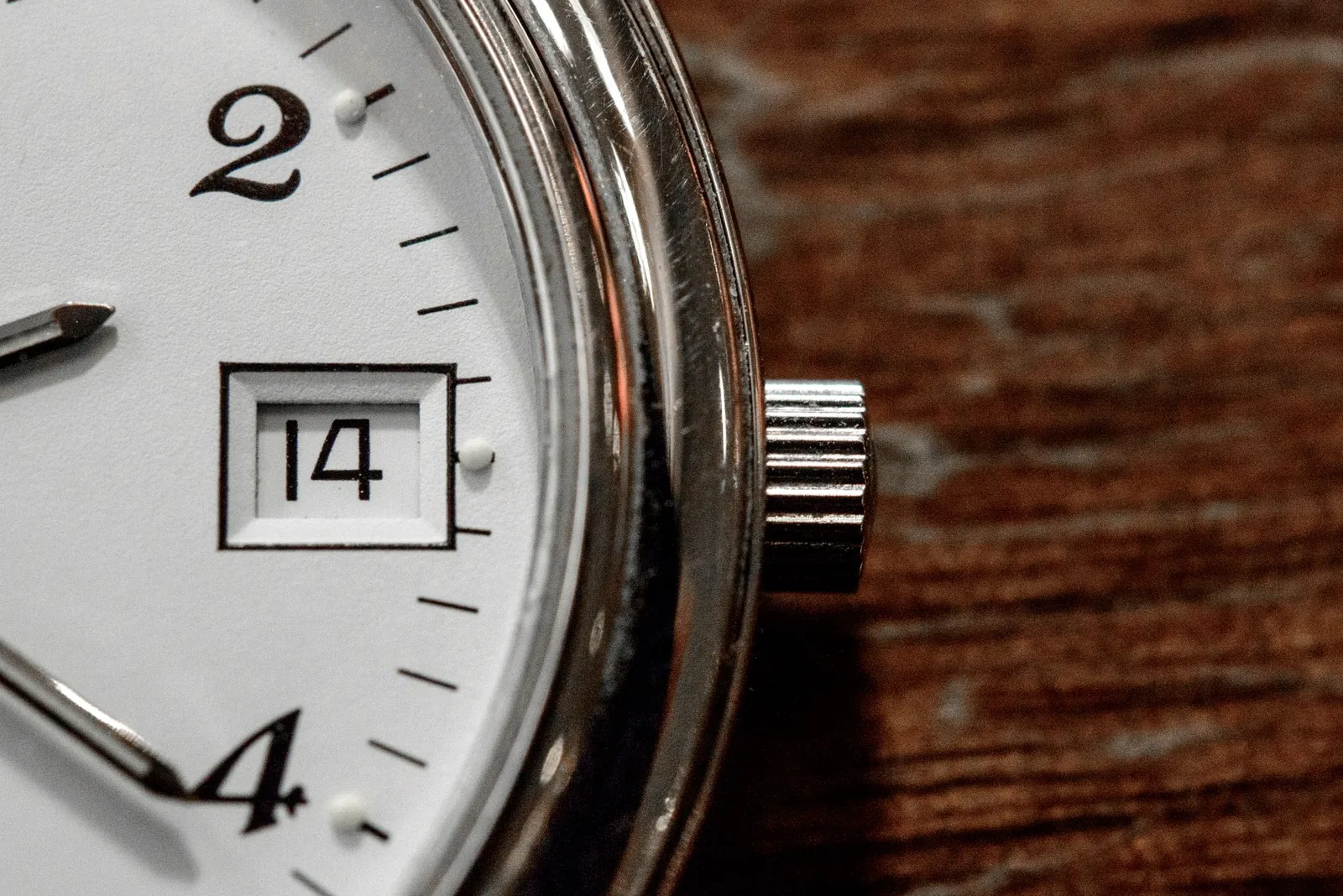
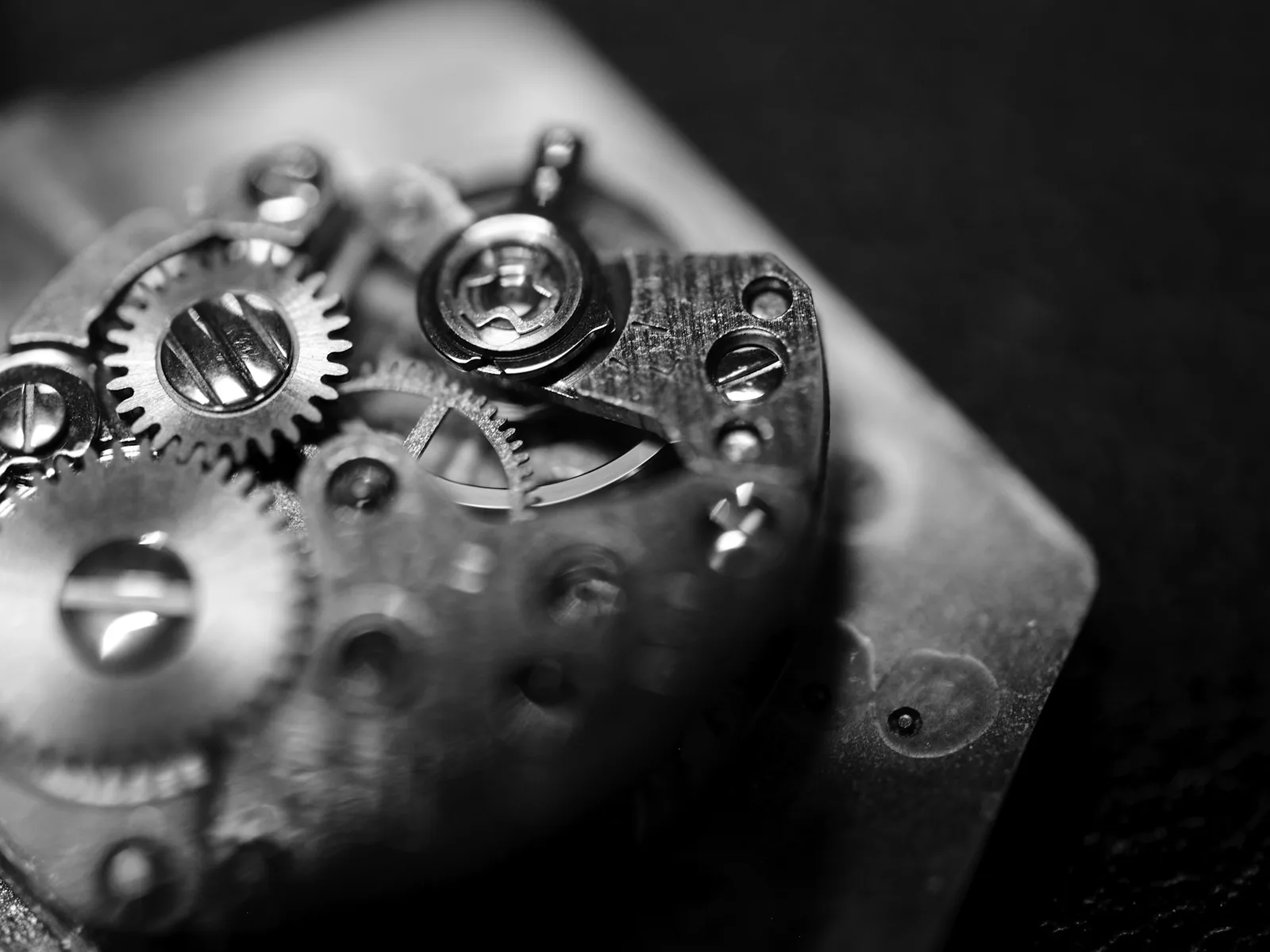
A mechanical movement is dozens of machined parts assembled and regulated by hand or by machine, and it dominates the cost of anything under a few hundred pounds. A quartz movement is a fraction of that, which is why quartz watches at the same price can spend more everywhere else.
That is the trade nobody explains clearly. At £200 you can have a mechanical watch with a mineral crystal and a folded-link bracelet, or a quartz watch with a sapphire crystal and a solid one.
Neither is wrong. But if you buy mechanical at the bottom of the market, you are choosing to spend most of the budget on the engine, and the rest of the watch will show it.
The comparison of watch movement types covers which engine suits which use. This guide is only about what each one does to the rest of the budget.
What to pay for, and what is free
Some quality costs real money to deliver. Some is a decision the designer made at no cost at all, which is why a cheap watch with good taste can outclass an expensive one without it.
| Component | Costs real money | What to look for |
|---|---|---|
| Movement | Yes, the most | A widely used calibre with parts availability |
| Crystal | Yes | Sapphire over mineral; hardened mineral is a middle ground |
| Bracelet | Yes | Solid links and solid end links, screwed rather than pinned |
| Case finishing | Yes | Crisp edges between brushed and polished surfaces |
| Dial printing | Barely | Sharp, even text; no bleeding at the edges of markers |
| Proportions | Nothing | Case, dial and hands in scale with each other |
| Restraint | Nothing | No decorative text, no unnecessary chrome |
The bottom three rows are where affordable watches are won and lost. A dial with four lines of text on it did not cost more to print than a dial with one, and it will date faster.
The crystal is worth more than it looks
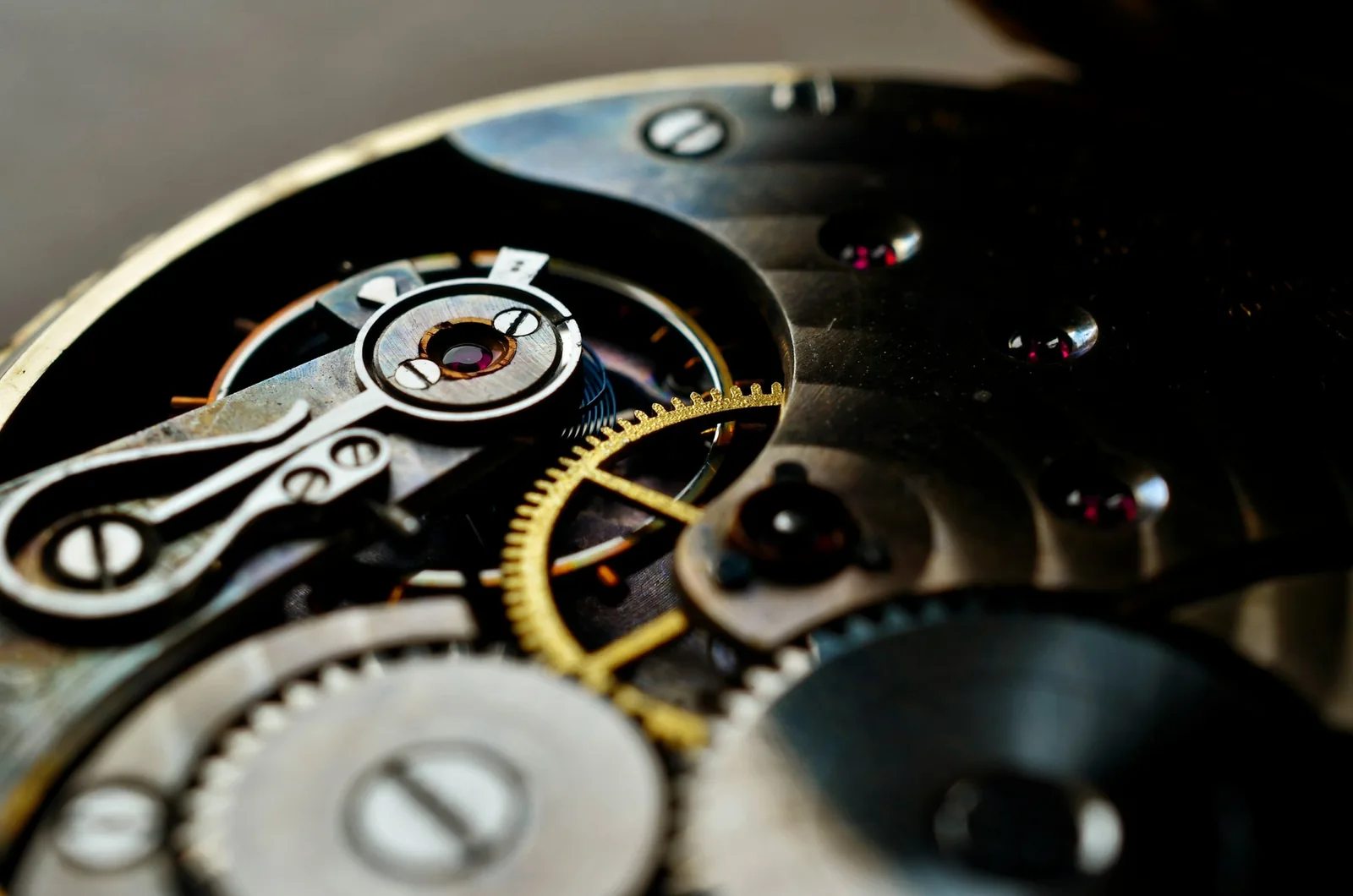
The crystal is the part you look through every time you check the time, and it is the part most likely to ruin the watch cosmetically. Mineral glass scratches; sapphire mostly does not.
A scratched crystal cannot be polished out the way a steel case can. On a watch you plan to wear daily for years, sapphire is the upgrade with the most visible return.
Acrylic is the exception worth knowing. It scratches easily but polishes back with a cloth and a little compound, which is why plenty of older watches still look sharp.
Bracelets are where corners get cut
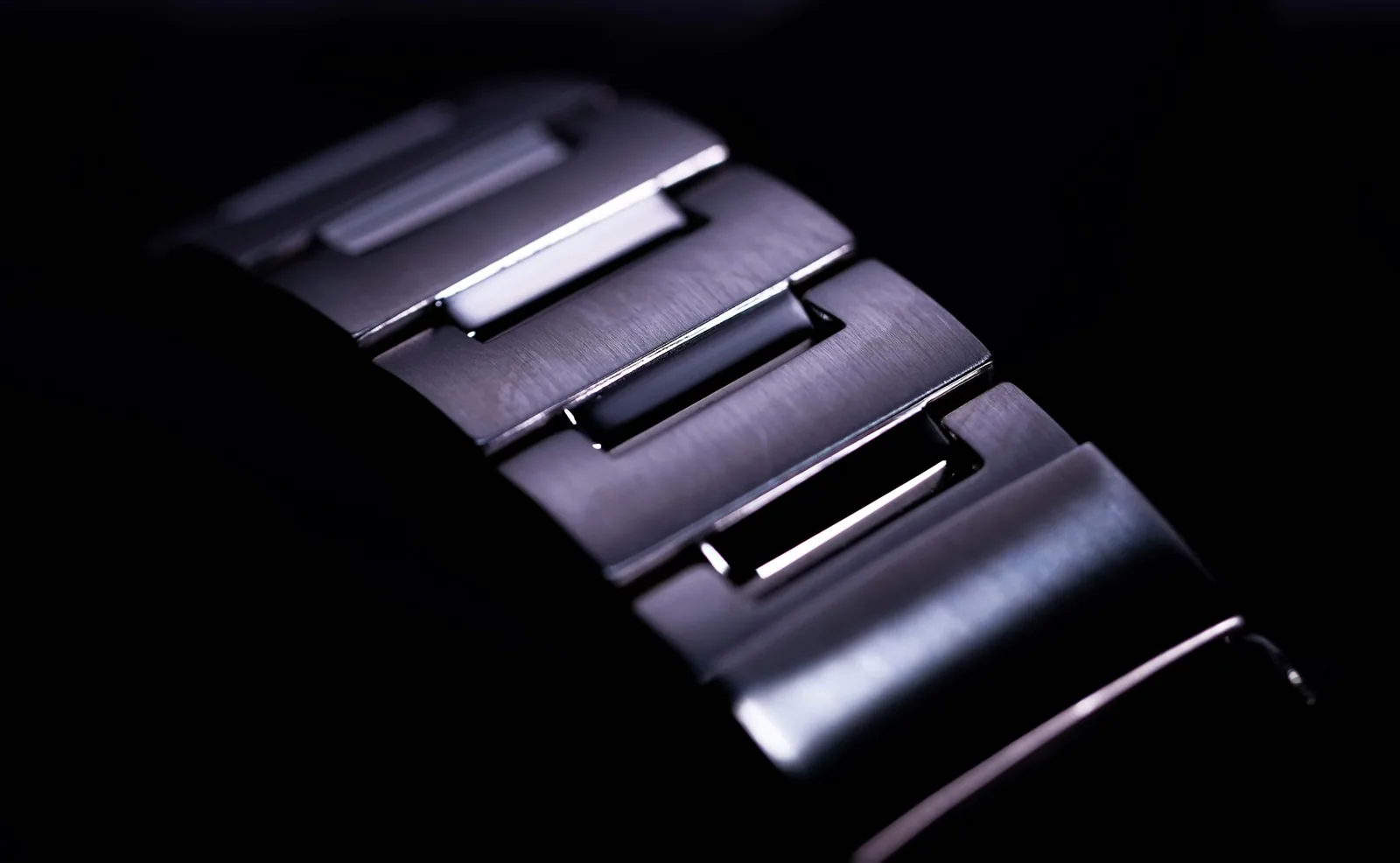
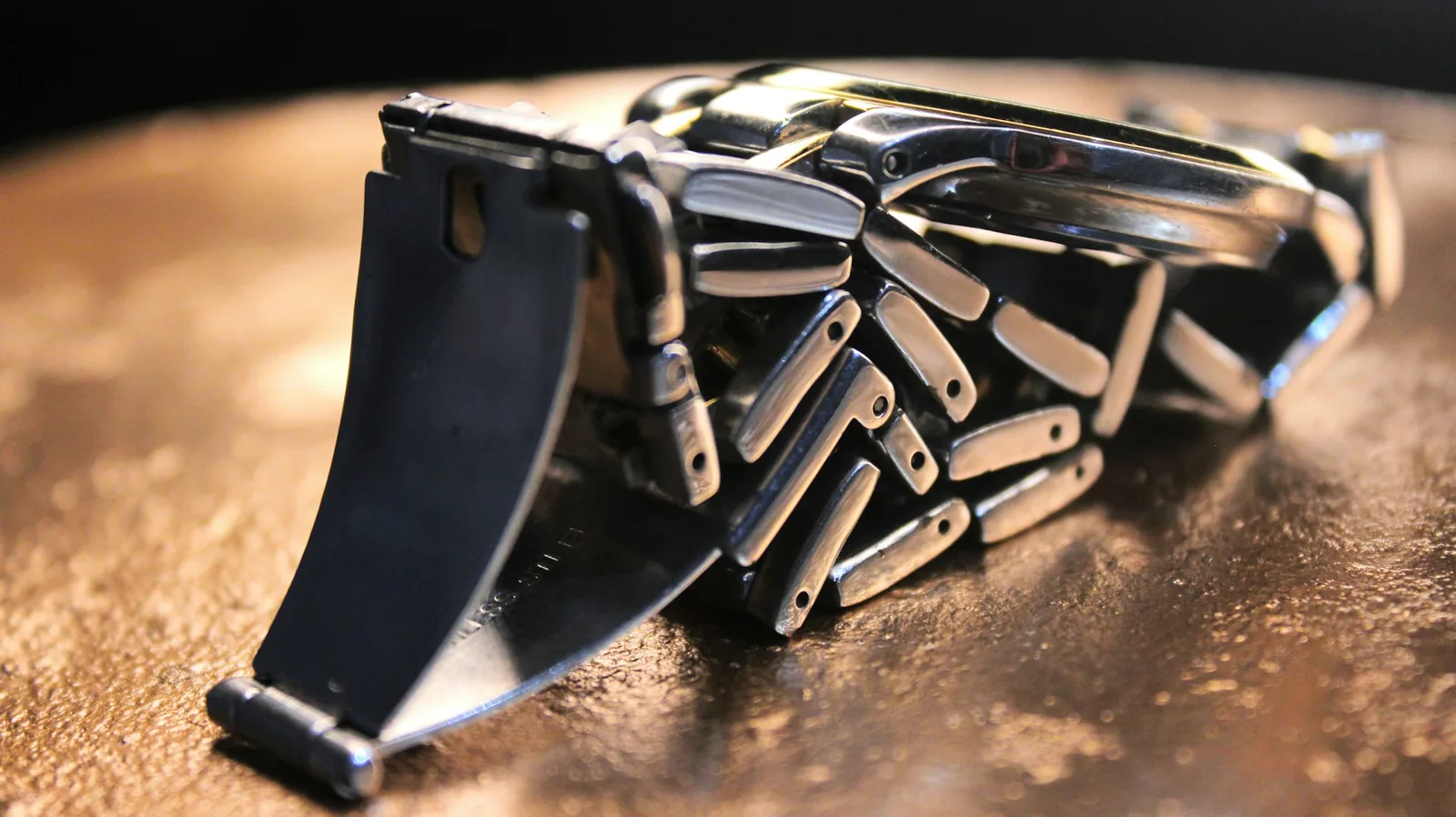
A bracelet is a lot of small machined parts, so it is expensive to do properly and easy to do cheaply. Hollow end links, folded links and pins held by friction are the usual economies.
You can feel the difference before you can see it. A good bracelet has weight without rattle, and the links articulate smoothly instead of clacking.
The useful part is that this is fixable. A mediocre bracelet is the one flaw you can spend fifty pounds to remove, which is covered in the guide to choosing and fitting watch straps.
What the archive shows about lasting value
This site preserves a full retail catalogue from 2006 and 2007, with the prices the shop actually charged. It is an unusually honest test of what ages well, because nobody was curating it for posterity.
The pattern is consistent. Plain three-hand watches from that catalogue still look like watches; the heavily styled pieces of that season look firmly of it.
Price was a poor predictor either way. Some of the cheapest entries have aged best, because restraint costs nothing and fashion is expensive to get wrong.
You can browse the whole thing by maker in the index of watch brands, or by specification through the list of every specification recorded.
The parts that fail first
Cost-cutting shows up over time rather than in the shop, and it shows up in a predictable order. Knowing the order tells you which economies you can accept.
Plated cases go first. A thin gold or black coating on steel wears through at the lug edges and the clasp within a couple of years of daily wear, and it cannot be repaired without re-plating the whole case.
Lume goes next, or rather it was never there. Painted markers that glow for ten minutes and then stop are not a defect but they are not useful either, and the difference between that and a proper application is real money.
Gaskets are the quiet one. They perish whether the watch is worn or not, which is why an unworn watch in a drawer is no more waterproof after five years than a worn one — a point the guide to water-resistance ratings takes further.
Movements, oddly, tend to outlast all of that. A basic mechanical calibre neglected for a decade will usually still run, badly, long after the case it sits in has stopped looking presentable.
Buying well at a low price
A short checklist covers most of it, and none of it requires knowing brands.
- Decide quartz or mechanical first, because it sets what the rest of the money can buy.
- Check the crystal material before anything else on the specification sheet.
- Look at the case from an angle to see whether the brushed and polished surfaces meet cleanly.
- Count the lines of text on the dial. Fewer is almost always better.
- Assume the strap is a placeholder and budget twenty pounds to replace it.
The Fondation de la Haute Horlogerie encyclopaedia is a good reference when a specification sheet uses a term you do not recognise.
Two watches at the same price
Put the checklist to work. Imagine two steel watches at the same money, one mechanical and one quartz, both three-hand, both 39mm.
The mechanical one has a mineral crystal, a folded-link bracelet with pinned links, and a modest 40-hour power reserve. The quartz one has sapphire, a solid bracelet with screwed links, and a rated battery life of three years.
Neither is the better watch in the abstract. The mechanical one is more interesting to own and more expensive to keep; the quartz one will look newer for longer and ask nothing of you.
The decision comes down to a question about you rather than about them: do you want a machine you maintain, or an instrument you forget about? The buying guide works through that choice in more detail, and the watch finder will filter the archive by movement if you want to see how the two families were priced in practice.
Frequently asked questions
What is the best affordable watch?
There is no single answer, and any guide that gives one is guessing at your wrist and your week. The better question is which compromises you can live with, since every watch under a few hundred pounds is making three or four of them.
Are cheap automatic watches worth buying?
They can be, if you accept that the budget went into the movement. Expect a mineral crystal and a modest bracelet, and expect to pay for a service eventually that may cost more than the watch.
Is sapphire crystal worth the extra money?
On a watch you will wear daily, yes. It is the single upgrade whose absence you will notice most, because a scratched crystal sits directly between you and the dial and cannot be polished out.
Does a higher price mean better accuracy?
Not reliably. An inexpensive quartz watch will out-keep almost any mechanical watch at any price. Price buys finishing, materials and repairability far more than it buys timekeeping.
Work out which of the four expensive parts matters most for how you will wear the watch, and let the other three be ordinary. That is how a modest budget buys something that still looks right in ten years.