
The honest comparison is short. Quartz keeps better time and costs almost nothing to run; mechanical is more involving, more repairable and more expensive to keep; solar removes the battery change; and none of them is the correct answer for everybody.
What follows is the head-to-head in the terms that actually matter after the first month of ownership — the ones that decide whether a watch stays on your wrist or goes in a drawer.
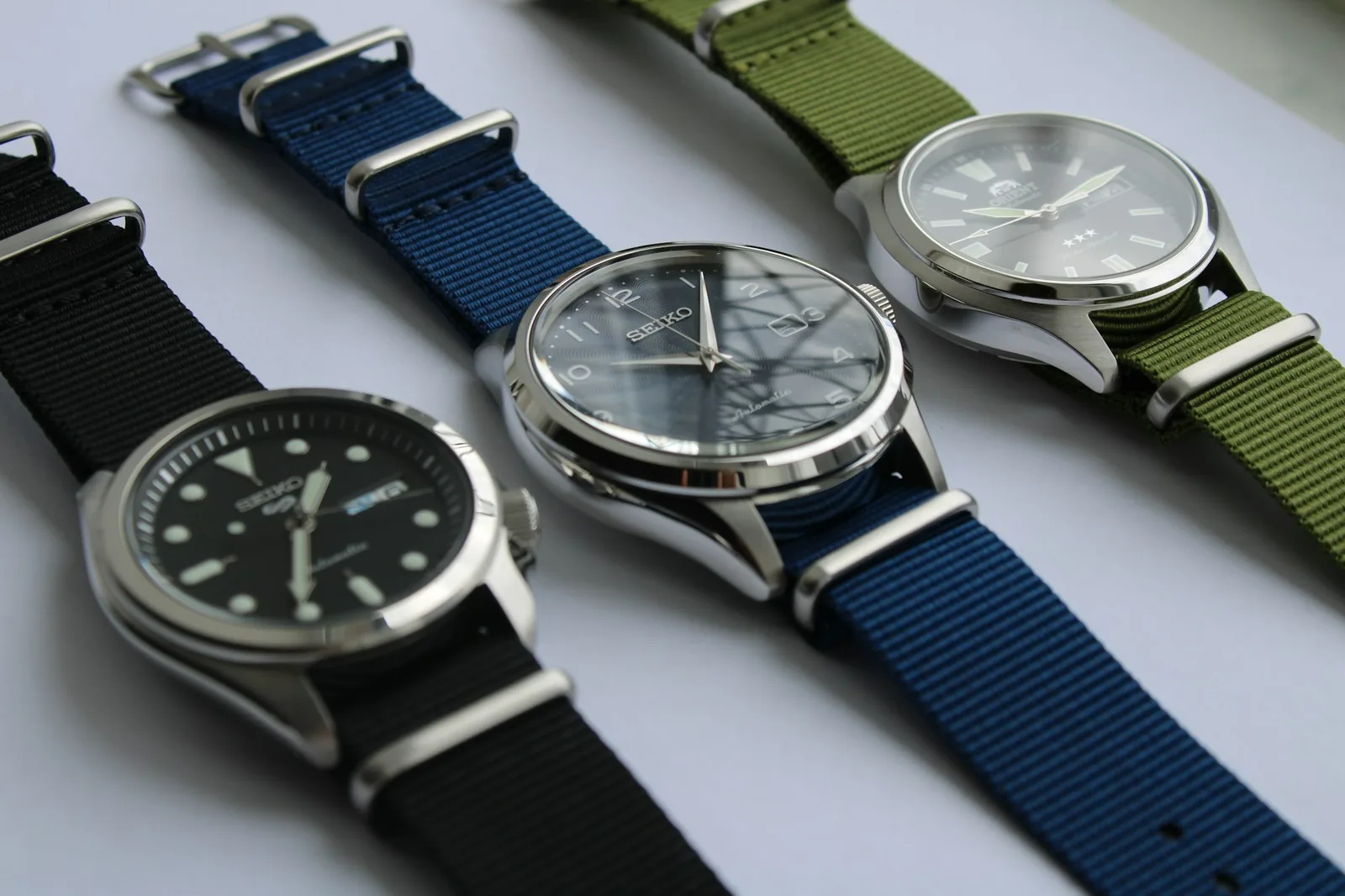
Automatic against quartz
This is the comparison everyone starts with, and it is usually framed as craft against convenience. That framing is not wrong, but it hides the practical points.
An automatic watch is a machine you keep running. Wear it most days and it looks after itself; leave it a weekend and it stops, and you reset the time and probably the date.
A quartz watch is an appliance. It runs whether you wear it or not, it is right to within a few seconds a month, and it asks for a battery every two to five years.
The cost picture inverts over time. A quartz watch is cheaper to buy at the same level of finishing and far cheaper to keep, while an automatic can be serviced indefinitely and will outlive the electronics.
| Point | Automatic | Quartz |
|---|---|---|
| Accuracy | Around 5 to 15 seconds a day | Around 15 seconds a month |
| If you do not wear it | Stops in a day or two | Keeps running for years |
| Upkeep | Service every 3 to 5 years | Battery every 2 to 5 years |
| Thickness | Thicker, because of the rotor | Can be very thin |
| Shock and magnets | Sensitive to both | Largely indifferent |
| Lifespan | Indefinite with servicing | Limited by parts availability |
Why quartz is more accurate
It is not a question of quality or price. It is a question of what is doing the counting.
A mechanical watch counts the swings of a metal wheel, and that wheel is subject to gravity, temperature, magnetism and the falling torque of an unwinding spring. A quartz watch counts the vibrations of a crystal cut to oscillate at 32,768 times a second.
The crystal is far more stable and far less bothered by the world around it. The principle is the same one that underlies national time standards, described by the NIST Time and Frequency Division, only at a much cruder level of precision.
This is why an inexpensive quartz watch out-keeps almost any mechanical watch at any price. Nobody buys a mechanical watch for accuracy, and anyone selling one on that basis is not being straight with you.
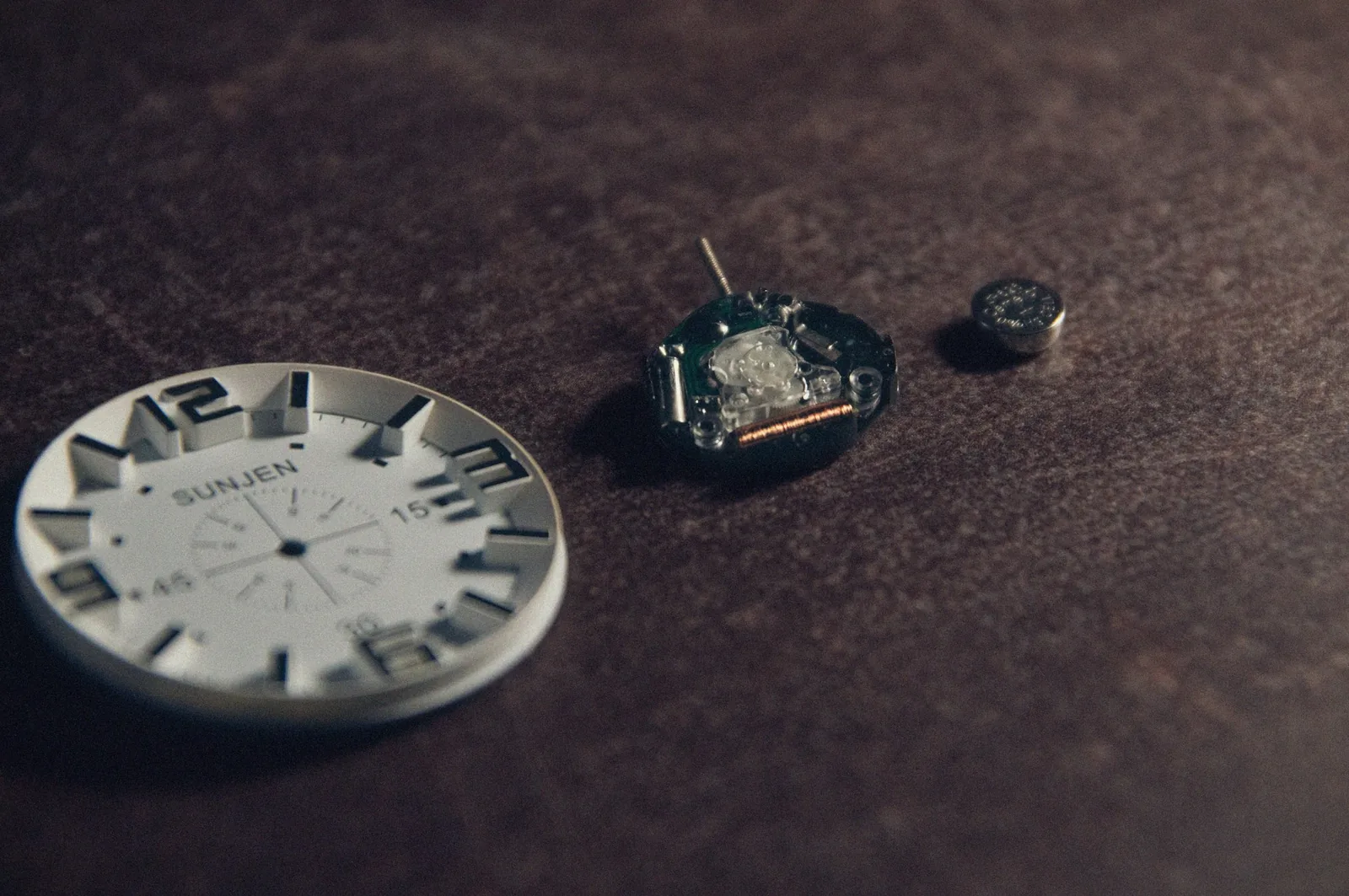
Solar against a conventional battery
Solar quartz puts a light-sensitive cell under the dial and a rechargeable cell behind it. Ordinary room light keeps it topped up, and a full charge typically lasts months in the dark.
The obvious advantage is never opening the case for a battery. Every case opening is a chance for a gasket to be pinched or a seal to be left unreplaced, so fewer openings means better long-term water resistance.
The catch is that the rechargeable cell is a consumable too, just a slow one. It will eventually hold less charge and need replacing, typically after a decade or more.
For a watch that lives on a desk under a lamp, solar is close to maintenance-free. For one kept in a drawer between rare outings, it is no better than an ordinary battery.
Radio-controlled and connected watches
A radio-controlled quartz watch receives a time signal from a national transmitter and corrects itself, usually overnight. Where the signal reaches, the watch is effectively never wrong.
Reception is the limitation. These watches depend on being within range of a transmitter and on being left somewhere the signal can reach, which a bedside table usually is and a basement is not.
Connected watches take the same idea over Bluetooth from a phone, which removes the range problem and adds a dependency on an app that may not be supported in ten years. The archive here records a number of atomic-timekeeping models from the 2000s, listed under the specifications index.
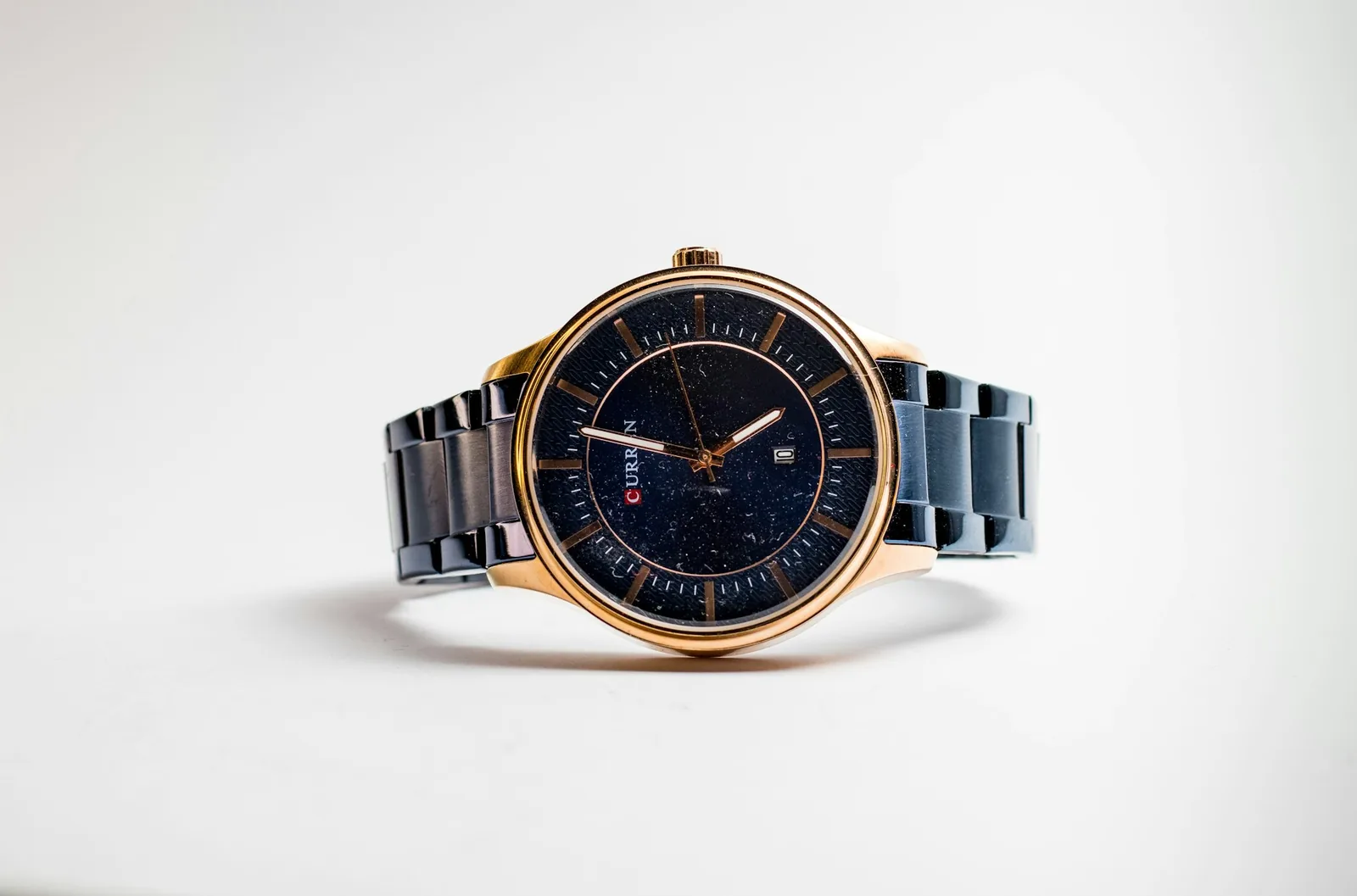
Mechanical against mechanical
The comparison people forget is between mechanical movements themselves, where the differences are real but rarely advertised clearly.
A movement with a longer power reserve survives a weekend off the wrist. One with a hacking seconds hand — the seconds stop when you pull the crown — can be set to the second, and one without cannot.
Hand-winding is not universal on automatics. Some rotor-only movements cannot be wound at the crown at all, which means starting a stopped watch involves shaking it.
And parts availability matters more than finishing for anything you intend to keep. A widely used calibre can be serviced anywhere for decades; an in-house movement from a small maker may not be, which is worth weighing in the value assessment.

Which comparison actually applies to you
Rather than arguing the general case, answer three questions about your own week.
- How many days in seven will this watch be on your wrist? Fewer than four, and an automatic will spend most of its life stopped.
- How much does being a minute out bother you? If the answer is “a lot”, buy quartz and be happy.
- Do you want to own a machine or use an instrument? Neither answer is wrong, but they lead to different watches.
Most people who rotate watches end up with quartz for the ones they wear rarely and mechanical for the daily piece. That is a sensible conclusion rather than a compromise.

Accuracy in practice, not on paper
Quoted figures are laboratory numbers. What you experience is different, because a watch on a wrist lives at body temperature in one or two positions for most of the day.
A mechanical watch rated at plus or minus ten seconds a day will often settle to a consistent gain or loss once it learns your habits, and a consistent five seconds fast is easy to live with. An erratic watch that gains one day and loses the next is far more annoying at the same average.
Quartz drifts too, but predictably and slowly. A watch running fifteen seconds a month fast needs correcting three or four times a year, which most people do without noticing.
If your watch has suddenly changed its behaviour rather than drifting steadily, that is a fault rather than a tolerance, and the troubleshooting guide covers the usual causes.
What the archive shows about the split
The catalogue preserved here dates from 2006 and 2007, a period when quartz dominated the mid-market and mechanical was climbing back as a premium proposition.
You can see it in the specification tags: solar, atomic timekeeping and quartz appear across the affordable end, while automatics cluster in the more expensive listings. The brand index makes the pattern visible maker by maker.
It is a useful corrective to the idea that mechanical is the default and quartz the compromise. For most of the buying public, for most of the last fifty years, it was the other way round.
If you are still narrowing the field, the buying guide covers the decision order, and the movements explainer covers how each family works.
Frequently asked questions
What is the difference between automatic and quartz watches?
An automatic is wound by the motion of your wrist and regulated by a swinging balance wheel. A quartz watch is powered by a battery and regulated by a vibrating crystal, which makes it far more accurate and much cheaper to run.
Which watch movement is the most accurate?
Radio-controlled or connected quartz, because it corrects itself against an external time standard. Among watches that keep their own time, ordinary quartz beats even a certified mechanical chronometer by a wide margin.
Is solar better than a normal quartz watch?
For long-term water resistance, yes, because the case is opened far less often. The rechargeable cell is still a consumable, but it typically lasts a decade or more rather than a few years.
Do mechanical watches hold value better than quartz?
Generally yes, because they can be serviced indefinitely and the market values them more highly. That is a statement about resale, not about which keeps better time or serves you better day to day.
Decide how many days a week the watch will actually be worn, and how much a minute of drift bothers you. Those two answers settle the movement question faster than any comparison table can.