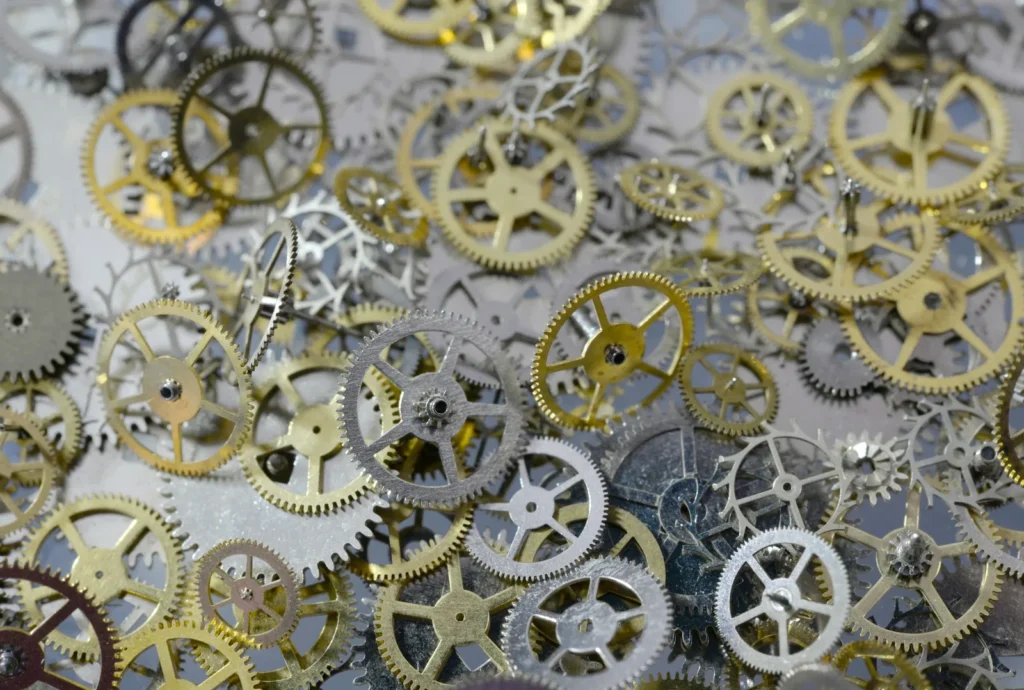
Every watch does the same two things: it stores energy, and it releases that energy in equal portions. The movement is the machinery that does both, and the only real difference between the families is what regulates the portions.
In a mechanical watch, a metal wheel swinging on a hairspring decides how fast time passes. In a quartz watch, a sliver of vibrating crystal does. Everything else — winding, complications, price, romance — follows from that one choice.
The mainspring: storing the energy
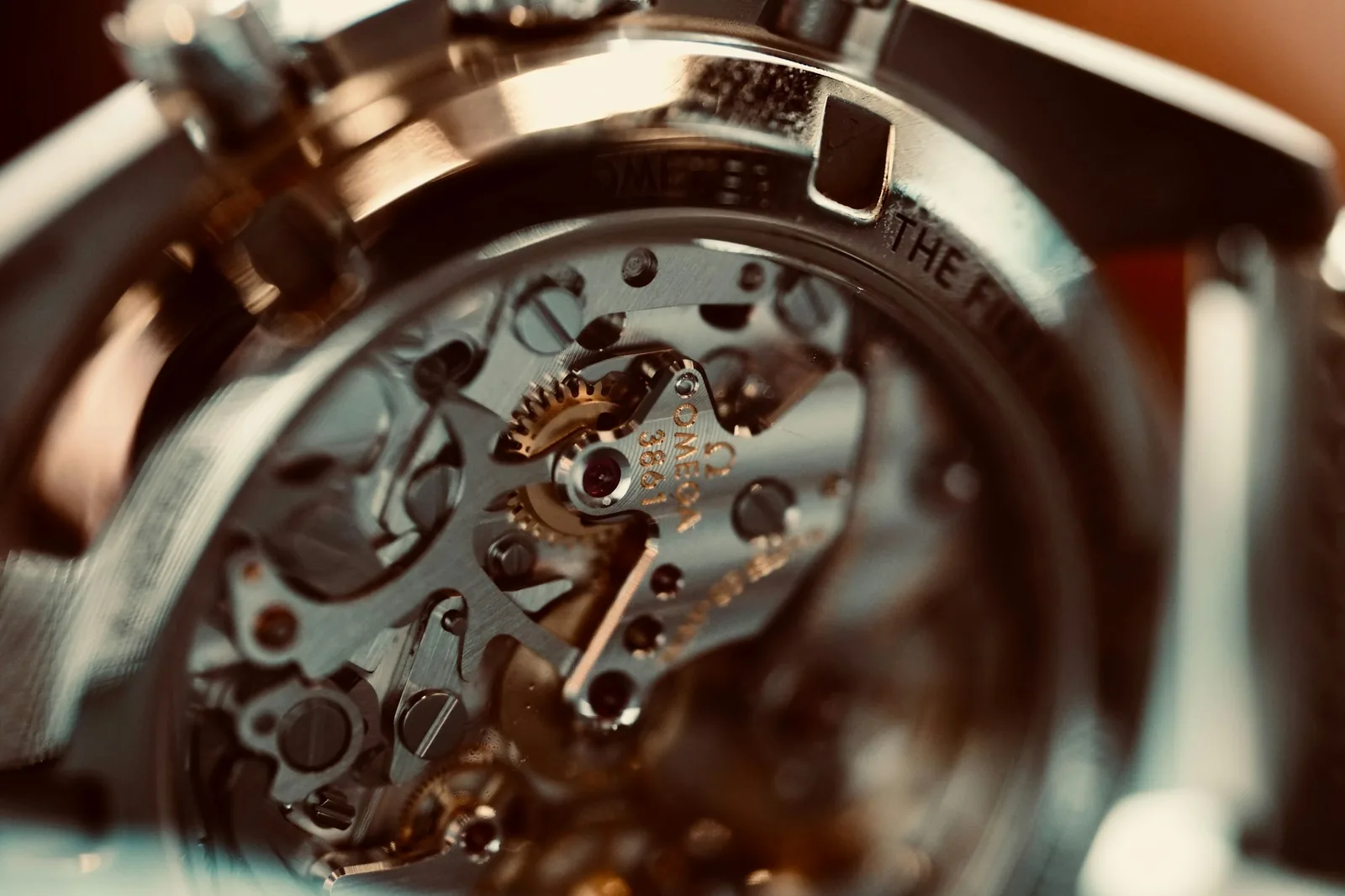
A mechanical watch runs on a coiled ribbon of steel called the mainspring, wound tight inside a barrel. Winding the crown, or the motion of your wrist, tightens it; the watch runs as it unwinds.
How long it runs from full wind is the power reserve, usually quoted in hours. Forty hours is common, seventy is generous, and anything under about thirty-eight means a watch taken off on Friday evening will be stopped by Sunday.
The mainspring does not deliver power evenly. It pushes hard when fully wound and weakly at the end, which is one reason a mechanical watch’s rate drifts as it runs down.
A quartz watch has no mainspring. A battery supplies a steady voltage from the day it is fitted until the day it dies, which is a large part of why quartz keeps better time.
The escapement: releasing it in portions
Between the mainspring and the hands sits the escapement, and it is the cleverest part of the machine. It lets the gear train advance one small step at a time, and it gives the balance wheel a tiny push on every swing to keep it going.
That tick you hear is the escapement. A typical modern movement beats at 28,800 vibrations per hour, which is eight ticks a second and the reason a mechanical seconds hand appears to sweep.
Higher beat rates are generally more stable but wear faster and demand more from the lubricant. Lower beat rates are gentler on the movement and slightly more susceptible to being knocked off rate.
The balance wheel and hairspring together are the regulator: the wheel swings back and forth, the hairspring returns it, and the period of that swing is what the watch is counting.
Hand-wound, automatic and quartz
Three families, and the differences are practical rather than moral.
| Type | Typical accuracy | What you have to do | Running cost |
|---|---|---|---|
| Hand-wound | Around 5 to 15 seconds a day | Wind it every morning | Service every 3 to 5 years |
| Automatic | Around 5 to 15 seconds a day | Wear it, or wind it after a rest | Service every 3 to 5 years |
| Chronometer-certified | Minus 4 to plus 6 seconds a day | Same as above | Service every 3 to 5 years |
| Quartz | Around 1 second a day or better | Change the battery | Battery every 2 to 5 years |
An automatic is a hand-wound movement with a weighted rotor added, so the swing of your arm winds it. It is a convenience, not a different principle, and every automatic can also be wound by hand unless the maker deliberately left that out.
What a chronometer certification actually proves
“Chronometer” is not marketing language. It is a certification, and in Switzerland it is issued by an independent body after the movement has been tested for fifteen days in five positions and at three temperatures.
To pass, a mechanical movement must average between minus four and plus six seconds a day. Details of the testing regime are published by the Contrôle Officiel Suisse des Chronomètres, which is the body that runs it.
Two things worth knowing. The certificate applies to the movement before it was cased, so a knock or a magnet afterwards can put it outside the standard.
And an uncertified movement is not necessarily worse. Certification costs money per movement, and plenty of makers regulate to similar tolerances without paying for the paperwork.
Why mechanical watches drift
A balance wheel is a physical object in a physical world, and four things push it off rate.
- Position. Gravity pulls on the balance differently when the watch is flat, on its side or crown down, so the rate changes with how you leave it overnight.
- Temperature. Metal expands, and the hairspring’s elasticity changes with it.
- Magnetism. A magnetised hairspring sticks to itself and the watch runs wildly fast.
- Wind state. A nearly unwound mainspring delivers less torque and the amplitude falls.
None of that afflicts a quartz movement in the same way. A quartz crystal is affected by temperature, but the effect is small and predictable enough that some movements compensate for it electronically.
If your watch has suddenly started gaining minutes a day, magnetism is the usual culprit and it is cheap to fix. The troubleshooting guide covers how to test for it.
Jewels, and what the number means
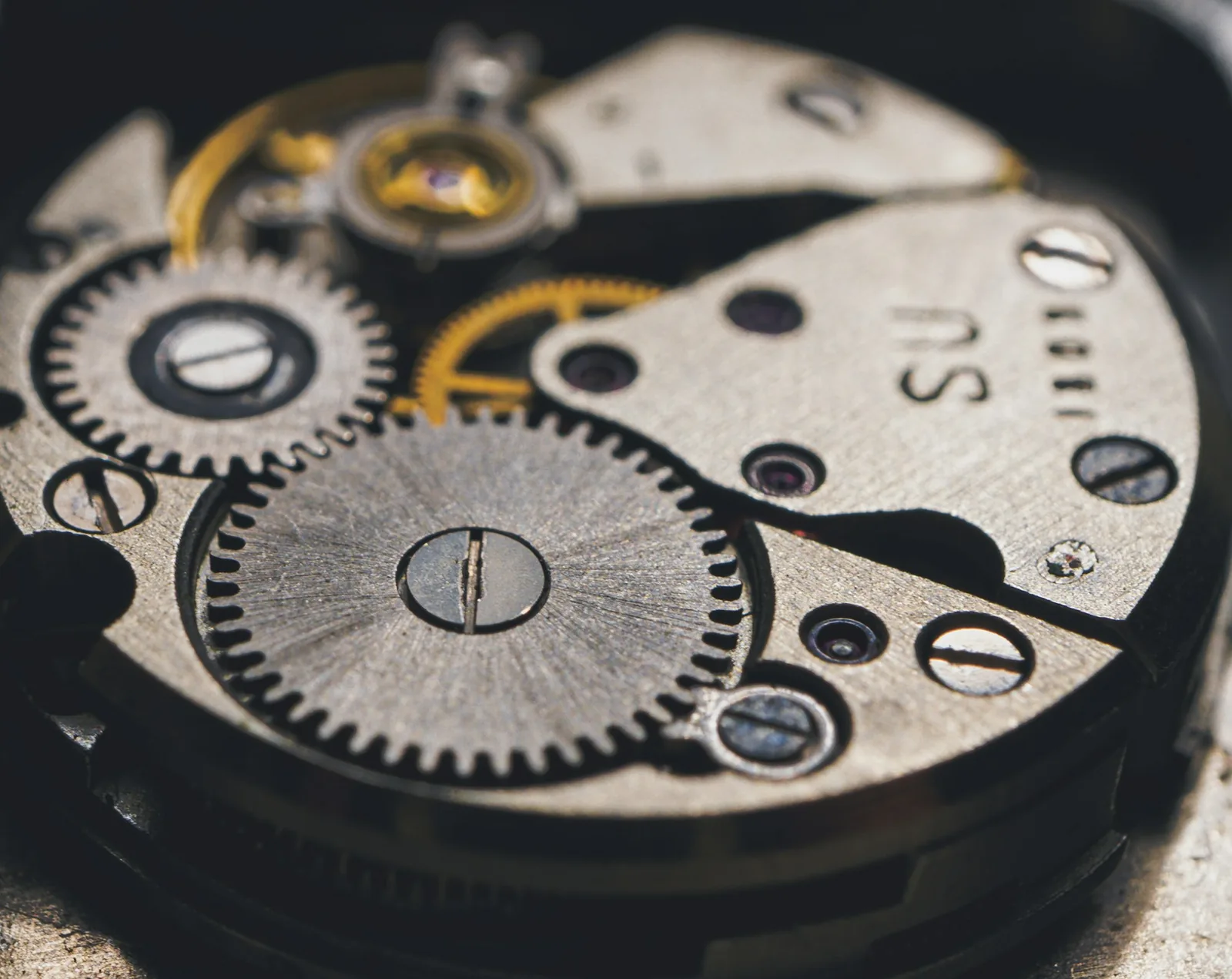
The jewel count printed on a movement is not a measure of luxury. Synthetic rubies are used as bearings at the points of highest wear, because a polished stone surface holds oil and resists wear better than metal on metal.
Seventeen jewels is the traditional count for a fully jewelled simple movement. Automatics tend to run to twenty-one or more, and complications add their own.
A very high count is often a sign of extra complications rather than extra quality. Anything past about thirty on a three-hand watch is usually decoration.
Complications, and what they cost the movement
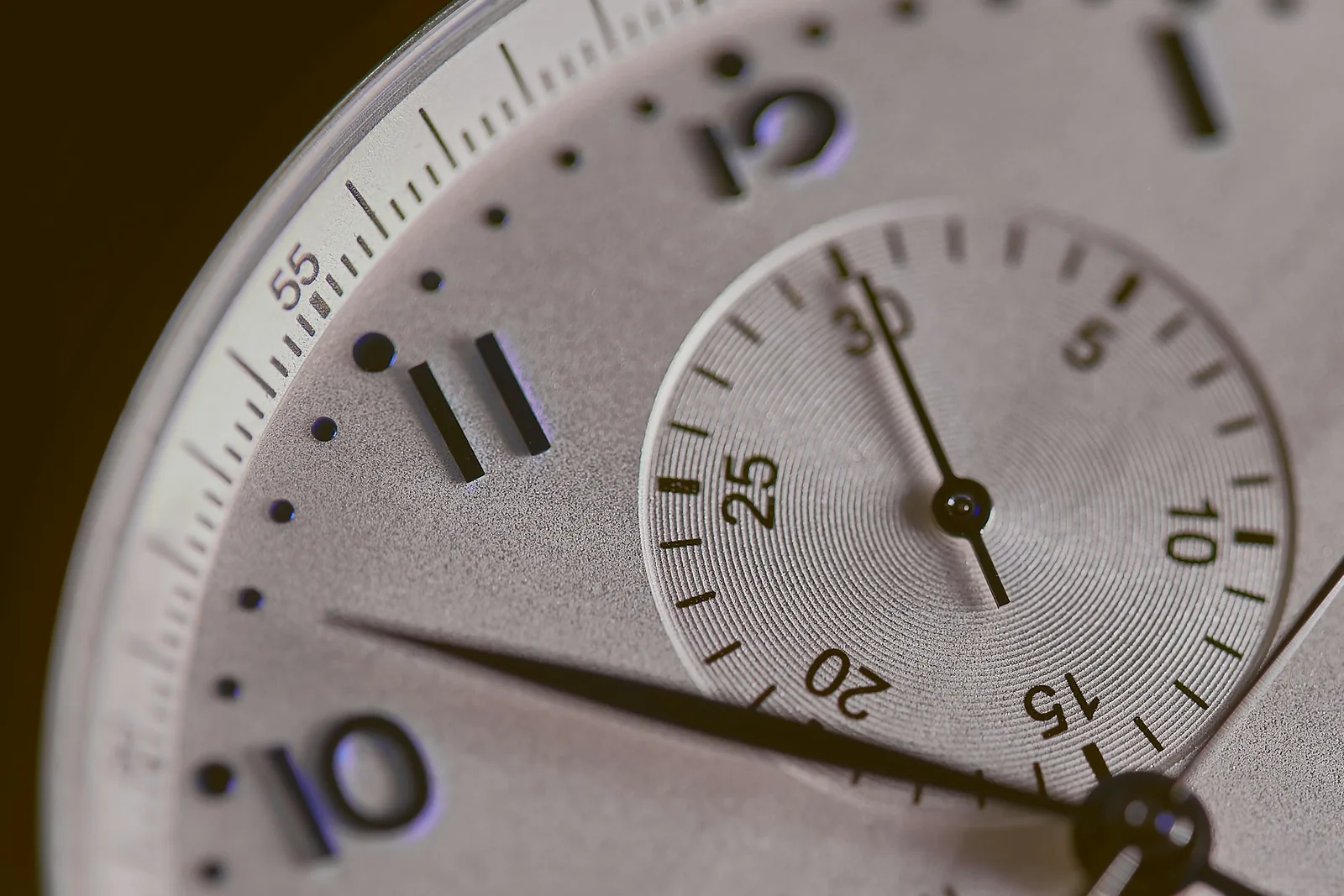
A complication is anything the movement does beyond hours, minutes and seconds. A date is a complication; so is a chronograph, a second time zone or a moon phase.
Each one adds parts, and parts add friction, height and points of failure. A chronograph module can add several millimetres to a case and a substantial premium to a service bill.
They also draw power. A watch driving three subdials and a date wheel has less torque left for the balance, which is why some chronographs lose amplitude while the timer is running.
None of that argues against complications, only against buying ones you will not use. The chronograph listings in the archive show how common the complication was even in the affordable end of a 2006 catalogue.
Which movement suits which owner
Ask how the watch will spend its week rather than which sounds better.
Somebody who wears one watch every day is well served by an automatic, because daily wear keeps it running and it never asks anything of them. Somebody who rotates between several will find automatics permanently stopped and need to reset them.
Somebody who wants the time to be right without thought should buy quartz and stop apologising for it. Somebody who enjoys the ritual of a morning wind will get more from a hand-wound movement than from either.
The movement comparison guide works through the head-to-head cases, and the watch finder will filter the archive by movement if you want to see how each family was actually specified.
Frequently asked questions
How does an automatic watch movement work?
A weighted rotor spins as your wrist moves, and a train of gears converts that motion into winding the mainspring. From there it is an ordinary mechanical watch: the mainspring drives the gear train, and the escapement releases it in equal steps.
How many jewels should a watch movement have?
Seventeen for a fully jewelled simple movement, twenty-one or more for an automatic. Higher counts usually mean extra complications rather than higher quality, and a very high number on a plain three-hand watch is decorative.
Do I need to wind an automatic watch?
Only if it has stopped or you have not worn it for a day or two. Twenty to thirty turns of the crown will start it; after that, normal wear keeps the mainspring topped up.
Is a chronometer worth paying extra for?
It buys a tested, documented rate rather than a promise, which matters if precision matters to you. It does not make a watch more durable or better finished, and plenty of uncertified movements perform just as well.
Learn the two parts that decide everything — the mainspring that stores energy and the regulator that portions it out — and the rest of the specification sheet stops being intimidating.