Watch Materials: Cases, Crystals and Bracelets Compared
Three material choices decide most of how a watch feels: what the case is made of, what you look through, and what holds it to your wrist. Everything else on a specification sheet is detail by comparison.
None of them is simply better than the others. Each is a trade between weight, hardness, cost and how it ages, and knowing which trade you are making is the whole of the subject.
Case materials
| Material | Weight | Scratches | Ages by |
|---|---|---|---|
| Stainless steel | Substantial | Yes, and polishes out | Softening at the edges |
| Titanium | About 40% lighter | More easily than steel | Dulling to a grey patina |
| Gold | Heavy | Easily; it is soft | Rounding, and it cannot be replaced |
| Plated base metal | Light to moderate | Wears through at the edges | Showing the metal underneath |
| Resin or composite | Very light | Scuffs rather than scratches | Fading, and eventually cracking |
| Ceramic | Moderate | Almost never | Not at all, until it chips |
Steel is the default for good reasons: it is strong, corrosion-resistant, repairable and cheap enough that the money can go elsewhere. Most of what you will look at is some grade of it.
Titanium, and what “lighter” costs
Titanium is roughly 40 per cent lighter than steel at similar strength, which is why it turns up on larger watches and on anything meant to be worn for days at a time.
It is also hypoallergenic in practice, which matters to anyone whose skin objects to nickel. The Royal Society of Chemistry’s entry on titanium covers why it is so unreactive.
The trade is surface hardness. Untreated titanium marks more readily than steel, and it takes a matte grey finish rather than a bright polish, so a titanium watch looks worn-in sooner.
Hardened treatments exist and help considerably. They also cost money, and they wear through eventually like any surface treatment.
Crystals: the part you look through
Three materials, and the difference is more visible day to day than any case choice.
- Sapphire is synthetic corundum and is exceptionally hard. It resists almost everything you will meet in ordinary life, and it is the upgrade with the most visible return on a watch worn daily.
- Mineral glass is hardened glass. It is cheaper, scratches more readily, and once scratched it stays that way.
- Acrylic scratches easily and polishes back with a cloth and a little compound, which is why so many older watches still look sharp.
Sapphire’s one weakness is brittleness. It resists scratching far better than glass and shatters more readily under a sharp impact, so it is not universally superior.
Anti-reflective coating matters too. A coating on the underside survives; one on the top surface scratches off and looks patchy within a few years — a point the affordable watches guide comes back to.
Bracelets and what they are made of
A bracelet is a lot of small machined parts, so material and construction both show.
Solid links and solid end links feel dense and articulate smoothly. Folded links, made from bent sheet, are lighter, rattle, and are the first economy a budget watch makes.
How links are held matters as much as what they are made of. Screwed links can be removed and refitted repeatedly; pinned links use friction and collars that wear out, and a lost collar means a trip to a watchmaker.
Clasp construction is the third variable. A stamped clasp flexes and eventually gapes; a milled one does not, and it is a reliable signal of where the rest of the money went — the strap guide covers sizing and swapping.
Steel is not one material
“Stainless steel” covers a family of alloys that behave differently, and the grade is worth reading when a maker bothers to state it.
The common grade in watchmaking resists corrosion well and machines cleanly. A higher-chromium grade resists salt water and acids better, takes a slightly brighter polish, and costs more to work.
In ordinary use the difference is small. For a watch that swims in the sea regularly it is not nothing, and it shows up over years rather than weeks.
What matters more than the grade is the finishing. A well-finished case in the common grade looks and wears better than a poorly finished one in the expensive alloy, which is the point the affordable watches guide makes about where money goes.
Coatings, plating and what wears through
Anything described as gold tone, rose gold finish, black PVD or ion plated is a coating over another metal, and every coating has a service life.
Thickness decides that life, and it is almost never stated. A heavier coating survives years of daily wear; a thin one shows the base metal at the lug edges and clasp within a couple of them.
Wear appears first where the watch touches things: the underside of the clasp, the outer edge of the bezel, the tips of the lugs. Once it starts it cannot be spot-repaired, only re-plated whole.
Solid material has no such failure mode, which is the real argument for steel or titanium over a coated case at the same price.
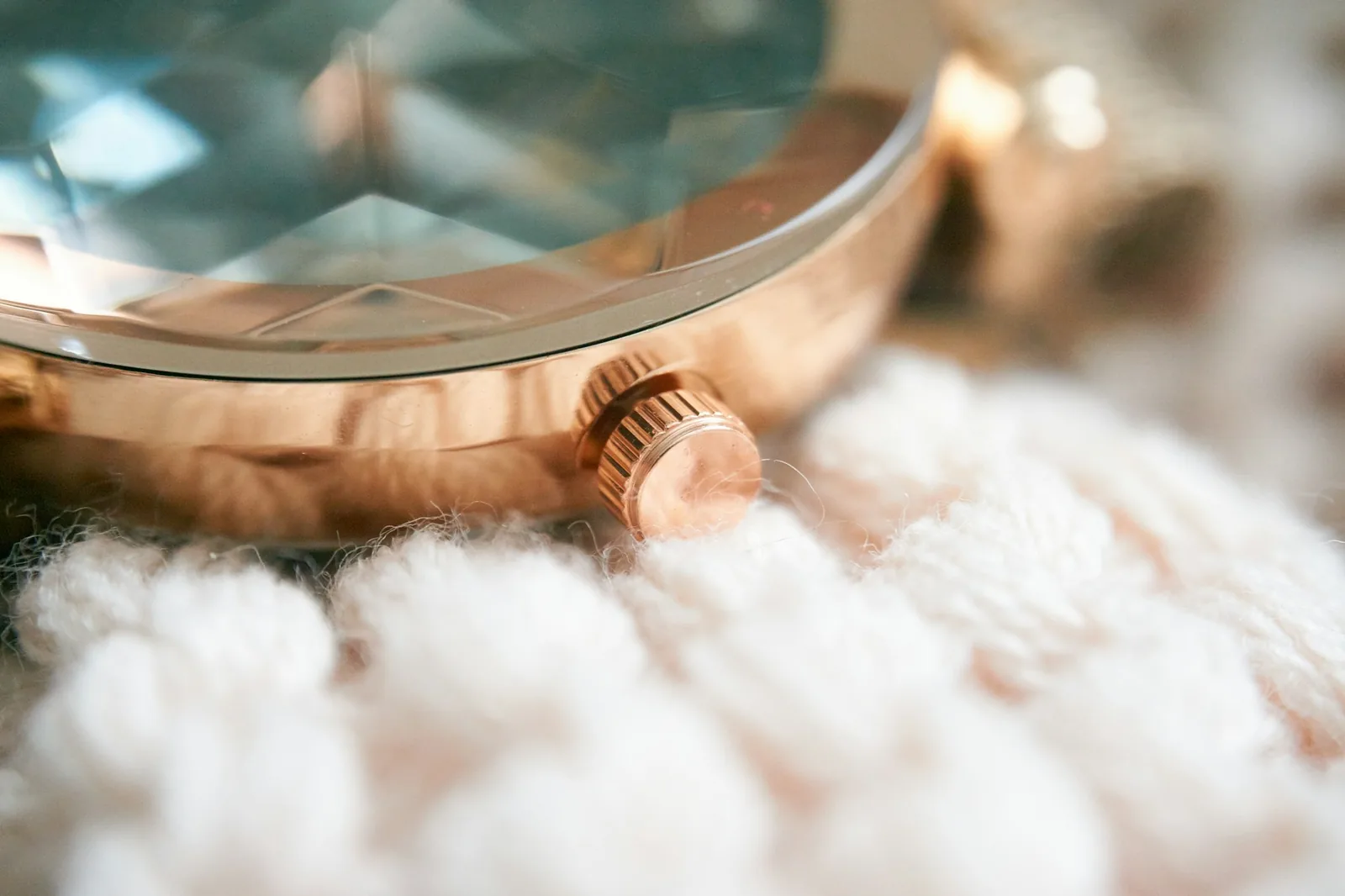
Materials and skin
Contact reactions under a watch are common, and they are usually mechanical rather than chemical: sweat and friction trapped against skin all day.
Where a genuine metal sensitivity is involved, nickel is almost always the cause. It is present in most stainless steels, though good grades release very little of it.
Titanium, ceramic and high-grade steels are the practical answers, along with a nylon or rubber strap that can be washed. The care and cleaning guide covers the day-to-day habits that prevent most of it.
Loosening the strap fixes more cases than changing the material does, which is worth trying first.
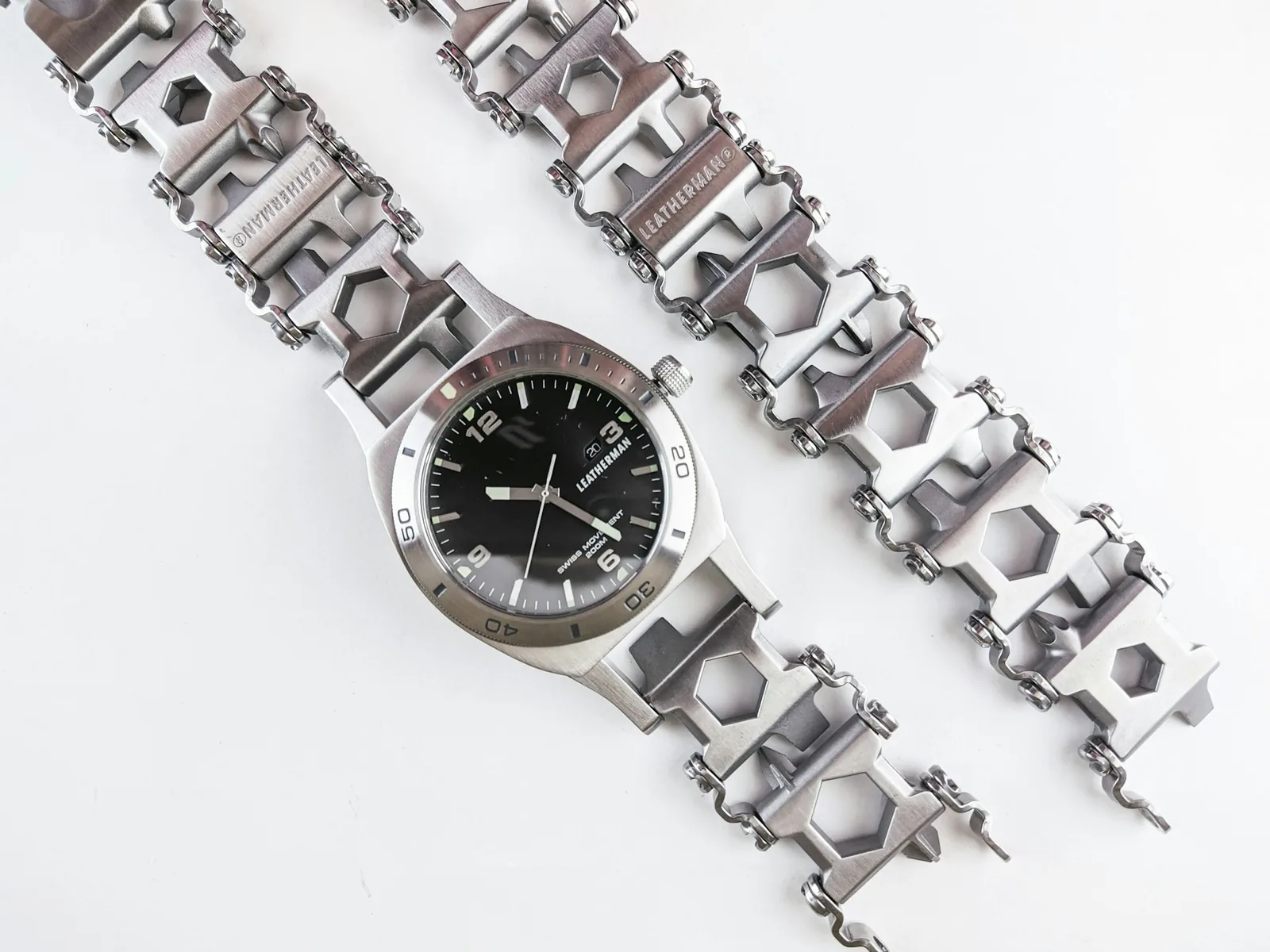
Lume, bezels and the small parts
Luminous material is a coating rather than a material choice, but it behaves like one. Modern strontium-aluminate compounds charge in seconds and glow for hours; older zinc-sulphide types fade within minutes.
Bezel inserts vary more than they look. Aluminium fades and marks and is easily replaced; ceramic holds its colour indefinitely and chips rather than scratches; steel is the compromise.
Case backs are worth a glance. Screwed backs seal better than snapped ones and are the norm on anything meant to get wet, which the water resistance guide explains.
None of these decides a purchase on its own. Together they tell you how carefully the watch was specified.
What the archive shows
The catalogue preserved here records the materials each model was sold with in 2006 and 2007, which makes it a useful snapshot of what the mid-market actually offered.
Stainless steel dominates, titanium appears as a premium option, and gold tone — plating rather than gold — is common at the affordable end. You can filter by material through the watch finder.
It is a reminder that “gold” on a specification sheet has meant several very different things, and that reading the exact wording matters more than reading the headline.
Frequently asked questions
Is titanium better than stainless steel for a watch?
It is lighter and kinder to sensitive skin, which suits large watches and long wear. It also marks more easily and takes a matte finish rather than a bright polish, so it looks worn-in sooner. Neither is simply better.
Is sapphire crystal worth paying for?
On a watch worn daily, yes. It is the part you look through, and a scratch on it cannot be polished out the way a scratch on steel can. Its one weakness is that it is more brittle than mineral glass under sharp impact.
Why does my watch bracelet irritate my skin?
Usually trapped sweat and friction rather than a metal allergy. Loosen it, dry your wrist after exercise, and clean the bracelet. Where a genuine sensitivity exists, nickel in the steel is almost always the cause.
What is the difference between solid and folded bracelet links?
Solid links are machined from bar and feel dense and quiet. Folded links are bent from sheet, weigh less and rattle. It is the first economy a budget watch makes and one of the easiest to feel in the hand.
Pick the case material for how the watch will be worn, spend on the crystal if it will be worn daily, and treat the bracelet as the part that reveals what the rest of the budget was doing.