Watch Collecting: Building a Collection With Intent
Most collections are not built. They accumulate, one impulse at a time, until the owner has six watches and wears two. The difference between the two outcomes is whether there was a rule.
A rule does not have to be sophisticated. “One watch per job” or “nothing after 1980” or “everything must survive a swim” will each produce a coherent collection, and any of them beats buying whatever is discounted this week.
Decide what the collection is about
The first question is not which watch but which kind of collection, because it determines everything after it.
A functional collection covers jobs: something for work, something for water, something for a suit. It stays small, everything gets worn, and it is the right answer for most people.
A thematic collection follows an idea — a maker, a decade, a movement family, a design language. It can grow large without becoming random, because the theme does the editing.
A historical collection follows evidence rather than taste. It is the most demanding, since condition and originality matter far more than appearance, and it needs the discipline the authentication guide describes.
The overlap problem
| Slot | What it does | Overlaps badly with |
|---|---|---|
| Daily | Worn most days, survives everything | Nothing; it is the anchor |
| Formal | Thin, plain, passes under a cuff | A second dress watch |
| Water and sport | High water resistance, robust | A second diver at a different depth |
| Travel | Second time zone, tough enough to pack | The daily watch, often |
| Sentimental | Inherited or commemorative | Nothing; it is exempt |
The commonest mistake is buying the same slot twice with a different dial colour. Two 40mm steel divers rated to different depths are one watch and one ornament.
Before any purchase, name the slot it fills. If the honest answer is “none, but I like it”, that is allowed — but say it, because a collection of exceptions is just a pile.
Condition, originality and price
In the used market, three things set price: condition, originality and completeness. They are not the same thing and they do not move together.
Condition is wear. Originality is whether the parts are the ones it left the factory with. Completeness is box, papers and service records.
For a collection meant to be worn, condition matters most and completeness least. For a collection meant to hold value, the order reverses.
Decide which you are building before you pay a premium for a cardboard box. The used buying checklist covers how to assess all three.
Buy fewer, better, and wear them
The most reliable advice in collecting is also the least exciting: three watches you wear beat eight you rotate out of guilt.
Every additional mechanical watch is a service bill on a timer, a stopped movement to reset, and a thing to store. Those costs are invisible at purchase and relentless afterwards.
A useful test before buying: which watch will this displace, and are you happy for that one to sit unworn? If the answer is nothing, the collection is not growing so much as diluting.
Selling is part of collecting and nobody enjoys it. A watch you have not worn in a year is telling you something clear.
Learning faster than you buy
The expensive part of collecting is not the watches, it is the education, and most of it can be acquired for nothing.
Handle as many watches as you can before spending. Shops, fairs and other collectors will teach you in an afternoon what photographs cannot in a month.
Read reference material rather than sales copy. Institutions like the Worshipful Company of Clockmakers maintain collections and publish about them, and museum material is written without something to sell.
Archives are the other cheap education. The catalogue preserved on this site records 678 models with their 2006 specifications and prices, which is an unusually honest picture of what the mid-market actually offered — browse it through the brand index.
What the 2006 catalogue teaches about value
An archived retail catalogue is a useful corrective, because nobody curated it for posterity. It shows what was ordinary, at what price, in a way a collector’s book never does.
Two patterns stand out. The plainest designs have aged best, and price at the time was a poor predictor of which those would be.
The second is how much of the market was quartz. Any account of the period that treats mechanical as the default is describing enthusiasts rather than buyers.
Neither pattern is a rule for the future. Both are a reminder that today’s obvious classics were mostly not obvious at the time.
Setting a budget that survives contact with the market
The budget most collectors set is for purchases, and it is the wrong budget, because purchases are the part that stops.
Every mechanical watch in a collection carries a recurring service cost. Four automatics on a five-year cycle is roughly one service a year, indefinitely, which the service guide puts real numbers to.
Insurance is the second recurring cost, and the one people discover after a loss rather than before. Household policies usually cap single items well below what a watch is worth.
Set both alongside the purchase budget. A collection that cannot afford its own maintenance slowly becomes a drawer of stopped watches.

Buying at auction, briefly
Auctions look like where bargains live and mostly are not, but they are where information lives.
Catalogue descriptions are written by specialists and state condition, originality and known replacements far more frankly than a dealer listing. Reading them is an education whether or not you bid.
The costs are the trap. A buyer’s premium on top of the hammer price is substantial, and shipping and import charges land afterwards.
Set a limit that includes all of it before the bidding starts, and treat that number as the price of the watch.
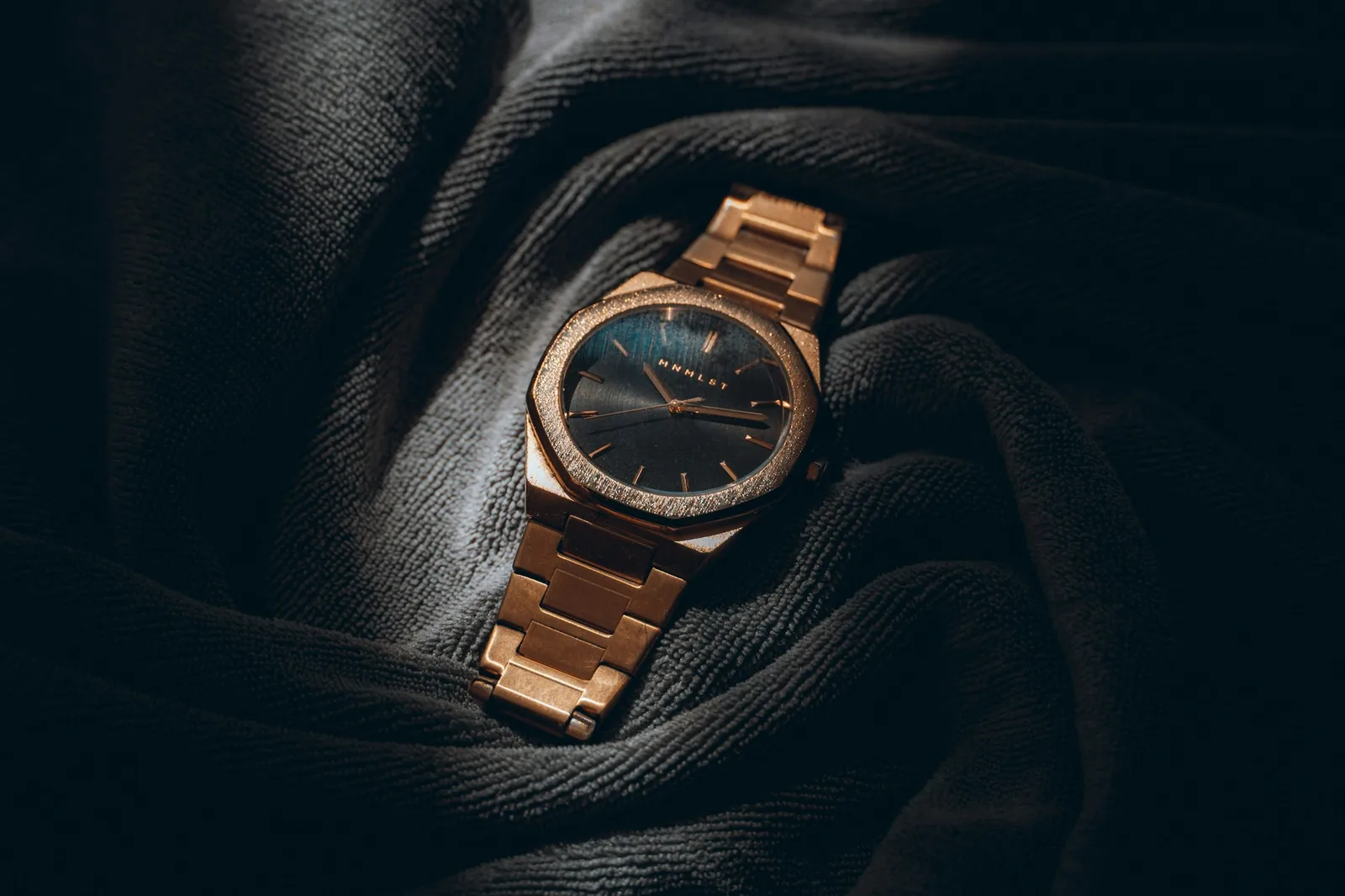
Storing what you are not wearing
A collection needs somewhere to live that is dry, dark and not stacked. Direct sunlight fades dials, humidity attacks gaskets, and watches piled together scratch each other.
Winders are optional and often oversold. They keep an automatic running and its calendar correct, at the cost of running the movement continuously when it could be resting.
For a watch worn weekly, a winder solves a problem you do not have. For a perpetual calendar that is painful to reset, it earns its place — the storage and travel guide covers the detail.
Insurance is the unglamorous part. Photograph everything, record serial numbers, and keep the record somewhere that is not the same room as the watches.
Frequently asked questions
How many watches should a collection have?
Fewer than most people end up with. Three or four covering distinct jobs will be worn; eight covering overlapping ones will not. Every extra mechanical watch adds a service bill and a movement to reset.
Where should I start a watch collection?
With the watch you will wear most days, chosen for durability and legibility rather than for interest. Everything after that is easier, because the anchor tells you what the other slots need to be.
Do watches make a good investment?
Treat them as objects you enjoy that may hold some value, not as an asset class. Servicing costs money on a schedule, the market is narrow and illiquid, and the pieces that appreciate are rarely the ones people predicted.
Should I buy box and papers?
It depends what the collection is for. If you are building something to wear, condition matters far more than cardboard. If you expect to sell, completeness moves the price more than almost anything else.
Pick a rule, name the slot before each purchase, and count the running cost of every mechanical watch you add. A collection built that way stays small, gets worn, and is far more satisfying than a large one that does not.