Watch Authentication: How to Tell Real From Fake
Counterfeits have stopped being obvious. The tells that worked twenty years ago — a misspelled name, a ticking seconds hand, a plastic crystal — have mostly been engineered out, and the remaining differences are in places a casual buyer never looks.
What has not changed is that faking a movement properly costs more than faking a case. That is why almost every reliable check comes back to what is behind the dial rather than what is printed on it.
Weight is the first thing to notice
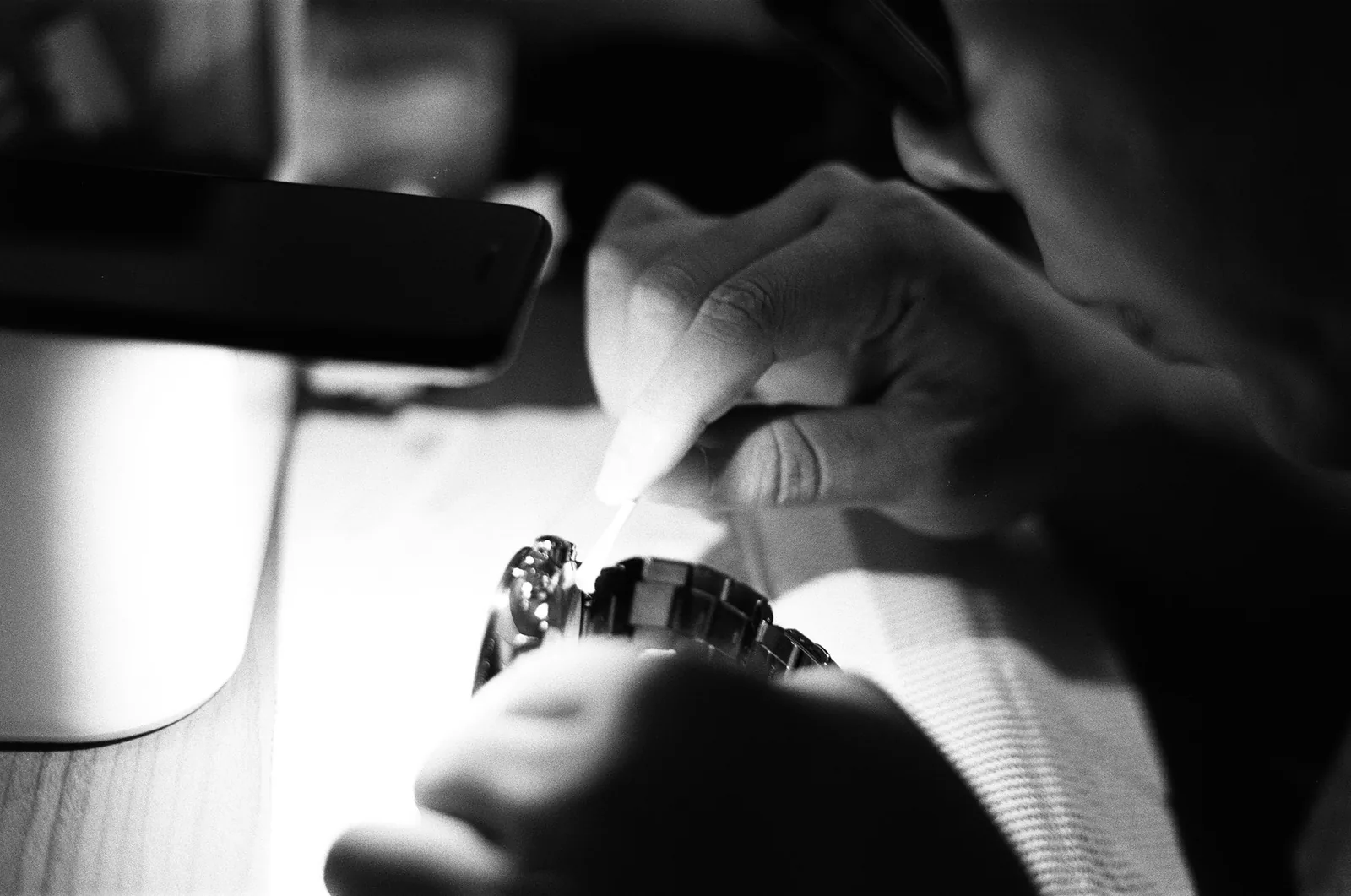
Pick the watch up before you look at it. Genuine watches in steel or gold have a density that surprises people who have only handled fashion pieces.
Counterfeits are usually lighter, because the case is thinner, the bracelet links are hollow and the movement is a cheap quartz module rather than an automatic. All three save the maker money and all three change how it feels.
This is not conclusive on its own. Titanium watches are genuinely light, and some real watches are modest in the hand.
But a watch that should be heavy and is not has told you where to look next.
The checks, in order of usefulness
| Check | What genuine looks like | How reliable |
|---|---|---|
| Movement finishing | Clean bevels, even graining, sharp engraving | Very high |
| Case engraving | Deep, sharp, evenly spaced | High |
| Dial printing | Crisp edges under magnification | High |
| Weight and density | Substantial for the material | Moderate |
| Seconds hand motion | Sweeping on a mechanical watch | Low; easily faked now |
| Box and papers | Consistent with the watch | Low; faked more easily than the watch |
Note the bottom two rows. Paperwork is the easiest part of the package to counterfeit, and a complete set of documents with a suspicious watch should raise your suspicion rather than settle it.
Printing and engraving under magnification
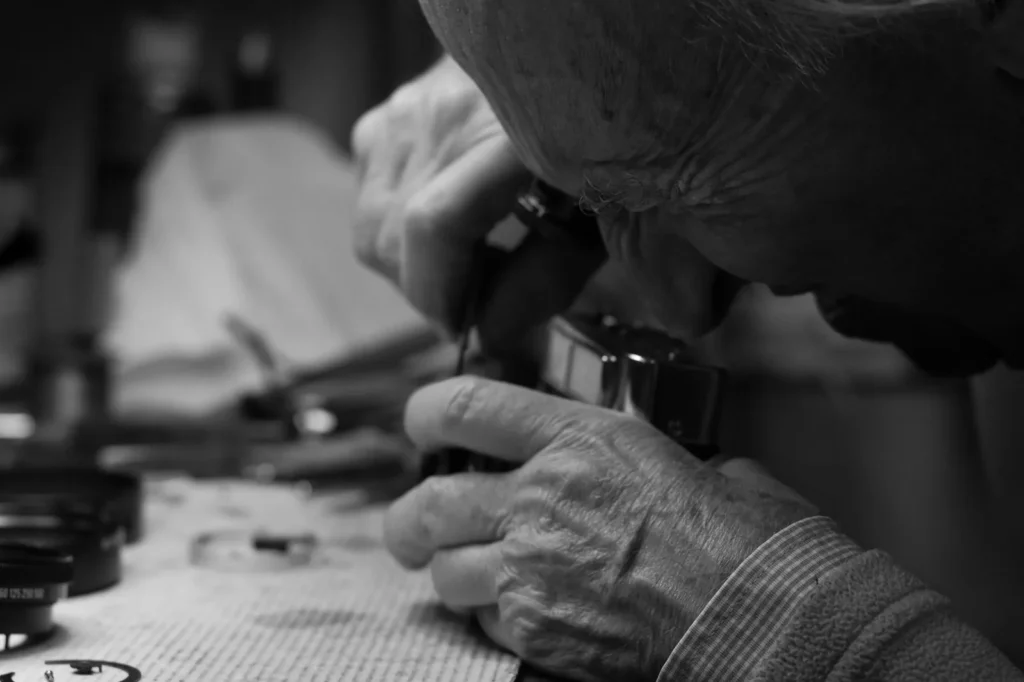
A ten-times loupe costs very little and is the single most useful tool a buyer can own. Almost every counterfeit fails somewhere under it.
Look at the smallest text on the dial. Genuine printing has clean edges even at high magnification; counterfeit printing shows soft edges, uneven weight between characters, or a faint halo where ink has spread.
Then look at the engraving between the lugs or on the case back. Real engraving is deep and consistent, with square-cut edges; fakes are often laser-etched shallow, and the characters vary in spacing.
Lume plots are worth a look too. On a genuine watch they are evenly applied and sit level with each other, and any spill onto the dial is a defect rather than the norm.
Why the movement is the honest test
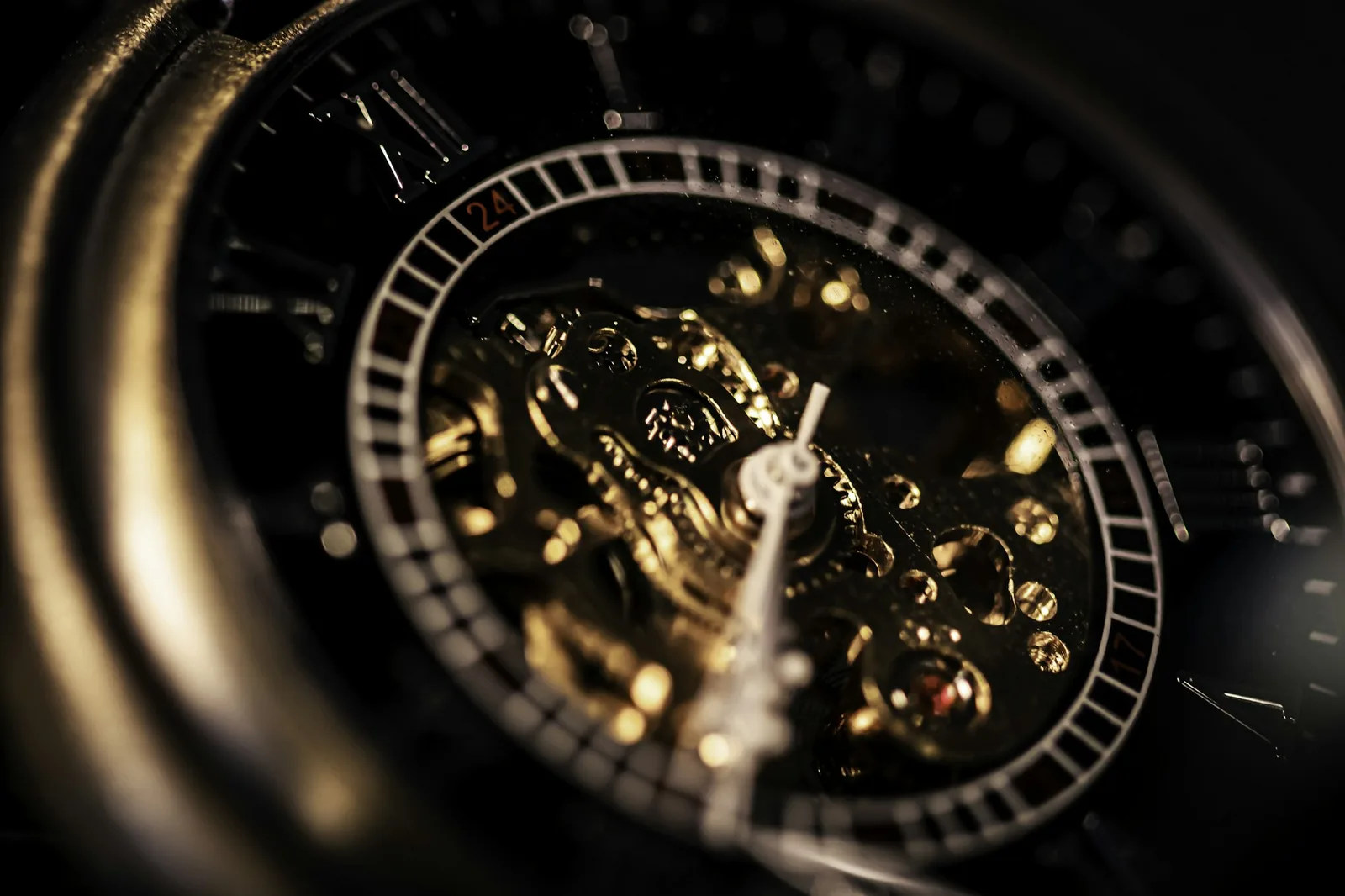
A convincing case can be made cheaply. A convincing movement cannot, because finishing is labour and labour is the expensive part.
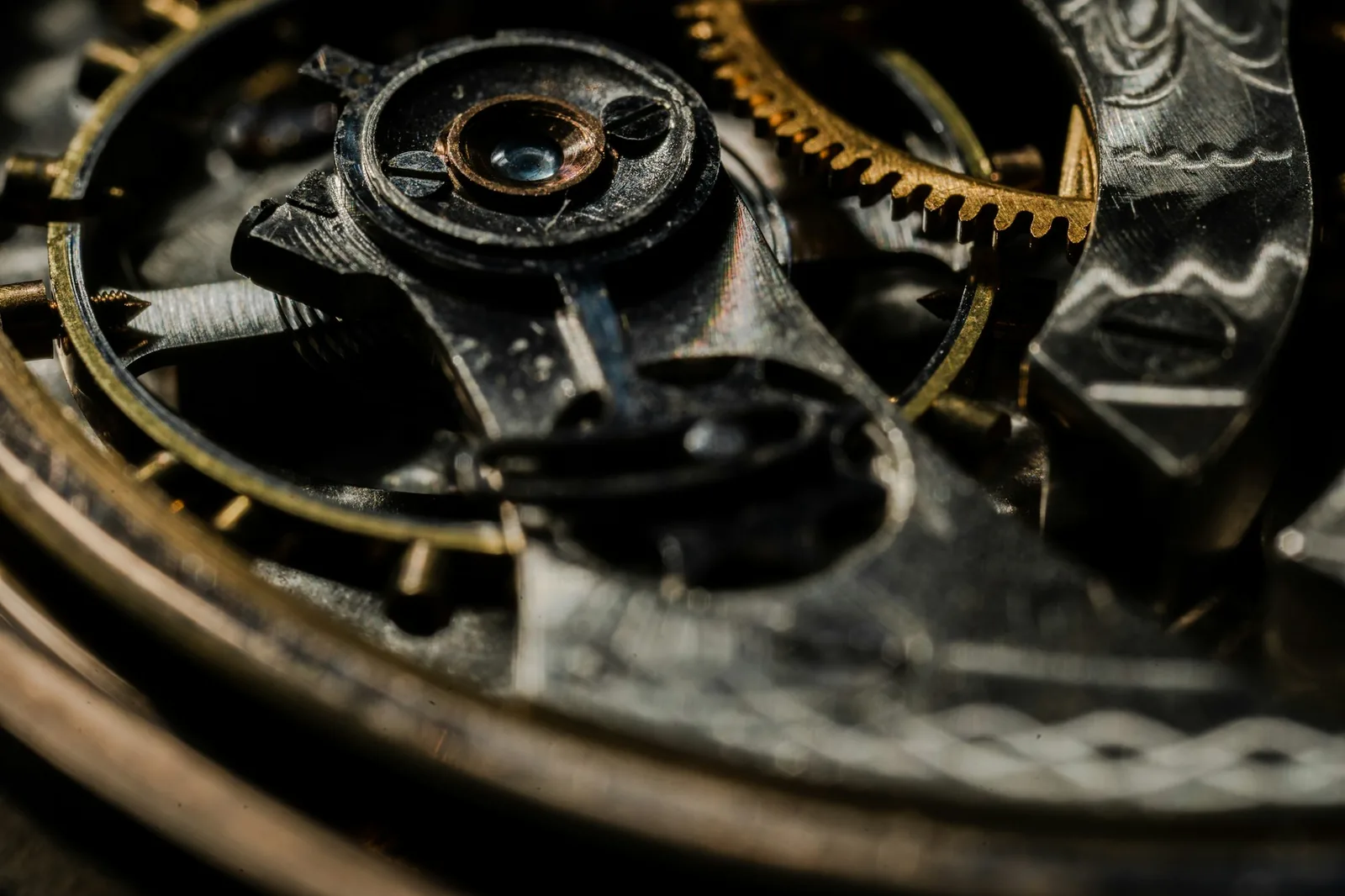
Where a case back is transparent, compare what you see against reference photographs of the calibre. Look for clean, even graining on the plates, polished bevels on the bridges, and screw heads with sharp slots and no burring.
Counterfeit movements are typically plain, roughly finished, and often carry decoration printed or stamped rather than cut. The difference is obvious once you have looked at one of each.
If the case back is solid, this check is for a watchmaker rather than a buyer, and that is usually money well spent. The movements explainer covers what you are looking at.
What paperwork is and is not worth
Documents help most when they are consistent with everything else. A card whose serial matches the case, dated by a dealer who still exists, supports the rest of the picture.
Documents on their own prove very little. Counterfeit boxes, warranty cards and even service papers are all produced, and they are cheaper to fake than a movement.
Serial numbers repay attention. Some makers will confirm a serial against their records, and a number that appears on several watches offered for sale at once is a strong signal.
Counterfeiting is a large and organised business rather than a cottage industry, which the World Intellectual Property Organization sets out in its material on intellectual property and enforcement. Treat the sophistication of a fake as expected rather than surprising.
When to stop and pay somebody
There is a point where amateur checking stops adding information, and it arrives sooner than most buyers think.
Pay for an independent opinion when the sum involved is large, when the seller is private, when the paperwork is missing, or when anything about the watch is inconsistent with anything else about it.
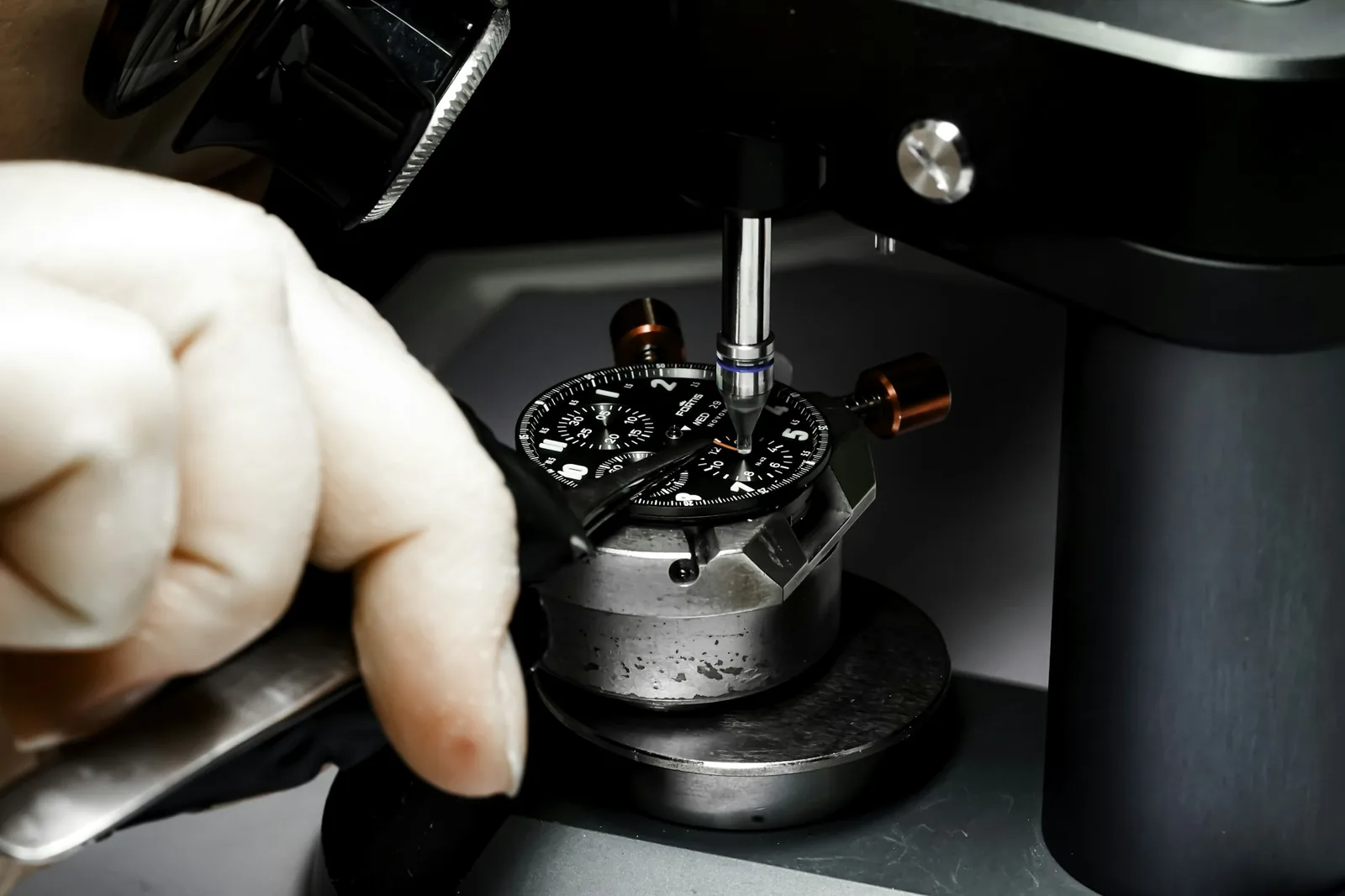
A watchmaker can open the case, identify the calibre and check that the parts inside belong there. That is an hour of somebody’s time against a four-figure mistake.
Refuse to be hurried. Urgency is the oldest tool in the trade, and a genuine seller with a genuine watch can wait a day.
The tells that stopped working
Half of the authentication advice online is a decade out of date, and following it produces false confidence rather than no confidence.
A ticking seconds hand no longer means a fake, because counterfeits now use automatic movements. A magnifying date window is now reproduced. Even the weight gap has narrowed as counterfeiters moved to steel cases.
What has not changed is finishing. Bevelling, graining and sharp engraving are labour, and labour is the one cost a counterfeiter cannot engineer away.
So when a checklist offers you a single dramatic tell, treat it as a starting point rather than a verdict. The reliable method is accumulating small inconsistencies, not finding one smoking gun.
Buying where authentication is somebody else’s job
The simplest defence is to buy where the risk sits with the seller rather than with you.
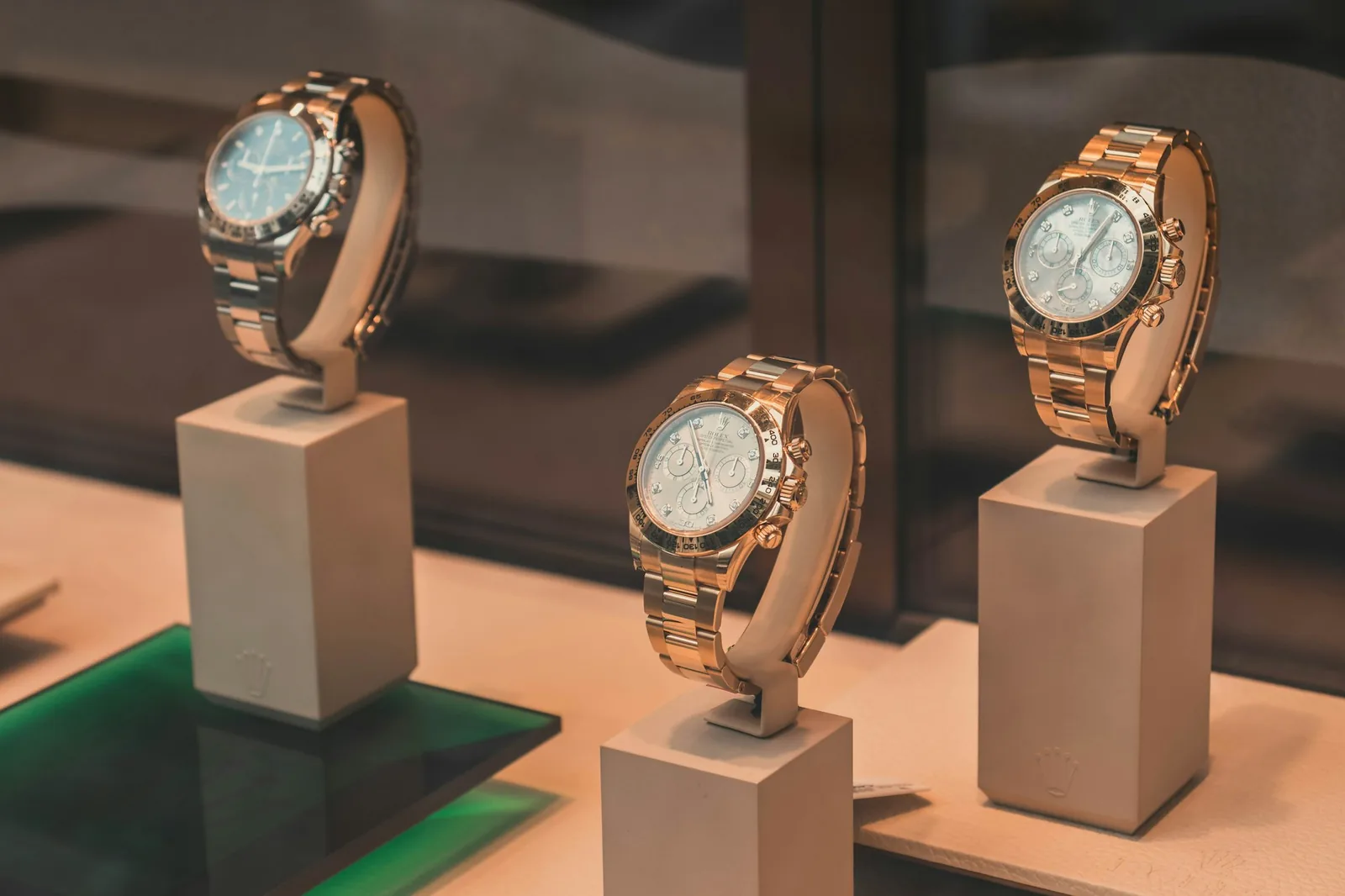
An authorised dealer, an established pre-owned specialist, or an auction house with a stated guarantee all price authentication into what they charge. That premium is the cost of not having to be an expert.
Platforms vary enormously. Some inspect every watch before it ships; others simply connect a buyer to a seller and take a fee, which is a different proposition entirely.
Read what the guarantee actually covers and for how long, and check the used buying checklist for the condition questions that a guarantee will not answer.
Frankenwatches, which are not fakes
Between genuine and counterfeit sits a third category: a real watch assembled from parts of several. A correct case, a replacement dial, a movement from a different reference.
These are common in the vintage market and they are not always dishonest, since decades of repairs leave their mark. They are, however, worth a great deal less than an original.
The check is consistency. Do the hands match the dial’s age? Does the movement’s serial fall in the right range for the case? Does the bracelet belong to the model?
Original specifications are the reference, which is where an archive earns its keep. The catalogue preserved here records what each model was sold with in 2006 and 2007, brand by brand in the brand index, and the used buying checklist covers the rest of the condition assessment.
Frequently asked questions
How can I tell if a watch is real?
Weight first, then dial printing and case engraving under a loupe, then the movement if you can see it. Genuine printing and engraving stay sharp at magnification; counterfeit work goes soft. The movement is the hardest part to fake convincingly.
Does a sweeping seconds hand mean a watch is genuine?
No, not any more. Counterfeits use automatic movements and sweeping hands routinely. It was a useful test twenty years ago and it is close to useless now.
Do box and papers prove a watch is authentic?
No. They are easier to counterfeit than the watch, and a complete set accompanying a suspicious watch should increase your caution rather than settle it. They support other evidence; they do not replace it.
When should I pay for professional authentication?
Whenever the amount is large, the seller is private, the paperwork is absent, or anything is inconsistent. An hour of a watchmaker’s time is cheap against the alternative, and they can open the case, which you probably cannot.
Buy a loupe, learn what good printing and clean finishing look like, and treat inconsistency as the signal rather than any single tell. The convincing fakes fail on the details nobody expects you to check.