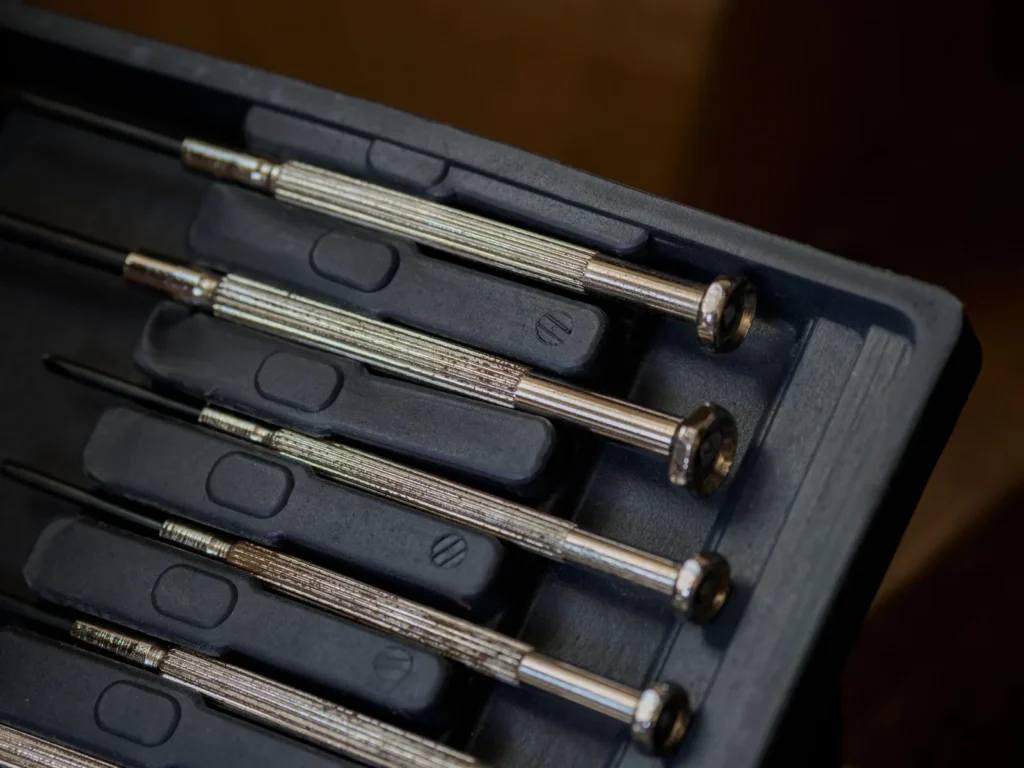
A full service is a strip, clean, re-lubricate, replace worn parts, reseal and regulate. Anything that does not include all six is a repair or a valet, not a service, and should not be priced as one.
Knowing what the work actually involves is the only defence against paying overhaul money for a clean and a polish. It also explains why the quotes you get vary so widely for the same watch.
What a service actually is
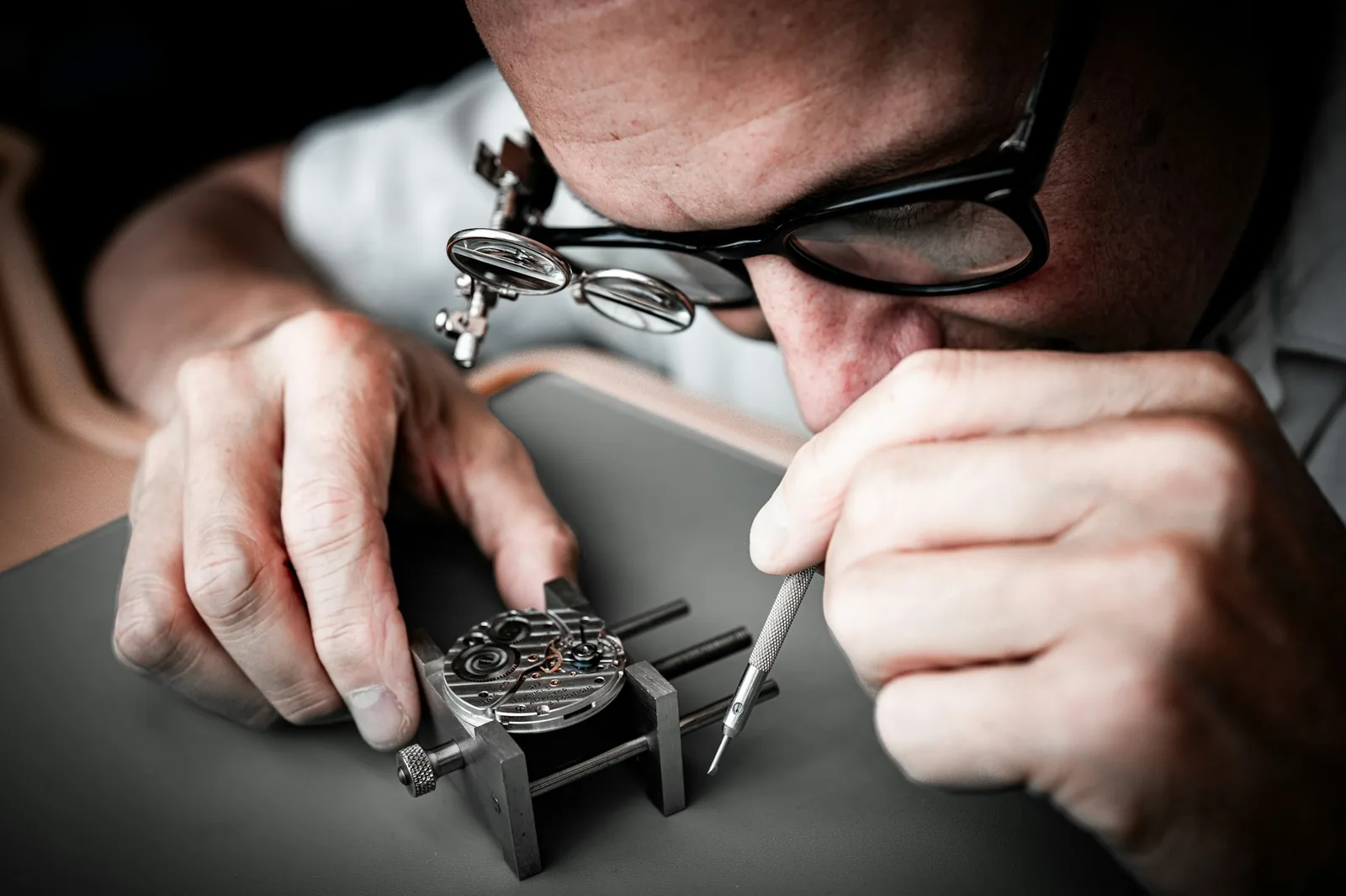
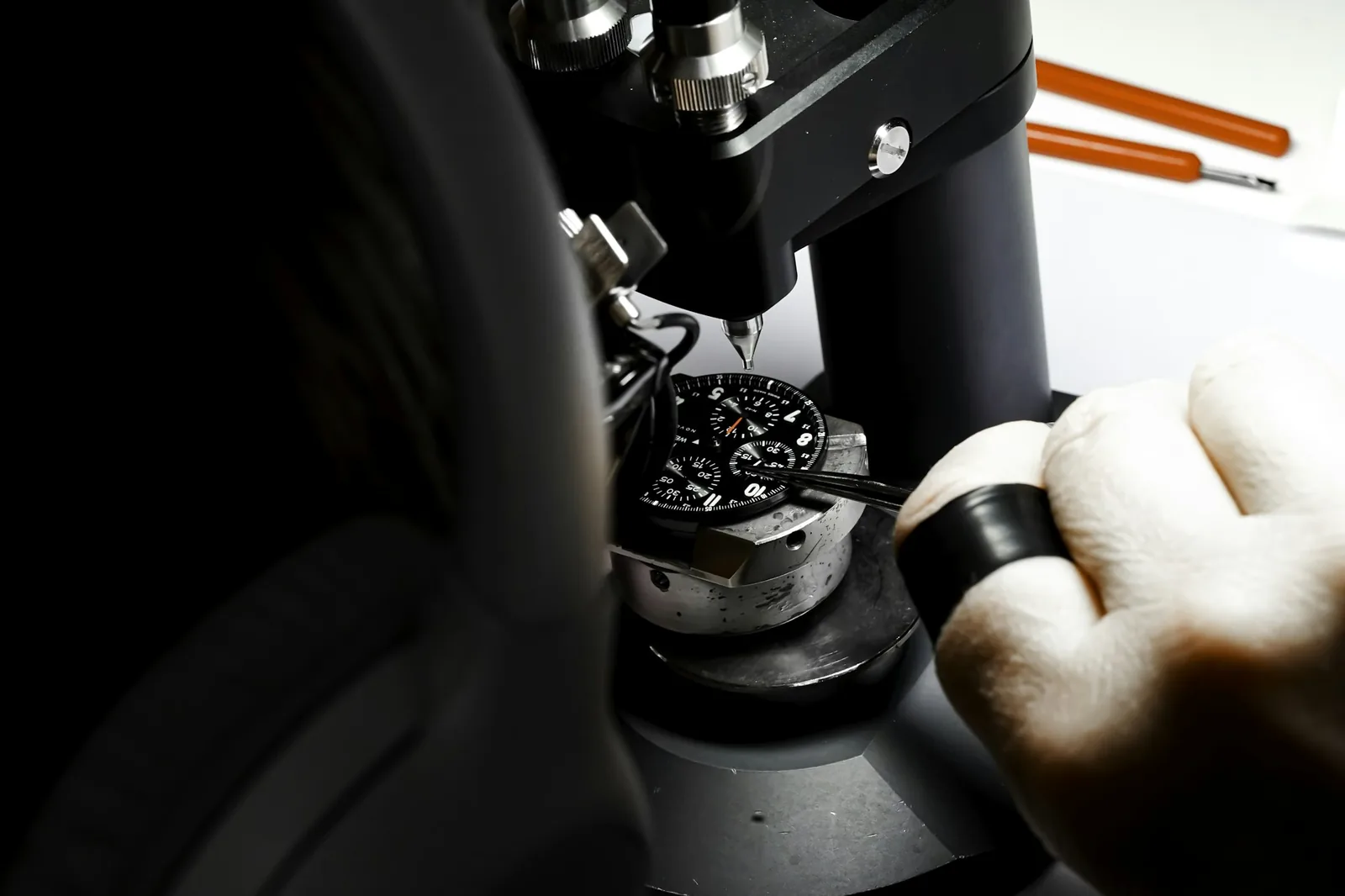
The movement comes out of the case and is taken apart, down to individual wheels and springs. Every part is cleaned, usually in a machine, to remove old oil and the fine metallic dust that wear produces.
Worn parts are replaced. The mainspring is a routine replacement on most services, because a tired one delivers less torque and the watch loses amplitude.
Reassembly is where the skill sits. Each bearing gets a specific oil in a specific quantity, and the escapement is lubricated with a different grade from the train.
Then the watch is cased with new gaskets, regulated across several positions, and pressure-tested. A service that skips the gaskets and the pressure test has left the water resistance to chance.
What it costs
| Watch | Independent watchmaker | Manufacturer service centre |
|---|---|---|
| Simple three-hand mechanical | Roughly $150–$300 | Often double |
| Mainstream luxury automatic | Roughly $400–$800 | Roughly $600–$1,500 |
| Chronograph | Add 50–100% over a three-hand | Substantially more |
| Multi-complication | Often declined | $1,500–$2,500 and upwards |
| Quartz | Battery and gaskets, modest | Rarely worth it |
Those are ranges rather than quotes, and they move with the market. The pattern that holds is the shape: complications multiply cost, and a brand’s own centre charges a premium for original parts and a warranty.
How often, really
Advice varies more than most owners realise, and some of it is decades out of date.
The traditional figure is three to five years. Several makers now say four to five, and at least one major brand quotes around ten, on the basis that modern lubricants and seals last considerably longer than the ones the old rule was written for.
Use varies it further. A watch worn swimming, particularly in salt water, ages its gaskets faster than one that lives at a desk.
The practical rule is to watch the behaviour rather than the calendar. A watch whose daily rate is drifting steadily worse, or whose power reserve is shortening, is telling you the lubricant has gone — which the guide to accuracy and power reserve covers in detail.
Choosing who does the work
Three routes, and the right one depends on the watch rather than the price.
- The manufacturer. Original parts, a warranty, and the only realistic option for an in-house movement with restricted parts supply. Slowest and dearest, and some will replace parts you wanted kept.
- An independent watchmaker. Usually cheaper and faster, often better at vintage, and far more likely to discuss what you want done. Parts availability is the constraint.
- A high-street jeweller. Fine for a battery and a strap. Most send anything more out to a third party, so ask who is actually doing the work.
Ask about qualifications rather than about years in business. Bodies such as the American Watchmakers-Clockmakers Institute certify watchmakers, and a certification is a more useful signal than a shopfront.
Say what you want left alone
This is the instruction most owners forget and most regret. Say, in writing, that you do not want the case or bracelet polished.
Polishing is often included as a courtesy. It removes metal, softens the crisp edges that make a case look right, and cannot be undone — and on a vintage watch it can take a serious bite out of value.
The same goes for parts. Ask for anything replaced to be returned to you, and say if you want the original dial, hands or bezel insert kept even if they are worn.
A good watchmaker will welcome the conversation. Anybody who is impatient with it is telling you something useful.
What happens between services
A service is not the only maintenance a watch needs, and the jobs in between are cheaper and easier to get right.
Gaskets and a pressure test are the important one. Any time the case is opened — including for a battery — the seals should be replaced and the watch tested, and a shop that skips it has quietly removed the water resistance you paid for.
A crystal replacement is straightforward and often transforms how a watch looks. It is the cheapest cosmetic improvement available on most watches.
Demagnetising takes seconds and costs almost nothing, and it fixes a watch that has suddenly started gaining minutes — the troubleshooting guide covers how to tell.
Turnaround, and why it varies so much
An independent watchmaker typically quotes weeks. A manufacturer’s service centre routinely quotes months, and sometimes considerably more.
The difference is parts and process. A brand centre works to a fixed procedure with original components, which is thorough and slow; an independent works to what the watch actually needs.
Ask for a timescale before handing anything over, and ask what happens if a part turns out to be unavailable. That is the question that most often turns six weeks into six months.
If a watch is your only one, ask about that too. Some watchmakers will schedule the work rather than take the watch and start a queue.
When repair is not worth it
An honest watchmaker will sometimes tell you the work costs more than the watch is worth, and they are usually right.
A service costing several hundred on a watch worth two hundred makes sense only for sentimental reasons, which are perfectly good reasons — but they should be the stated reason.
Quartz watches are the common case. Beyond a battery, a gasket set and perhaps a coil, a quartz movement is generally replaced rather than repaired.
Corrosion is the other. Water damage caught in days is a gasket and a clean; water damage caught in months is often a new movement, which is why the troubleshooting guide treats condensation as urgent.
Getting a quote you can compare
Ask for the same five things from everyone you approach, and the numbers become comparable.
- Is this a full overhaul, and does it include a new mainspring?
- Are gaskets replaced and is the watch pressure-tested afterwards?
- Will the case or bracelet be polished, and can that be declined?
- What warranty covers the work, and for how long?
- What happens to parts that are replaced?
A quote that cannot answer those is not a quote for a service. If you are weighing a service against buying something else, the used buying checklist is the other half of that sum.
Frequently asked questions
How much does a watch service cost?
Roughly $150 to $300 for a simple mechanical watch at an independent, and $400 to $1,500 for a mainstream luxury automatic depending on where it goes. Chronographs and complications cost substantially more, and a manufacturer’s own centre charges a premium.
How often should a mechanical watch be serviced?
Traditional advice says three to five years; several makers now say four to five, and at least one says around ten. Behaviour beats the calendar — a steadily worsening rate or a shortening power reserve is the real signal.
Should I use the manufacturer or an independent watchmaker?
The manufacturer for an in-house movement with restricted parts, or where a warranty matters. An independent for anything vintage, anything where you want a say in what is done, and most ordinary mechanical watches.
Should I let them polish my watch?
Usually no, and say so in writing because it is often included by default. Polishing removes metal permanently, softens the case’s original edges and can reduce the value of an older watch considerably.
Ask what the work includes, say what you want left alone, and treat a worsening rate rather than an anniversary as the trigger. That turns servicing from a recurring bill into maintenance you control.