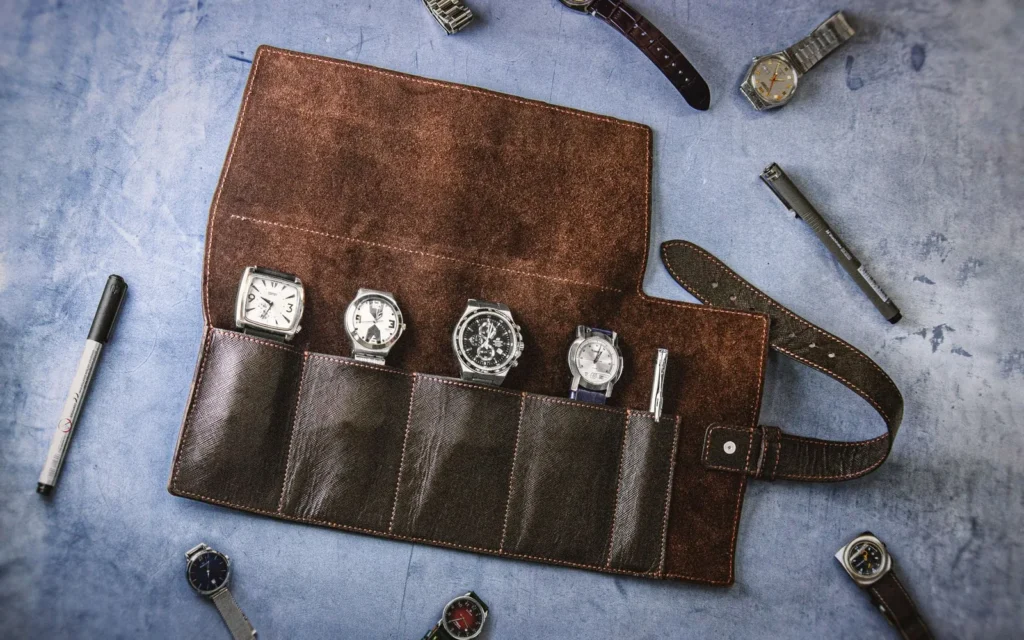
Watches are damaged in storage more often than people expect, and almost always by three things: sunlight, humidity and being stacked on top of each other. None of them costs anything to avoid.
Travel adds a fourth problem, which is that the safest place for a watch is usually on your wrist, and the places people put them instead are worse.
Storing at home
A drawer with a soft lining is genuinely fine. So is the box the watch came in. Neither needs replacing with anything expensive.
What matters is where the drawer is. Avoid windowsills, which fade dials and degrade luminous material through ultraviolet exposure, and avoid bathrooms, where humidity is constant and gaskets suffer.
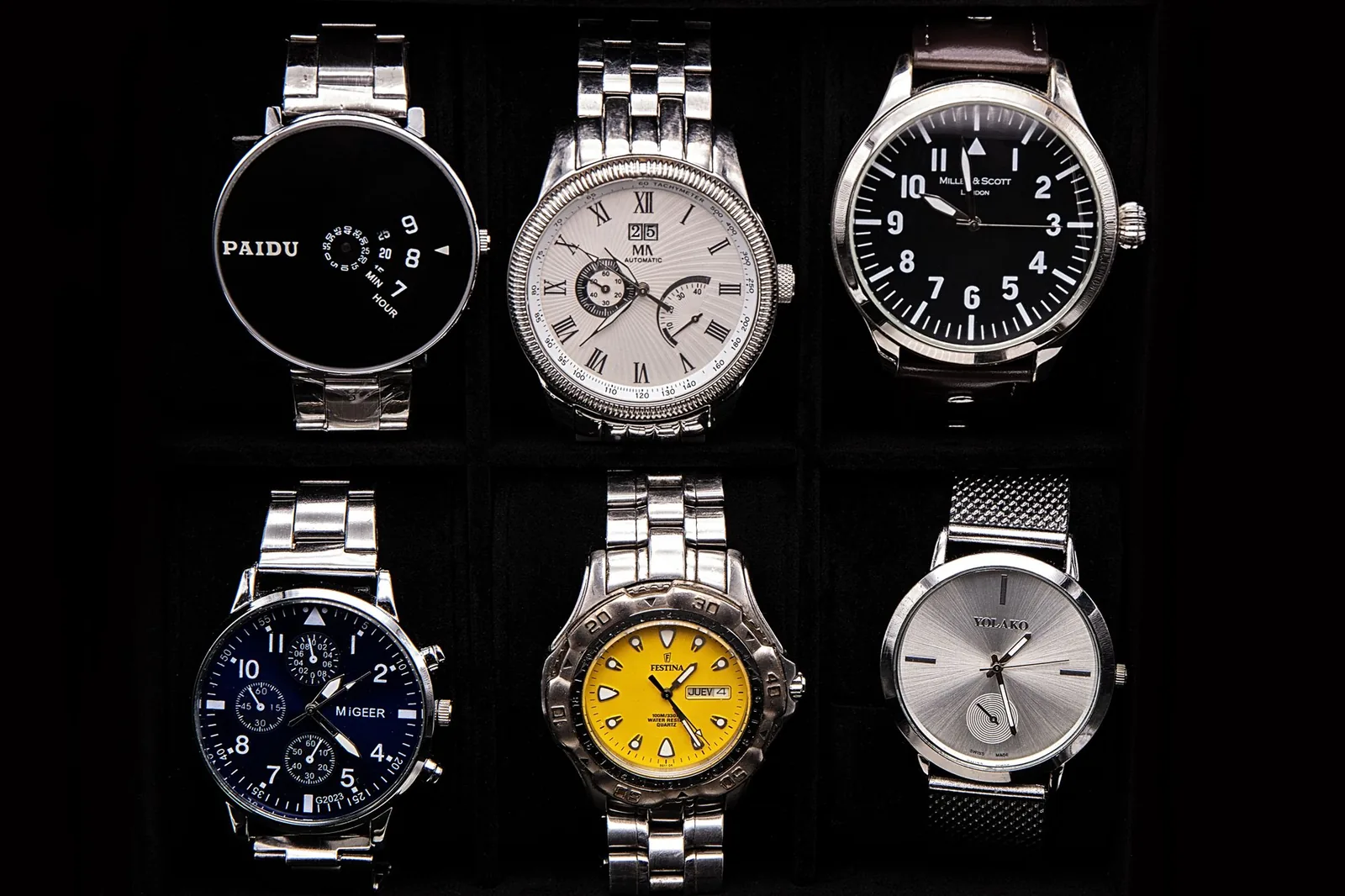
Do not stack watches. A crystal resting against a bracelet clasp will pick up a scratch that cannot be polished out, which is the most common self-inflicted damage there is.
Keep them apart from magnets, too. Phone cases, laptop lids, speakers and magnetic clasps all sit in the same drawers people use for watches — and the troubleshooting guide covers what that does to a hairspring.
Boxes, rolls and cases compared
| Option | Best for | Weakness |
|---|---|---|
| Lined drawer | Any number, at home, cheaply | Easy to stack and scratch |
| Watch box with cushions | Keeping watches apart and visible | Advertises what is inside |
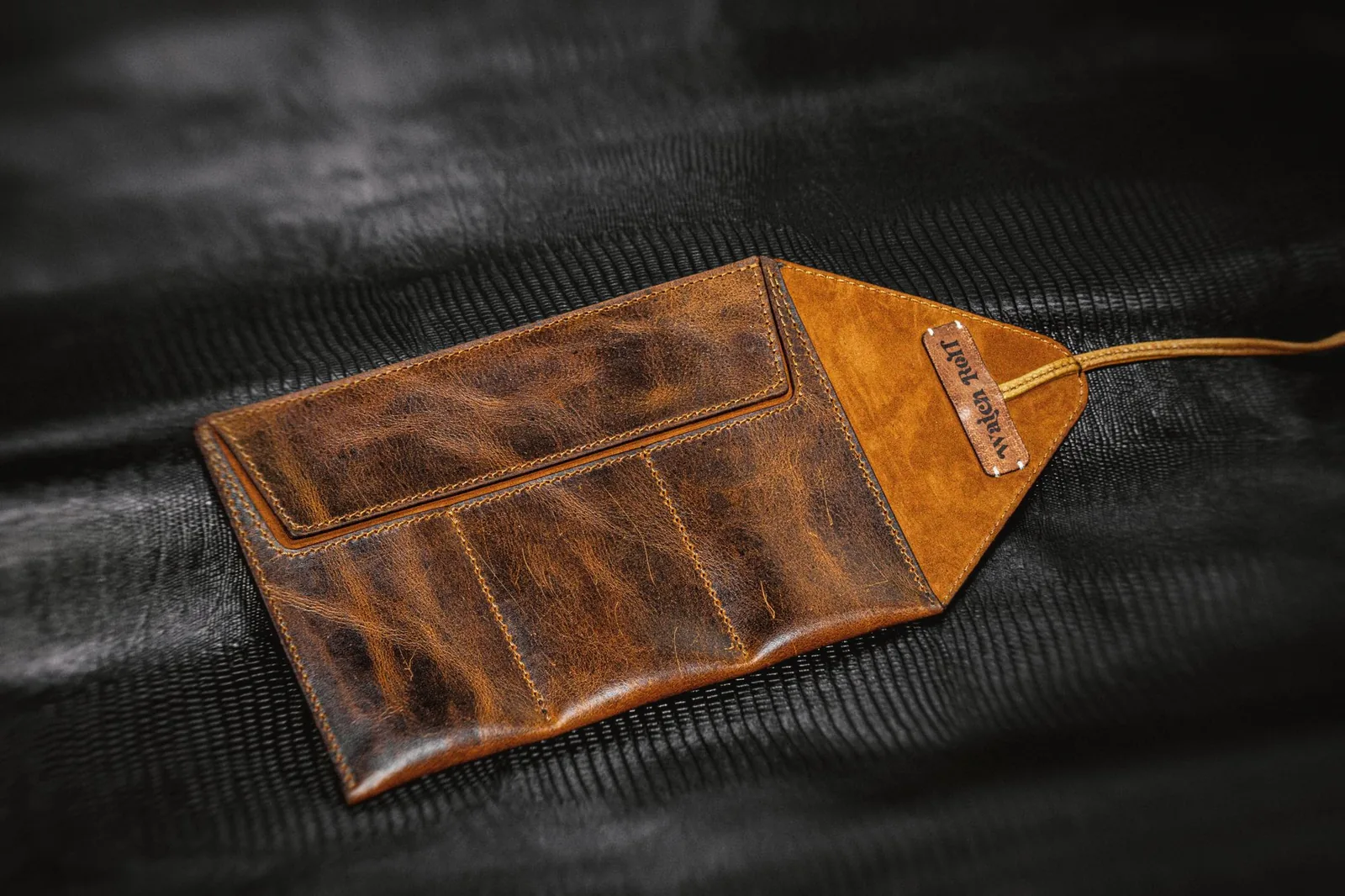
| Watch roll | Travel; one to three watches | No impact protection |
| Hard travel case | Checked luggage, if unavoidable | Bulk, and it looks like treasure |
| Winder | Calendars that are painful to reset | Runs the movement continuously |
| Safe | Anything valuable, at home | Humidity, unless it breathes |
The cushions in a watch box are there to keep bracelets from touching. Using them properly is most of the benefit; a box with four watches piled in one compartment is a drawer with delusions.
Are watch winders worth it?
A winder rotates an automatic watch so it stays wound and its calendar stays correct. That is the whole benefit, and it is smaller than the marketing suggests.
For a plain three-hand automatic worn weekly, a winder solves a problem that takes thirty seconds to solve by hand. Wind it, set it, wear it.
For an annual or perpetual calendar, the calculation changes completely. Resetting one of those is a careful, fiddly job, and keeping it running is worth the electricity.
The argument that winders cause wear is overstated but not wrong: a movement running continuously accumulates running hours it would not otherwise. If you use one, use a setting with rest periods rather than continuous rotation — and see the power reserve guide for why a hand wind is usually enough.
Long-term storage
A watch put away for years needs a little thought, because time passes for a stationary watch too.
Let a mechanical watch run down rather than storing it fully wound. A mainspring held under full tension for years is not doing itself any good.
Take the battery out of a quartz watch you are not going to wear. A cell left to die in the case can vent and corrode the movement, and that damage is frequently not worth repairing.
Gaskets perish whether or not the watch is worn. A watch that has sat untouched for five years has five-year-old seals and no water resistance worth trusting, as the water resistance guide explains.
Leather straps want to be stored flat and dry, away from the watch if possible, since they hold moisture against the case back.
Travelling with a watch
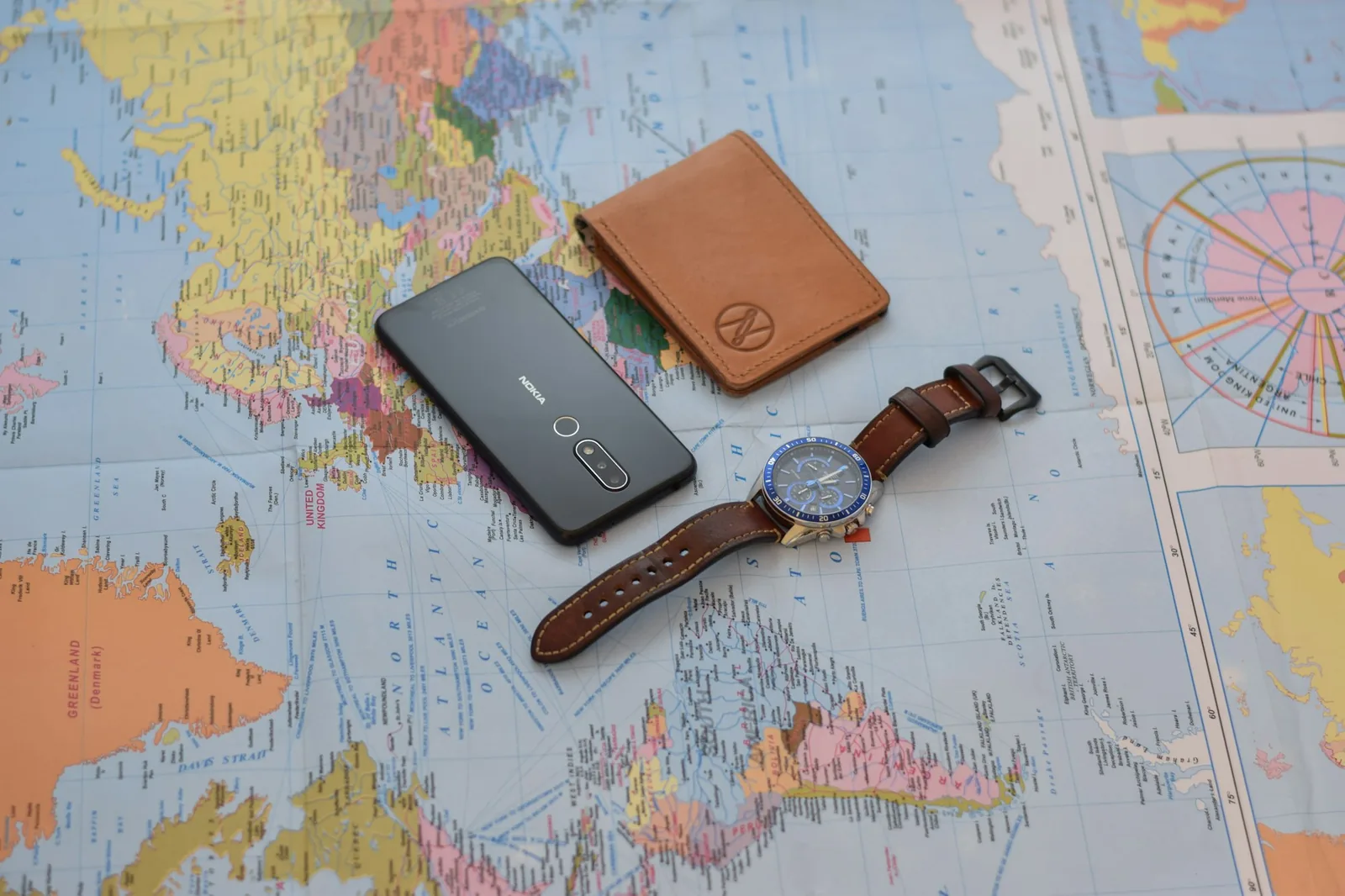
The safest place for a watch in transit is on your wrist, and the second safest is in your hand luggage. Never in checked baggage.
If you are taking more than one, a soft roll in a bag you keep with you is enough. A hard case is only worth it if the bag is going somewhere you are not.
Check what your destination requires before you go. Some countries have declaration rules for valuables, and travel insurance frequently caps single-item cover well below what a watch is worth — the official foreign travel advice is the place to check the local rules.
Photograph everything before you leave, with serial numbers visible. It takes two minutes and it is what an insurer will ask for.
Humidity, and the one thing a safe gets wrong
A safe solves theft and creates a different problem: it is a sealed metal box, and sealed metal boxes hold moisture.
Damp is worse for watches than most owners realise. It attacks gaskets, encourages corrosion on steel case backs and, over years, can reach a movement through seals that are no longer new.
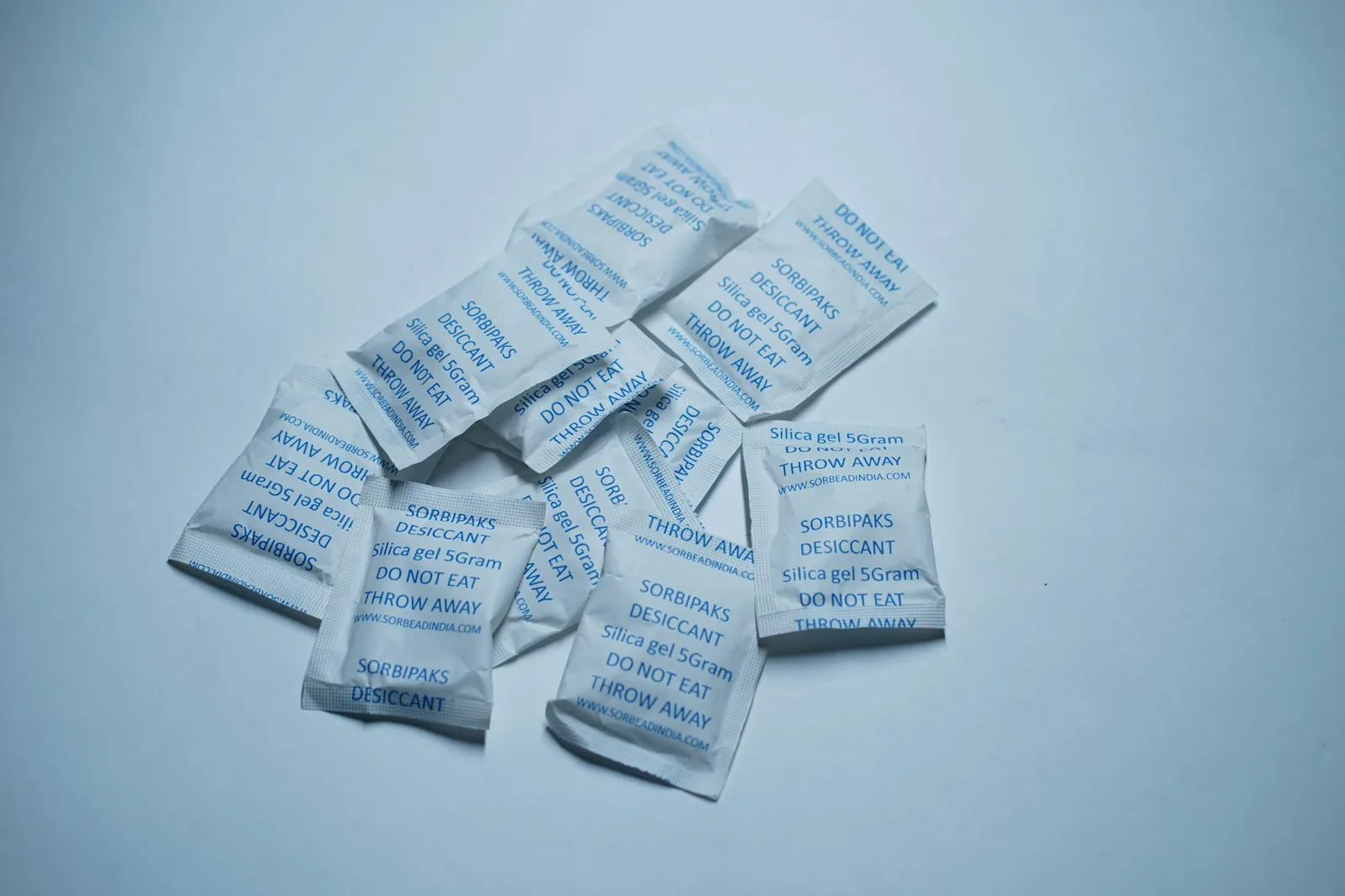
A cheap sachet of silica gel, replaced occasionally, deals with it. So does opening the safe from time to time, which most people do anyway.
The same applies to any airtight container. A watch sealed in a plastic bag with a little humid air in it is stored worse than one in an open drawer.
Keeping a record
The most useful thing you can do for a collection takes twenty minutes and costs nothing.
Photograph each watch from the front, the back and the clasp, with the serial number legible. Note the reference, the purchase date and any service history.
Keep that record somewhere that is not the house the watches are in. An insurer will ask for exactly this, and after a loss is a bad time to discover the photographs were on a phone that went with them.
Update it when anything changes — a service, a new strap, a sale. A record that is two years out of date is halfway to no record at all.
Hotel safes, and what they are for
A hotel room safe deters opportunism and nothing more. They are small, lightly built and frequently openable with a master code.
That does not make them useless. It makes them appropriate for a watch you would rather not leave on a bedside table, and inappropriate for anything you could not stand to lose.
For genuinely valuable pieces, the honest answers are the hotel’s main safe with a receipt, or leaving the watch at home. Taking a very expensive watch somewhere unfamiliar is a decision, not an accident.
A modest, robust watch is the traveller’s answer, which is a large part of why field and dive watches exist — the watch types guide covers what makes them suitable.
Time zones and setting on arrival
Changing time zones is where dates get broken. The rule is the same as always: do not adjust the date while the watch thinks it is near midnight.
On a watch with a date, move the hands forward past noon first, then set the date, then set the time properly. Going backwards through midnight is the move to avoid.
A GMT hand makes all of this unnecessary, which is the practical argument for the complication rather than the romantic one — the complications guide covers the two kinds and which suits a traveller.
If you have crossed several zones and the watch has stopped, wind it fully before setting it. Setting a nearly unwound watch is how you get a rate that makes no sense for the next day.
Frequently asked questions
How should I store a watch I am not wearing?
Somewhere dry, dark and not stacked. A lined drawer or the original box is fine. Keep it out of sunlight, away from bathrooms, and away from magnets — which means away from phones, laptops and magnetic clasps.
Do I need a watch winder?
Only if resetting the watch is genuinely painful, which in practice means an annual or perpetual calendar. For a plain automatic, winding it by hand takes thirty seconds and avoids running the movement continuously.
Should I put a watch in checked luggage?
No. Keep it on your wrist or in hand luggage. Checked bags are handled roughly, are frequently opened, and most travel insurance will not cover a valuable item stored in one.
Should I store a mechanical watch wound or unwound?
Let it run down. A mainspring held at full tension for years is under constant load for no benefit. Take the battery out of a quartz watch instead, since a dying cell can leak and corrode the movement.
Keep them dry, dark and separated, let a mechanical watch run down before it goes away, and never put one in a bag you will not be carrying. That covers almost every way a watch gets damaged while nobody is wearing it.