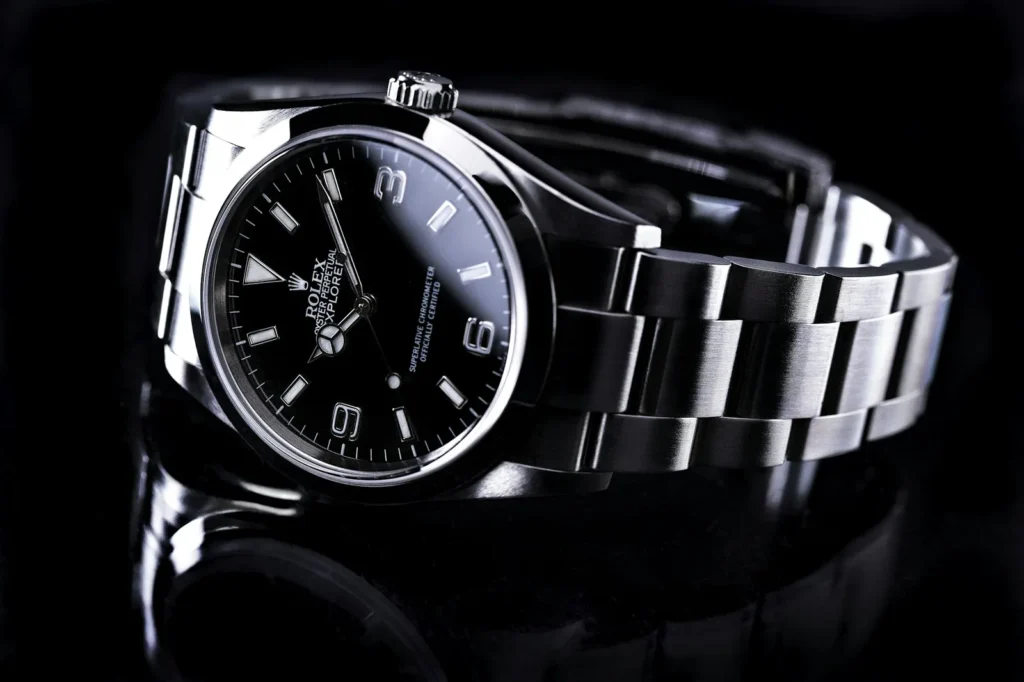
Most watches are not damaged by neglect. They are damaged by enthusiasm — hot water, ultrasonic tanks, silver polish and the conviction that a screw-down crown makes a watch invincible.
Proper care is mostly a matter of doing very little, consistently. A rinse, a wipe, and a sense of what not to do will keep a watch presentable for decades.
The weekly wipe
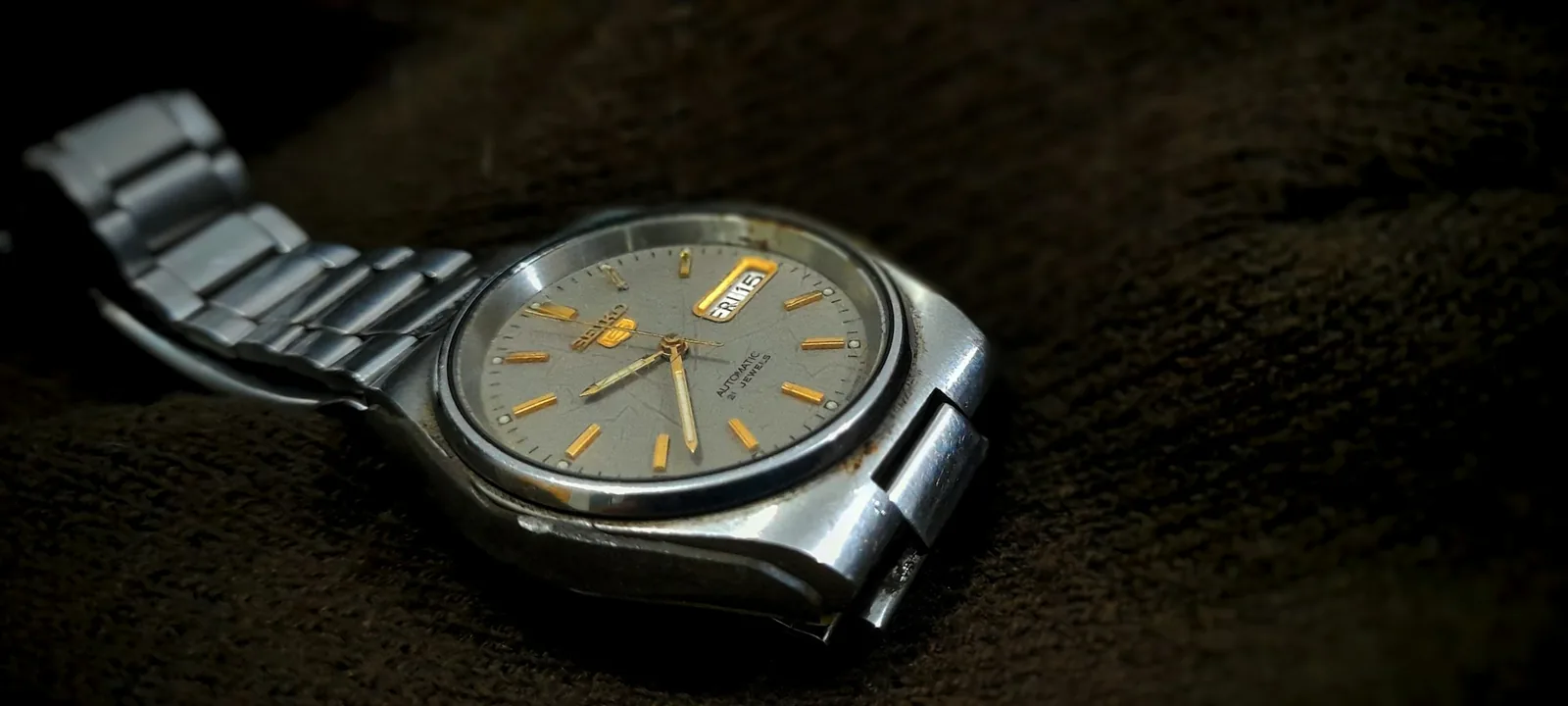
The single most valuable habit takes thirty seconds. Wipe the case and the strap with a dry microfibre cloth at the end of each week, paying attention to the underside of the lugs.
That is where skin oil and dust collect into a grey paste that eventually works into the gaps. Removing it weekly means never needing to remove it properly.
Use the cloth dry unless the watch is visibly dirty. A dry cloth cannot push moisture past a gasket, which is the failure mode most cleaning advice ignores.
For the crystal, breathe on it and wipe. Glass cleaner is unnecessary and the solvent in it does no favours to a rubber gasket.
Cleaning a bracelet properly
A steel bracelet holds more grime than the case, because it has hundreds of internal surfaces. It is also the part that can be cleaned most aggressively, because it has no seals.
The safest method is to take the bracelet off the watch first. Then use warm water, a drop of washing-up liquid and a soft toothbrush, working along the links and the clasp.
Rinse thoroughly and dry properly, ideally with a hairdryer on a cool setting to drive water out from between the links. Water left inside a clasp will leave mineral marks as it dries.
If you clean the bracelet on the watch, keep the case out of the water entirely. That means the whole exercise depends on the gaskets, and gaskets are the part you cannot inspect.
What to keep a watch away from
Four things cause most avoidable damage, and none of them looks dangerous at the time.
| Hazard | What it does | What to do instead |
|---|---|---|
| Hot water and steam | Case and gaskets expand at different rates, letting vapour in | Take the watch off for showers and saunas |
| Soap and shampoo | Degrades rubber gaskets over time | Rinse in clean water if it gets soapy |
| Ultrasonic cleaners | Drives water past seals and can loosen dial markers | Bracelet only, never the cased watch |
| Magnets | Magnetises the hairspring, so the watch runs fast | Keep clear of phone cases, laptop lids, clasps |
Salt water deserves a line of its own. It is not immediately destructive but it is relentless, so rinse the watch in fresh water after the sea and dry it before it evaporates on its own.
Straps need different care
Leather wants to be kept dry and allowed to breathe. Wipe it, never soak it, and rotate to another strap occasionally so it can dry out fully between wears.
Rubber and silicone can be washed with soap and water, and should be, because they hold skin oils and start to smell. Nylon can go in the sink or, at a pinch, in the wash.
A strap worn tight all day holds sweat against skin, and that combination of damp, friction and metal is a common cause of irritation. The NHS guidance on contact dermatitis is worth reading if a watch has ever left a mark on your wrist.
The practical fix is usually looser, not different. Wear the watch loose enough to move a centimetre, and take it off after exercise rather than leaving it to dry on your arm.
Keeping the lume and the dial right
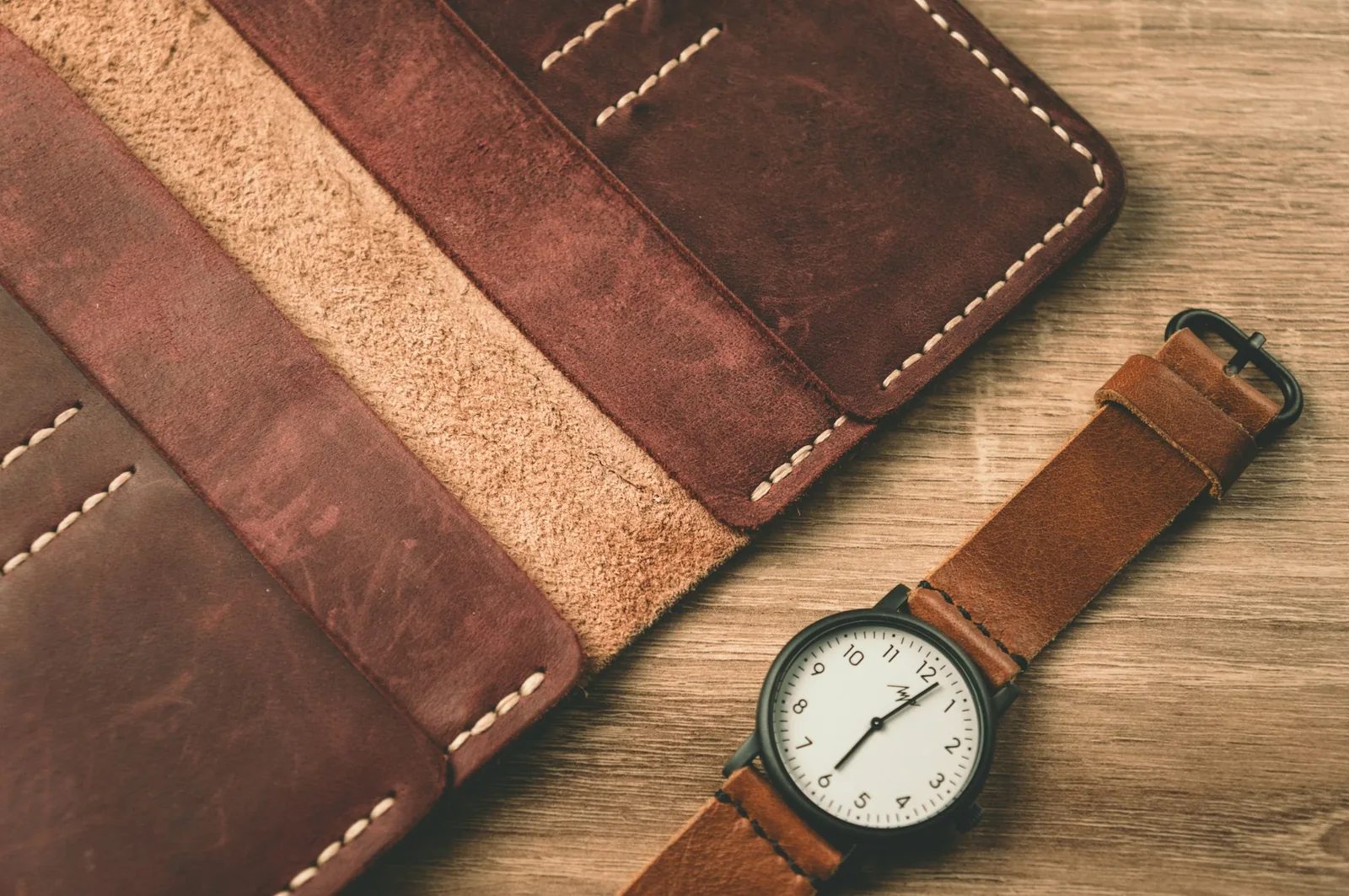
Luminous material is charged by light and it fades over decades, but the thing that ruins it early is ultraviolet exposure rather than age.
A watch left on a sunny windowsill will lose lume brightness and dial colour faster than one worn daily. Dials fade unevenly, which is why so many vintage watches have a patchy look.
There is nothing to be done once it has happened. Re-luming is possible and rarely worth it on anything but a sentimental piece, since it replaces original material with new.
Prevention is simply storage out of direct light, which costs nothing. The archive’s older entries show how varied dial finishes were before the current fashion for uniformity — worth a look through the specification index if you are curious about how they were described at the time.
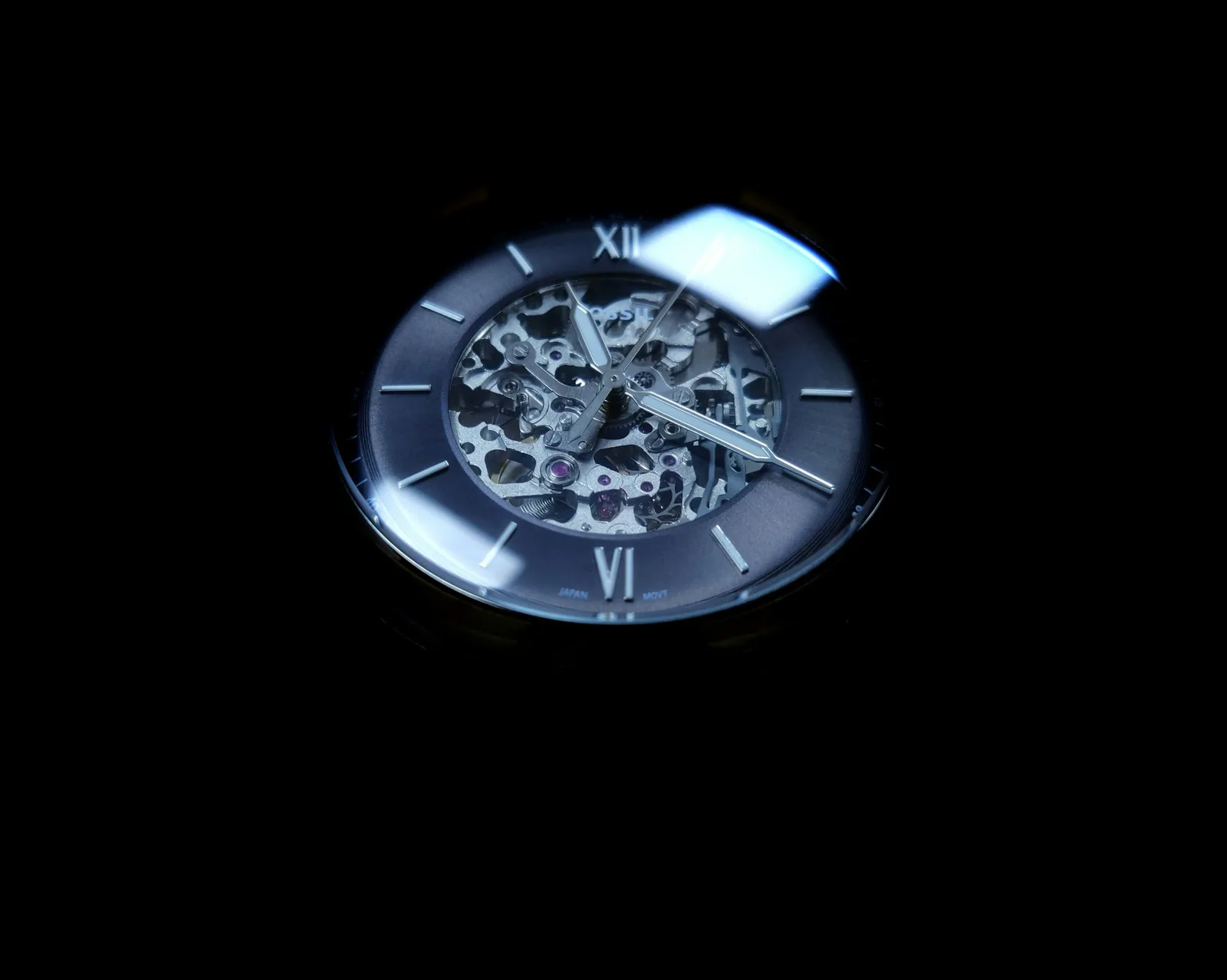
Storage between wears
A watch not being worn wants to be dry, dark and unsqueezed. A drawer with a soft lining is genuinely fine; the box it came in is fine too.
Avoid windowsills, which cook the watch and fade the dial, and avoid bathrooms, where the humidity is constant. Avoid stacking watches on top of each other, which is how crystals get scratched.
Watch winders are optional and slightly contentious. They keep an automatic running and its date correct, at the cost of running the movement continuously when it could be resting.
For a watch worn weekly, a winder is unnecessary. For a perpetual calendar that is painful to reset, it earns its place.
Service intervals worth keeping
Mechanical watches want a full service every three to five years, because the lubricants degrade whether or not the watch runs. Waiting until it stops means the pivots have already been running dry.
Quartz watches want a battery before the old one leaks, not after. A dead battery left in place for a year can vent and corrode the movement beyond economic repair.
Water-resistance testing is separate and cheap. Any time the case has been opened, the gaskets should be replaced and the watch pressure-tested, which is covered in the water resistance guide.
If a watch has started behaving differently rather than gradually drifting, that is a symptom rather than a maintenance interval. The troubleshooting guide covers what the common symptoms mean.
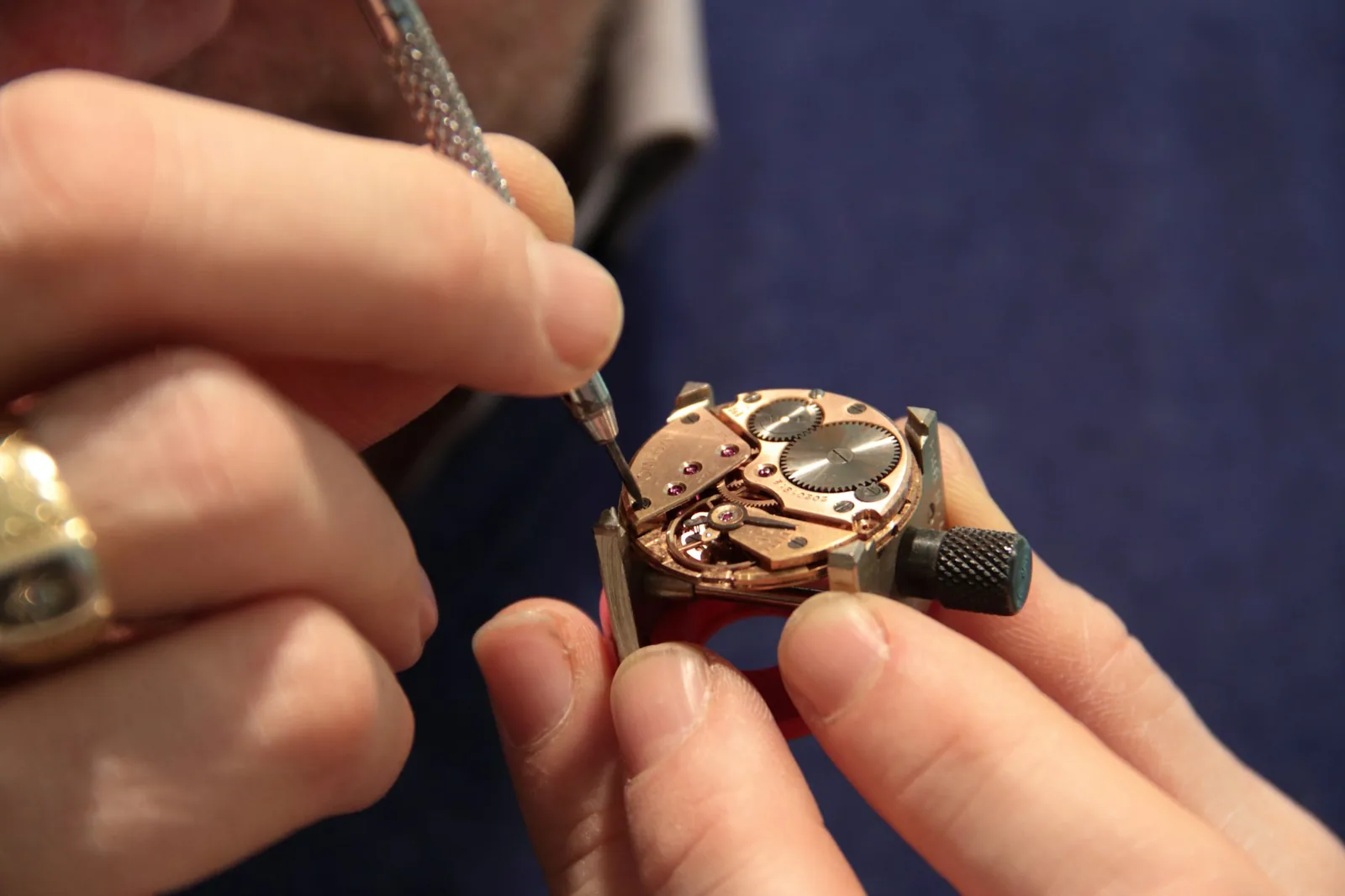
What not to attempt at home
Some jobs are genuinely easy and some quietly ruin watches. Changing a strap, cleaning a bracelet and rinsing off salt water are all fine.
Opening a case back is not, unless you have the right tool and a replacement gasket. Polishing a case is not either — it removes metal, softens the crisp edges that make a case look good, and cannot be undone.
Touching the dial or hands is the one to avoid completely. Dial paint and old luminous material are fragile, and a fingerprint on a dial is permanent in a way a fingerprint on a case is not.
If you are curious about how the machine works, the movements explainer is a cheaper way to find out than opening one.
Frequently asked questions
How do I clean a watch at home?
Wipe the case and crystal with a dry microfibre cloth weekly. For a dirty bracelet, remove it from the watch and use warm water, a little washing-up liquid and a soft toothbrush, then rinse and dry it thoroughly.
Can I wear my watch in the shower?
Better not, whatever the rating says. Hot water makes the case and gaskets expand at different rates, and soap degrades the seals. Both shorten the life of the water resistance you paid for.
How often should a watch be serviced?
Every three to five years for a mechanical watch, because the lubricant degrades on a timetable of its own. Quartz watches need a battery every two to five years and a gasket check whenever the case is opened.
Why does my watch leave a mark on my wrist?
Usually trapped sweat and friction rather than a metal allergy, though nickel sensitivity is real. Loosen the strap so the watch can move, dry your wrist after exercise, and try a nylon or rubber strap for a while.
Wipe it weekly, keep it away from heat and magnets, and book the service before something goes wrong rather than after. That is very nearly the whole of watch care.