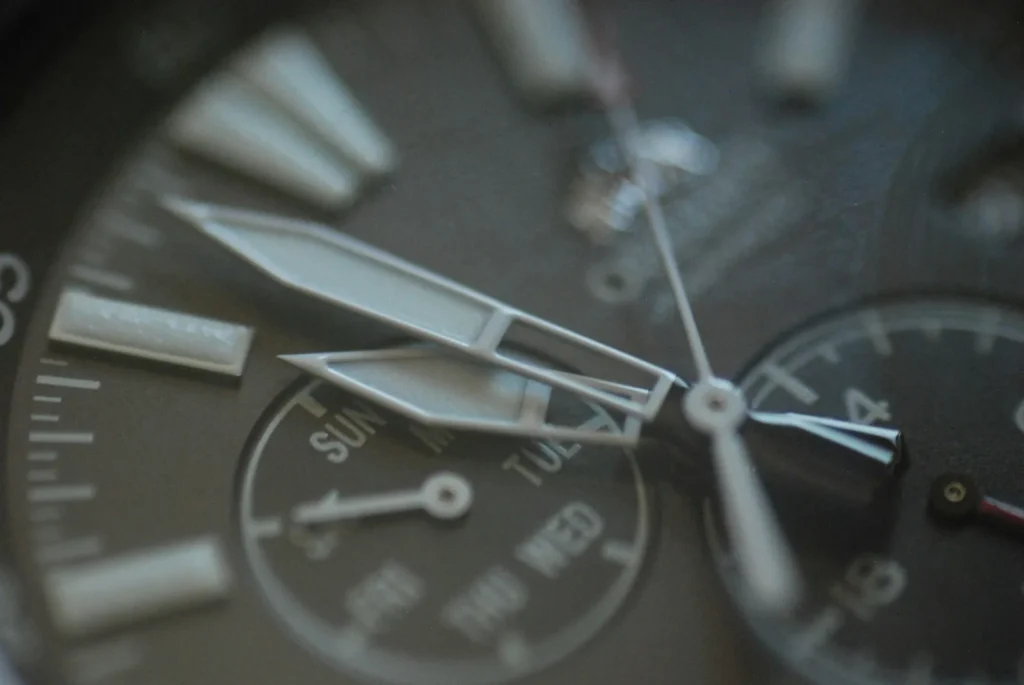
A complication is anything a watch does beyond hours, minutes and seconds. A date is one. So is a chronograph, a second time zone, a moon phase and an alarm.
Every one of them adds parts, and parts add height, cost and something else to go wrong. The useful question is never whether a complication is impressive but whether you will use it more than once a year.
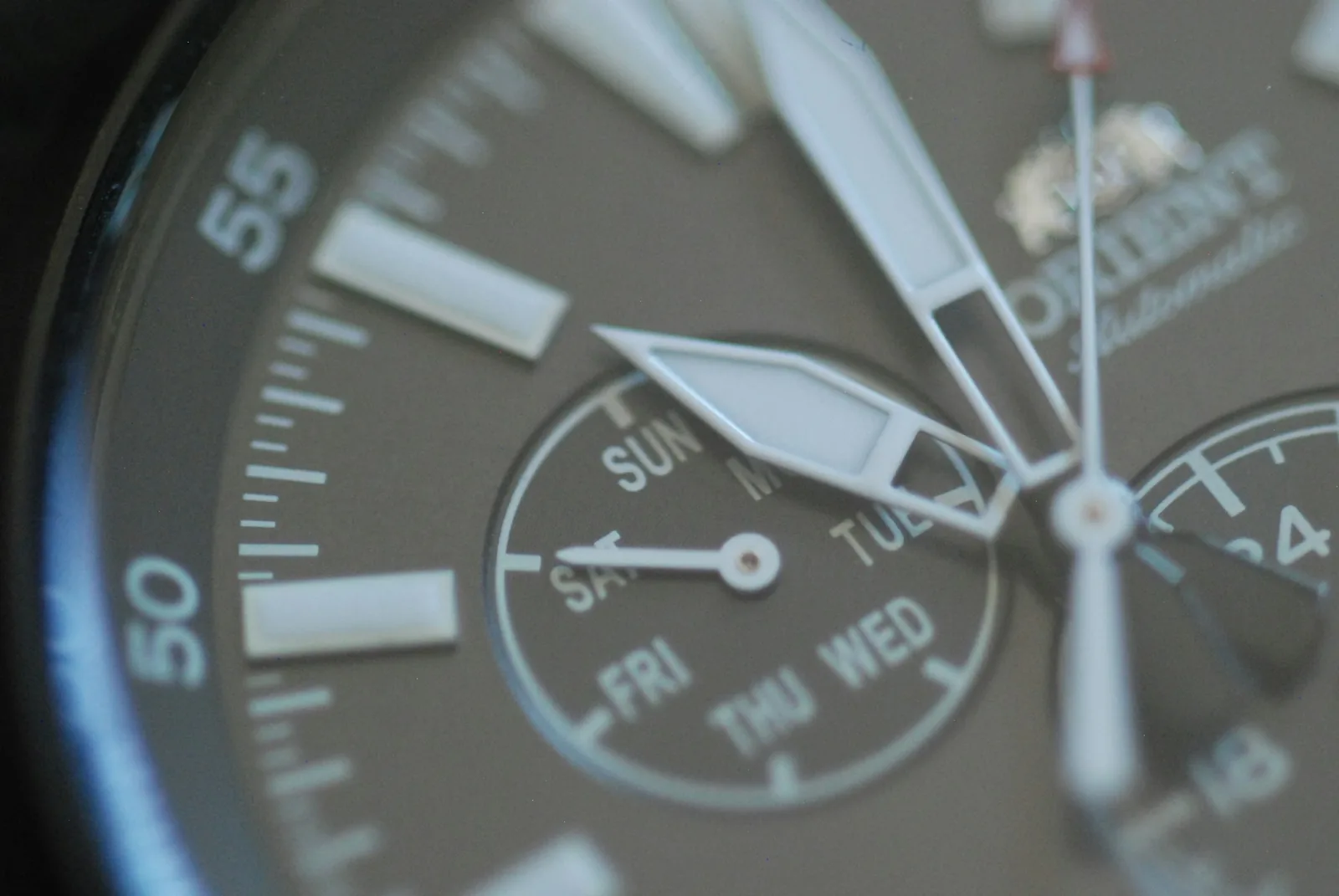
The complications you will actually meet
| Complication | What it does | Cost to own | Worth it if… |
|---|---|---|---|
| Date | Shows the day of the month | Minimal | Almost always |
| Day-date | Adds the weekday | Small | You lose track of weekdays |
| Chronograph | Times an interval | Height, and a dearer service | You genuinely time things |
| GMT or dual time | A second time zone | Modest | You travel or work across zones |
| Power reserve | Shows remaining wind | Modest | You rotate several watches |
| Moon phase | Tracks the lunar cycle | Modest; fiddly to set | You like it, which is reason enough |
| Alarm | Sounds at a set time | Modest | You want it off a phone |
| Annual or perpetual calendar | Handles month lengths | Substantial, and a specialist service | You wear it constantly |
Read the last column first. Most complications are bought for the second row of that table and used at the rate of the fourth.
The date, and its quiet cost
A date is the complication almost everybody wants and the one that causes the most avoidable trouble.
The mechanism advances the disc gradually over several hours around midnight. Changing the date by hand during that window can jam or break the parts doing the work, which is why the standard advice is never to set the date between about nine at night and three in the morning.
Set the time forward past noon first, so you know the watch thinks it is daytime, then set the date. It is a ten-second habit that avoids an expensive repair.
A date also means a watch left unworn needs resetting as well as restarting, which is a small tax on owning more than one — see the storage and travel guide.
Chronographs: the most bought, the least used
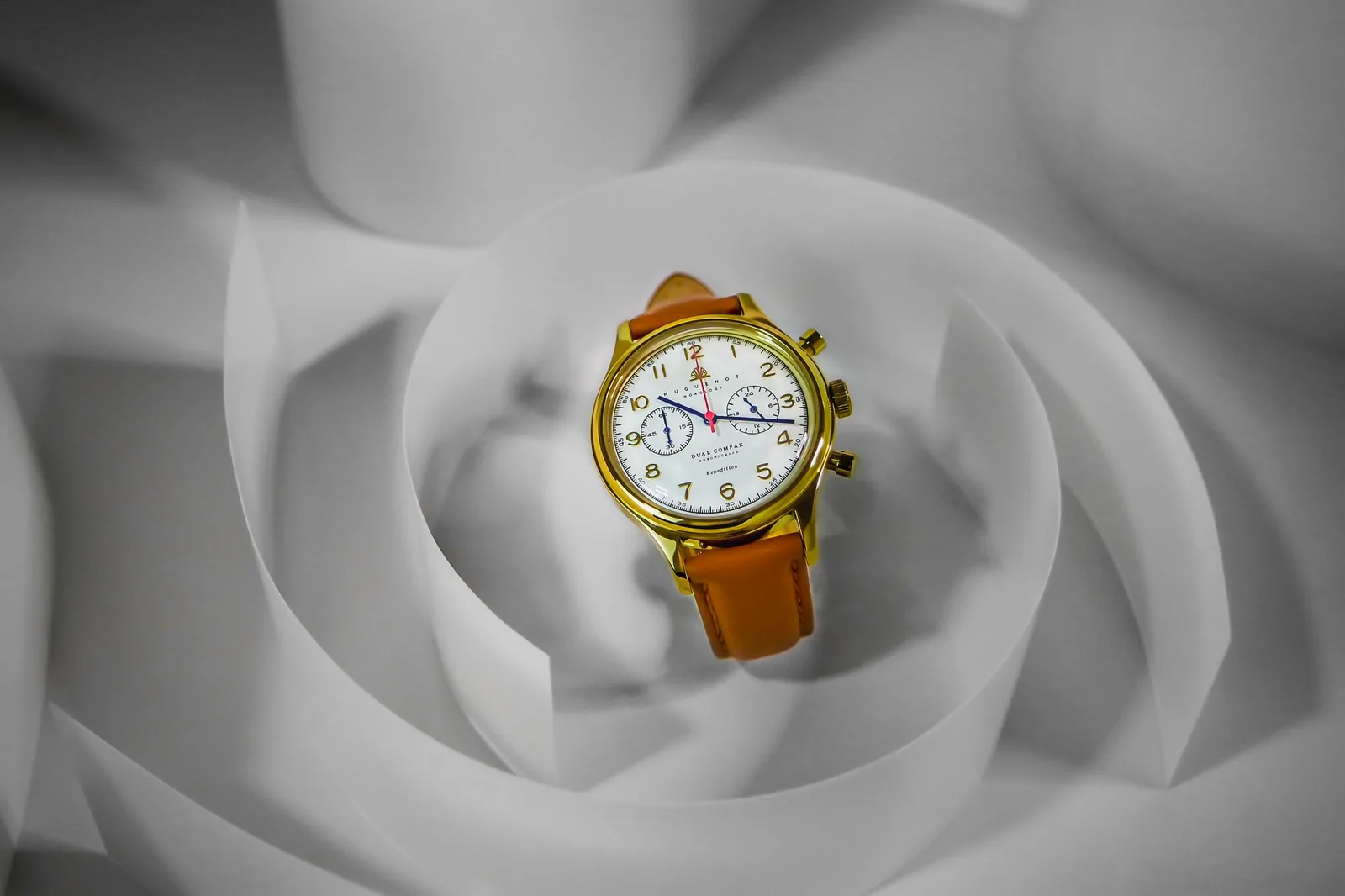
A chronograph is a stopwatch integrated into the movement. Pushers start, stop and reset a central seconds hand, and subdials count the elapsed minutes and hours.
It is the most popular complication by a wide margin, and it is the one whose owners most often admit they never use it. Phones took the job.
The cost is real. A chronograph adds height to the case, adds pushers that extend it sideways, and adds meaningfully to every future service bill.
If you do time things — cooking, parking, intervals, laps — it earns that. The archive’s chronograph listings show how common the complication already was in a mid-2000s catalogue, and the watch types guide covers where it fits stylistically.
GMT and dual time
A GMT adds a hand that circles the dial once a day rather than twice, read against a 24-hour scale. Set it to your home time and the main hands to wherever you are.
The useful distinction is between a “true” GMT, where the hour hand can be jumped independently, and a caller GMT, where the extra hand moves instead. The first suits travellers; the second suits people who stay put and call abroad.
It is the complication with the best ratio of usefulness to cost for anyone whose life crosses time zones. Unlike a chronograph, it works passively — you do not have to remember to use it.
The archive records the same idea in its world-time models, listed in the specification index.
Moon phase, and why it is charming rather than useful
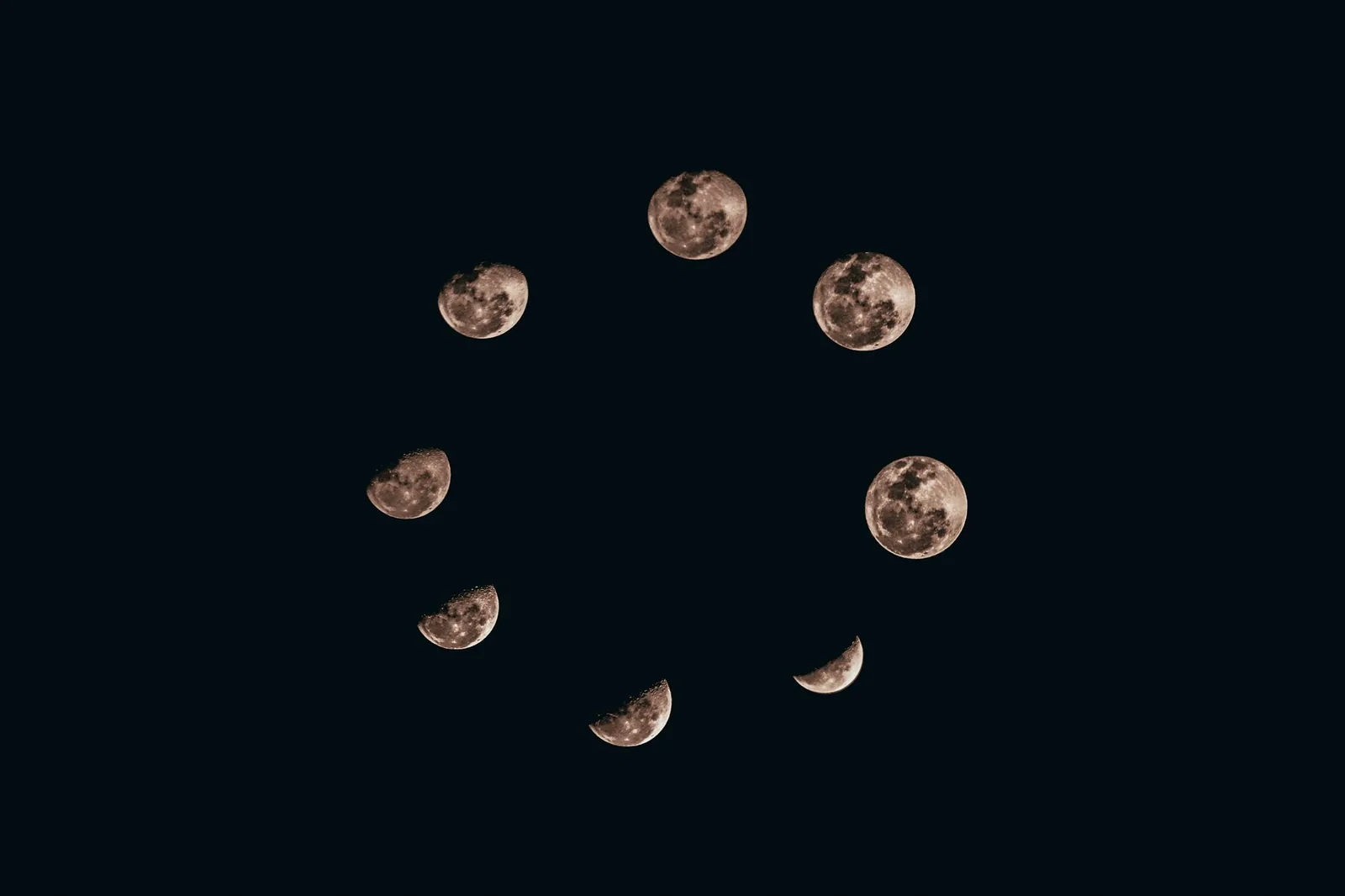
A moon phase disc turns behind an aperture to show the current phase. Since the lunar cycle is about 29.5 days, a simple two-moon disc driven by a 59-tooth wheel drifts by roughly a day every two and a half years.
More elaborate versions reduce that to a day in a century, which is a wonderful piece of gear-cutting in service of a fact you can get from the sky or from NASA’s moon phase pages.
Nobody buys one for utility, and pretending otherwise is silly. It is bought because a small painted moon crossing a dial is a lovely thing, which is a perfectly respectable reason.
Be aware it is fiddly. A moon phase left to stop has to be advanced day by day to catch up.
Power reserve indicators and alarms
Two complications that are more useful than their reputation, and both for the same reason: they tell you something the watch alone cannot.
A power reserve indicator shows how much wind is left. On a hand-wound watch it removes the guesswork; on an automatic worn irregularly it tells you whether tonight’s rest will stop it.
An alarm is the oldest useful complication there is, and it survives because a wrist buzz is discreet where a phone is not. Mechanical alarms are quiet, which is either charming or useless depending on how deeply you sleep.
Neither adds much height or service cost, which is what separates them from a chronograph. If you rotate several watches, a reserve indicator earns its place faster than almost anything else — see the power reserve guide.
Setting a complicated watch without breaking it
More complications are damaged by careless setting than by wear, and the rules are simple enough to memorise.
Never adjust a date, day or moon phase while the watch reads between about nine at night and three in the morning. The mechanism is engaged during that window and forcing it breaks teeth.
Wind first, set second. A movement running on the last of its reserve does not have the torque to drive a date change cleanly.
And on a chronograph, always reset the timer to zero before winding or setting. Leaving it running consumes the reserve and puts the movement under load it does not need.
What complications do to the movement
Every added function draws on the same mainspring. A watch driving a chronograph, a date wheel and a running seconds hand has less torque available for the balance than a plain three-hander.
That shows up as reduced amplitude, which shows up as a rate that drifts. Some chronographs measurably lose time while the timer is running.
Complications also add height. A chronograph module can add several millimetres, which matters on a smaller wrist — the small wrist guide covers why.
And they add service cost permanently, not once. That is the part worth thinking about at the point of purchase, since it recurs every few years.
Choosing honestly
Ask two questions about any complication you are drawn to.
- When did you last need this information, and did you get it from a phone?
- Are you prepared to pay for it again at every service for as long as you own the watch?
If the answers are “never” and “no”, buy the version without it and enjoy the thinner case. If they are “constantly” and “yes”, buy it and use it — the buying guide covers where it fits in the decision order.
Frequently asked questions
What is a watch complication?
Anything the movement does beyond showing hours, minutes and seconds. A date is a complication, and so is a chronograph, a second time zone, a power reserve indicator, an alarm and a moon phase.
Why should I not change the date at midnight?
The date mechanism engages for several hours around midnight to advance the disc. Forcing it by hand during that window can damage the parts doing the work. Set the hands past noon first, then set the date.
Is a chronograph worth buying?
Only if you actually time things. It is the most-bought complication and the least-used one, and it adds case height, case width and a permanent premium to every service. If you do use it, it earns all of that.
What is the difference between a true GMT and a caller GMT?
On a true GMT the main hour hand jumps independently, so you change local time without disturbing the second zone — the traveller’s version. On a caller GMT the extra hand moves instead, which suits somebody who stays put and calls abroad.
Judge a complication by how often you would use it rather than by how it looks on a specification sheet. The ones that earn their place tend to be the quiet ones you never have to operate.